
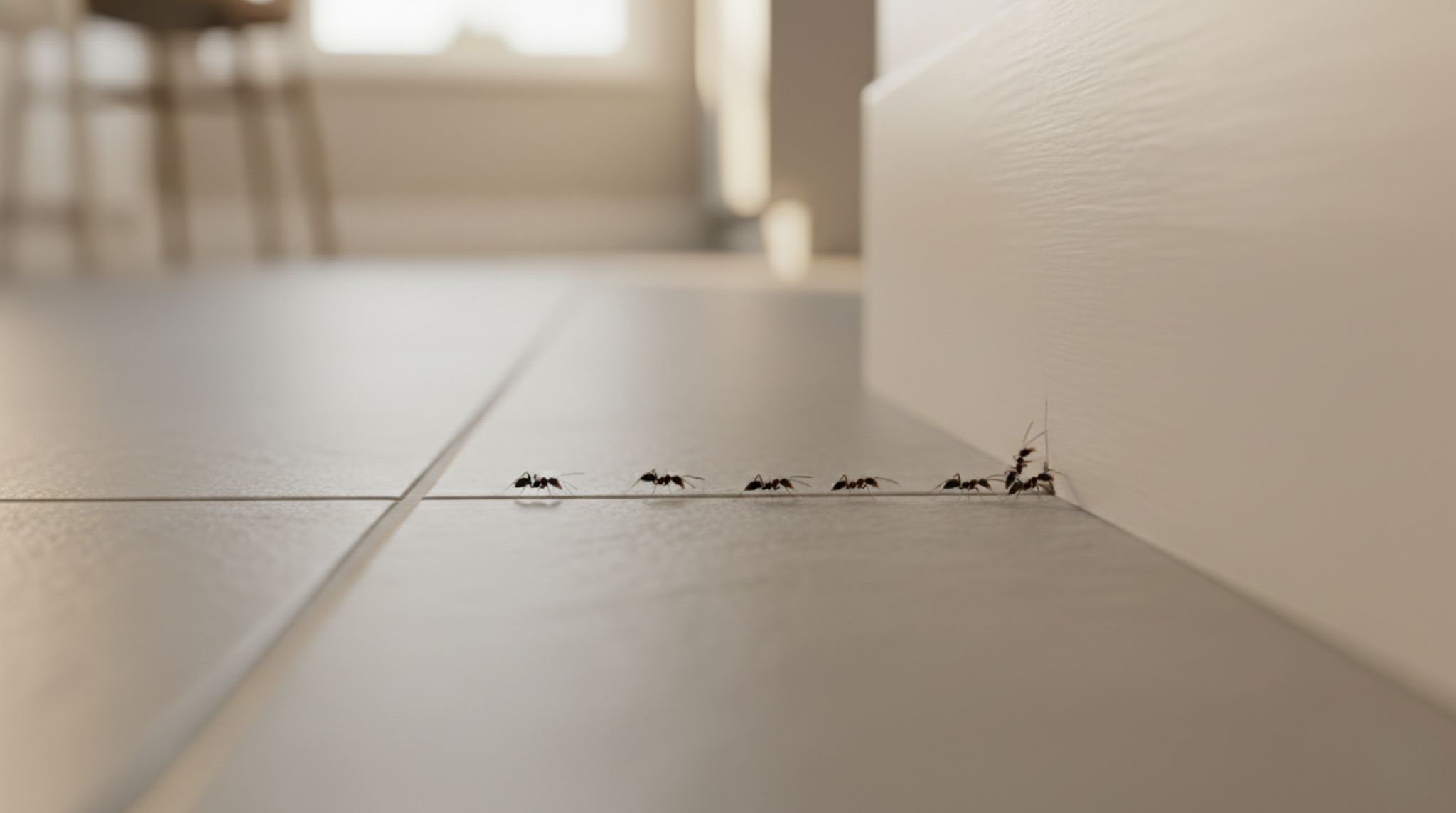
How to Get Rid of Ants in Walls : Let me be honest with you, the first time I discovered ants were living inside my walls, I completely panicked. It was a random Sunday morning. I was making chai in the kitchen, when I noticed a long, perfectly organized line of ants disappearing into a tiny crack near the baseboard. Not just crawling on the wall, actually going inside it. I remember thinking, “Okay, this is a problem I have absolutely no idea how to fix.”
I tried everything over the next few weeks. Some things worked beautifully. Some things were a complete waste of time and money. And I’m going to share all of it with you – the good, the bad, and the why didn’t I think of this sooner. So if you’re dealing with ants in your walls right now, don’t worry, you’ve come to the right place. In this article, we will know how to get rid of ants in the wall.
Why Are Ants Even Inside Your Walls in the First Place?
Before we talk about solutions, let’s talk about why this happens. Because if you don’t understand ‘why,’ the problem keeps coming back. Ants don’t randomly decide to move into your walls. They found food or moisture. Ants are incredibly efficient scouts. When one ant finds a crumb, a water leak, or even just the smell of something edible, it leaves a chemical trail back to the colony. Every ant that follows that trail reinforces it. So what starts as one ant becomes fifty, then hundreds.
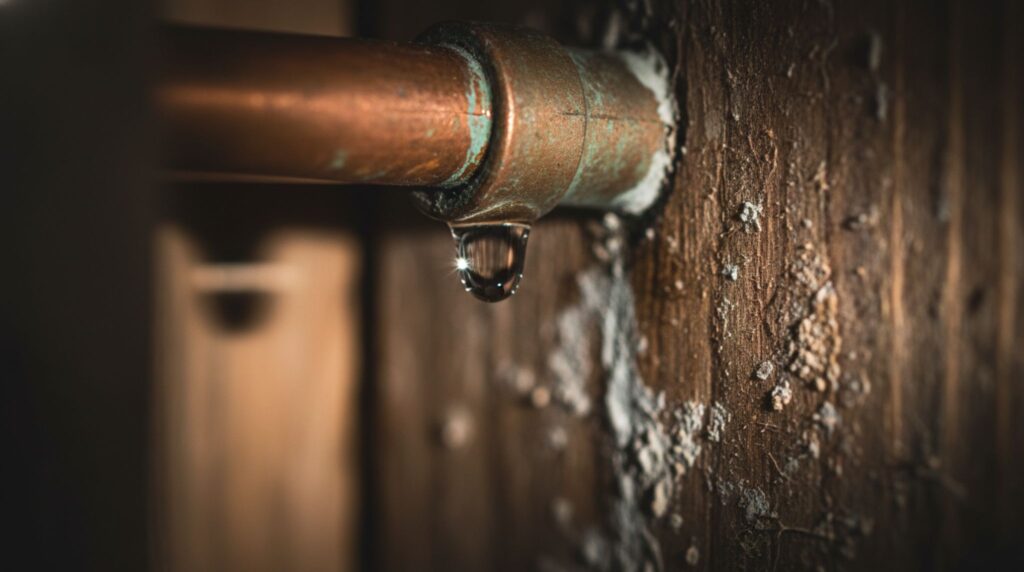
You may not see it — but the ants can smell it from outside.
The space inside your wall, that hollow gap between the two surfaces, is a perfect hiding spot for ants. It’s dark, warm, safe from predators, and completely undisturbed. Honestly, it’s exactly the kind of home ants would choose for themselves.
And if there’s even a little moisture coming from somewhere, a slow pipe drip, some condensation, anything that space becomes even more irresistible for them. Shelter plus water in one place? That’s everything they need. So the truth is, you’re not inviting ants into your home – but that warm, damp, hollow wall is absolutely doing it for you.
Carpenter ants in particular love wood that has even slight moisture damage. There’s a gap or crack somewhere. No home is perfectly sealed. Expansion gaps, electrical conduit entries, plumbing pipes, window frames, foundation cracks – ants can squeeze through a gap that’s barely the thickness of a credit card. In my case, it turned out I had a slow drip behind my kitchen sink that I didn’t even know about. The wall cavity near the pipe had gotten slightly damp over months, and the ants had basically set up a whole neighborhood in there.
How Do You Know Ants Are Living Inside Your Wall?
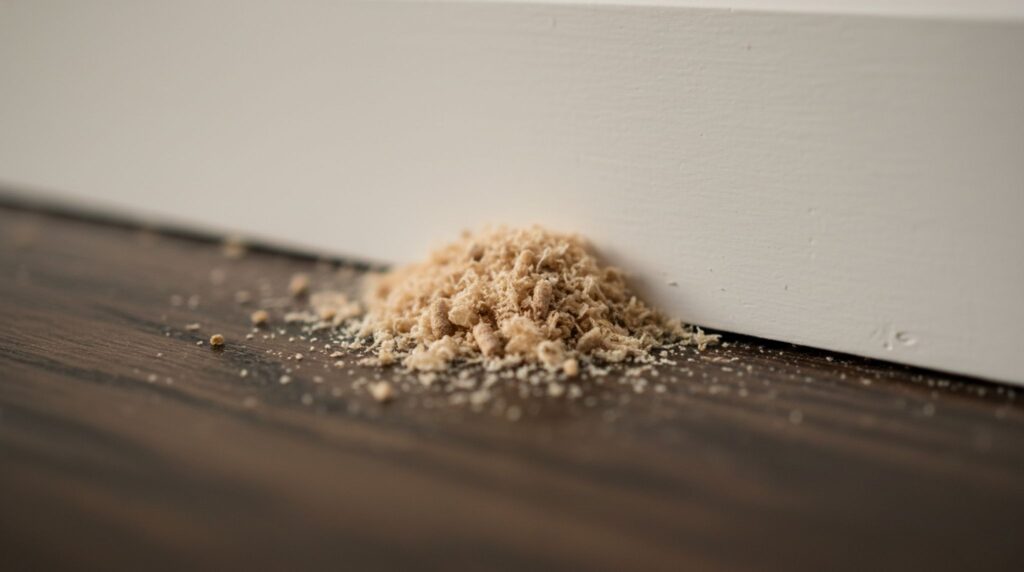
It’s worth figuring out before you start any treatment. Signs that ants are actually nesting inside your walls:
- You see ants emerging from or disappearing into cracks in baseboards, window frames, outlet covers, or wall junctions.
- You hear a faint rustling or crackling sound inside the wall, especially at night. This is more common with carpenter ants.
- You find sawdust near baseboards. It is a classic sign of carpenter ants excavating wood.
- The ant trail seems to start or end at the wall rather than leading to an obvious food source.
- You tap on the wall and it sounds hollow in places where carpenter ants shouldn’t hollow out wood as they build galleries.
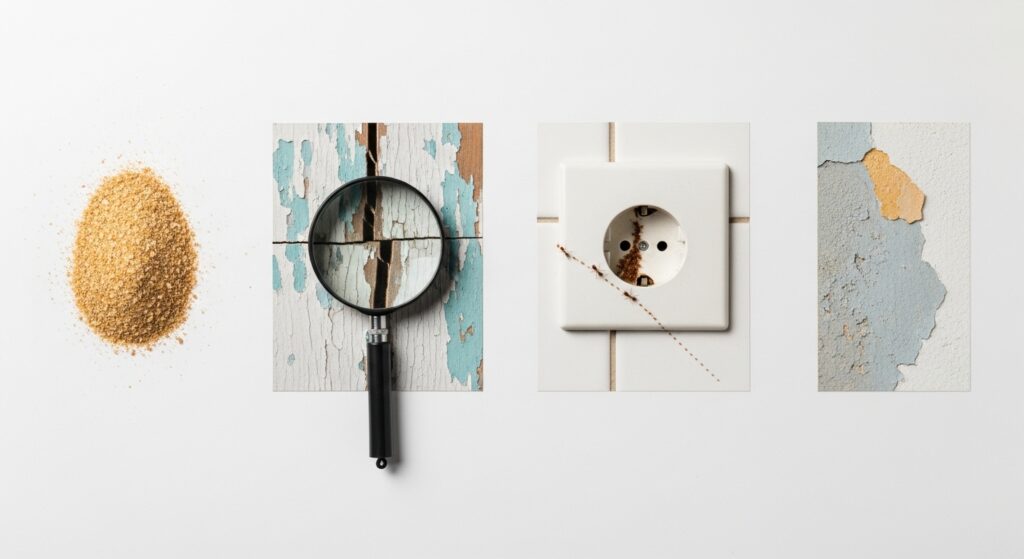
Found one of these? Don’t wait — a small colony becomes a large one fast.
Self Used 5 Methods that Actually Works
Here I am going to tell you about those methods which I used and actually got results. Here it is –
Method 1: Bait Stations
Why does this work?
This is genuinely my favourite method, and here’s the science behind it. Ant bait works on a beautiful principle, it’s a slow-acting poison mixed with something the ants love to eat. The worker ants carry the bait back to the colony as food. They share it with the queen and the other ants. And over 3–7 days, the entire colony, including the ones you never see, dies from the inside.
Spraying ants on sight only kills the scouts. The queen, sitting safely inside your wall, just produces more. Bait gets to the source.
How to use it:
- Place bait along the ant trail, not on the trail itself, but beside it.
- You want the ants to find it naturally while they’re scouting, not disrupt their existing trail.
- Use gel baits near cracks and entry points. Do not use any home made spray or any insecticide at the same time. If you spray, the ants scatter and avoid the bait. Let them eat the bait undisturbed.
- Be patient. You’ll see more ants for the first 2–3 days as word spreads about the food source. This is a good sign. The bait is working.
- Replace the bait if it dries out or if ants stop visiting it.
This is an effective method. I personally used it. I placed bait stations at three points along my kitchen baseboard, and by day five, the traffic had dropped to almost nothing. By day eight, I couldn’t find a single ant.
Method 2: Boric Acid
Why does this work?
Boric acid is a naturally occurring compound that’s toxic to insects but has very low toxicity to humans and pets at the concentrations used for pest control. It works in two ways: ants can ingest it when grooming themselves or eating bait mixed with it, and it also damages their exoskeleton on contact. It disrupts their digestive system and they die within a few days. The best part? It’s cheap, widely available, and incredibly effective.
How to use it:
- Boric acid dust: Using a hand duster or even a squeeze bottle, puff a thin layer of boric acid dust into the cracks and gaps where you’ve seen ants entering the wall. Don’t pack it in – a light dusting is enough. Ants walk through it, carry it back, and groom it off each other.
- DIY bait: Mix boric acid with something sweet like a small amount of sugar water, honey, or peanut butter.
- The ratio matters: too much boric acid and the ants will detect it and avoid it. Use about 1 part boric acid to 9 parts bait food. Place small amounts near entry points.
- One important note: keep boric acid away from areas where kids or pets can get to it. At high concentrations it’s still not something you want them ingesting.
Method 3: Seal Every Entry Point
Why does this work?
Every other treatment you do is temporary if you don’t close the doors. Ants are relentless. Even if you kill the current colony, a new one will scout the same entry points and move in. Sealing cracks eliminates the invitation.
How to do it:
Walk around your home – inside and outside – and look for:
- Gaps where pipes enter walls in kitchen, bathroom, laundry
- Cracks along baseboards or where walls meet floors
- Gaps around window and door frames
- Electrical outlet boxes on exterior walls often have gaps behind them.
- Cracks in the foundation or exterior walls
- For small cracks, caulk will work perfectly for you. A tube of silicone or acrylic caulk from any hardware store costs almost nothing. Run a bead along the crack, smooth it with a wet finger, let it dry.
- For larger gaps around pipes, use steel wool packed into the gap first, then caulk over it. Ants can chew through foam and some sealants, but they cannot chew through steel wool.
I spent about two hours one weekend afternoon caulking every gap I could find in my kitchen. It made a massive difference, not just for ants but for the occasional cockroach that had been sneaking in too.
Method 4: Diatomaceous Earth
Why does this work?
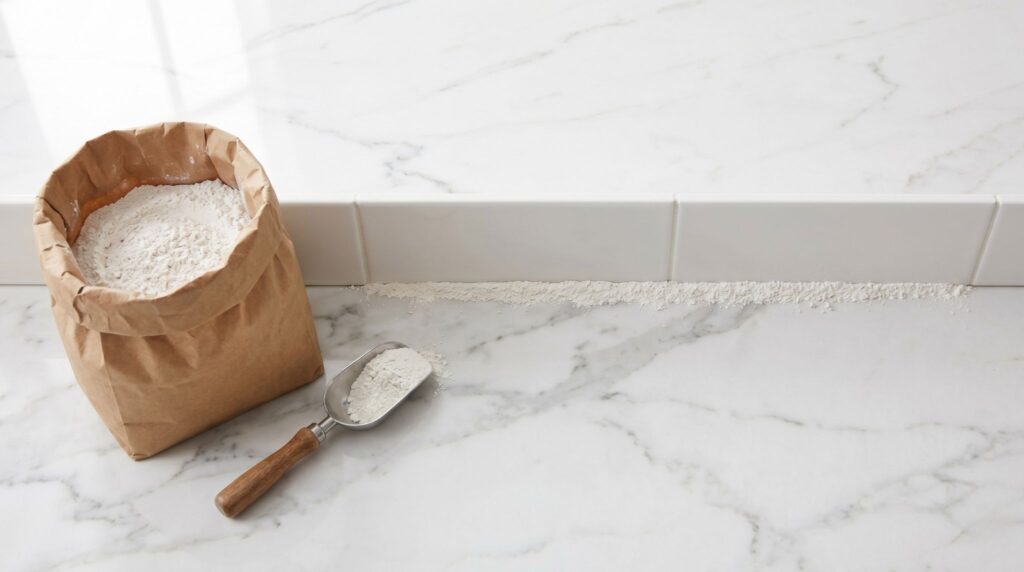
Diatomaceous earth (DE) looks like a fine white powder. When ants walk through it, it cuts through their exoskeleton and causes them to dehydrate and die. It’s completely mechanical. It’s also food-grade safe, which means it’s non-toxic to humans and pets.
How to use it:
- Apply a thin line or light dusting along baseboards, around the perimeter of rooms, and near any cracks where ants are entering.
- Puff it into wall cavities through existing cracks if you can.
- Reapply after rain or if the area gets wet. DE loses its effectiveness when damp.
- DE works best as a barrier combined with other treatments, not as a standalone solution for established wall colonies.
Method 5: Addressing the Root Cause – Moisture and Food
Here’s the one that nobody talks about enough. You can kill every single ant in your home, but if you have a water leak or a moisture problem in your walls, you’re going to have ants again within months.
What to check:
Under sinks: Look for any slow drips or moisture around pipe joints. Even a tiny, slow drip creates enough dampness to attract ants.
Bathroom walls: Check around the toilet base, shower walls, and under the vanity for moisture buildup or signs of water damage.
Exterior walls: After rain, check if any walls feel damp to the touch from the inside. This could indicate poor sealing or flashing issues.
Roof and attic: If you have ants appearing on upper floors or ceiling areas, check whether there’s a roof leak creating moisture that’s running down inside the walls.
On the food side: Store all pantry items in airtight containers, especially sugar, flour, and pet food. Don’t leave dishes in the sink overnight Empty your trash regularly and use a bin with a lid
Clean up crumbs and spills immediately – I know this sounds obvious, but even a light countertop wipe-down every evening makes a difference.
What If the Infestation Is Severe? When to Call a Professional
I want to be real with you about this. There are situations where DIY is not enough, and calling a pest control professional is genuinely the right call. Consider calling a professional if:
- You’ve been treating for 2–3 weeks with multiple methods and the problem isn’t improving.
- You suspect carpenter ants these guys actually damage wood as they nest, and a large established colony can cause real structural damage that goes way beyond a pest control problem.
- You can hear significant activity inside the walls and the colony seems extensive.
- You’ve found evidence of multiple nest sites around your home.
A professional can use products and application methods like injecting insecticide foam directly into wall voids that aren’t available to regular homeowners. They can also do a proper inspection to identify exactly which species you’re dealing with, because the best treatment for carpenter ants is different from fire ants or odorous house ants.
In my case, DIY was enough. But I also know someone whose carpenter ant problem had been going on for two years undetected, and by the time they got professionals in, they needed repairs to the wooden framing inside one of their walls. Catching it early matters.
A Simple Week-by-Week Plan You Can Actually Follow
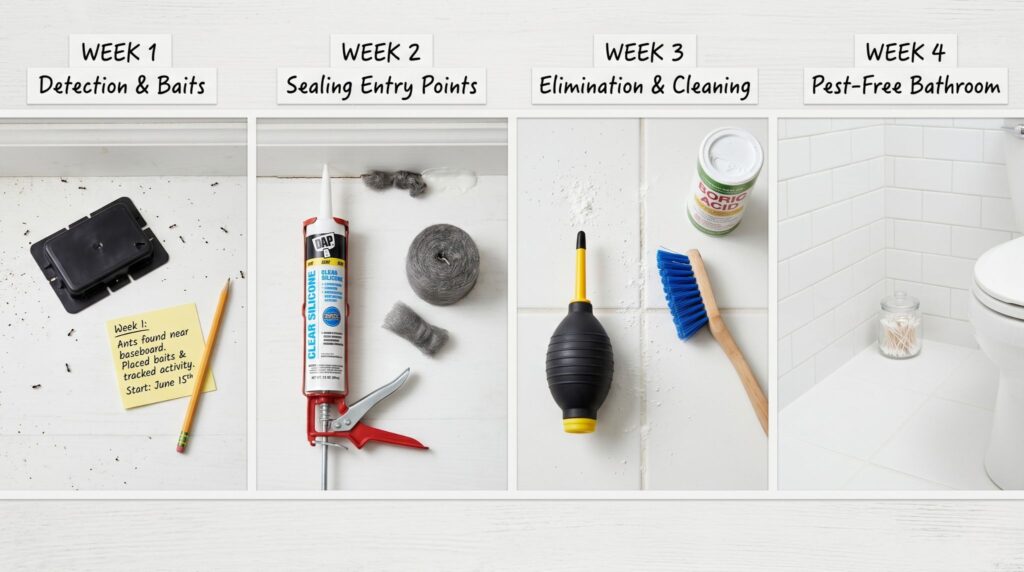
Here’s what I’d recommend if you’re starting from scratch:
Week 1:
- Place bait stations along ant trails and near wall entry points.
- Do not spray anything, let the bait do its work.
- Identify and note all entry points, you’ll seal them later.
Week 2:
- Continue monitoring bait stations, replacing them if dry.
- Begin sealing entry points with caulk and steel wool.
- Apply diatomaceous earth along baseboards as a supporting barrier.
Week 3:
- If you still see activity, add boric acid dust application to wall crevices.
- Deep clean the kitchen, check under appliances, around drain areas, inside cabinets.
- Address any moisture issues you found
Week 4 and beyond:
- Monitor and maintain sealed areas.
- Keep bait stations in place for a month even after activity stops.
- Store food properly and maintain a regular cleaning routine.
FAQ
Can ants in walls damage my home?
Regular ants like sugar ants or odorous house ants don’t damage the structure – they’re just nesting there. Carpenter ants are the exception. They hollow out wood to build galleries and can cause real structural damage over time.
Will ants go away on their own?
Rarely. If there’s a food or moisture source attracting them, they’ll stay and the colony will grow. You need to actively address it.
Is it dangerous to have ants in my walls?
For most species, no – it’s a nuisance rather than a health hazard. However, some ants can contaminate food, and carpenter ants can cause property damage.
How long does it take to get rid of a wall ant infestation?
With the right approach, especially bait, most infestations resolve in 1–3 weeks. Severe or large colonies can take longer.
Conclusion
In this article I told you how to get rid of ants in the wall. Getting rid of ants in your walls is absolutely not a one-spray-and-done situation. It takes a little patience, a multi methods approach, and honestly some detective work to figure out. The combination of bait stations, boric acid, sealing entry points, and addressing moisture will solve the problem in the vast majority of cases. If you have any questions regarding the same DM us. We will revert on your query asap.