
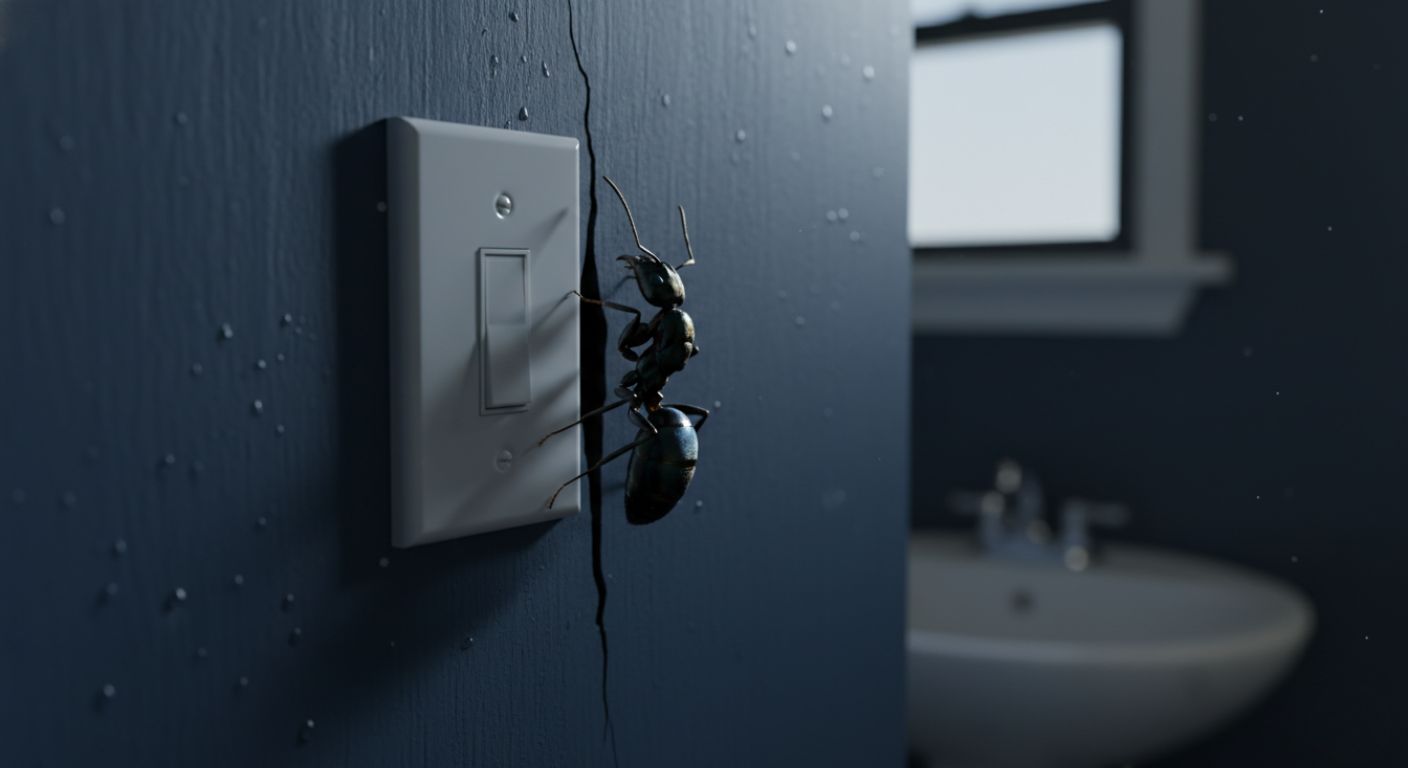
One day, at 2:00 a.m., when I turned on the bathroom light, a large black ant crawled out from a crack in the wall near the switchboard. I ignored it. Then, the next day, after dinner, I finished my dishes, leaned under the sink, and noticed a small speck of dust that wasn’t black. The question came to my mind: Is my house being emptied from the inside? Then I took the matter a little more seriously and Googled it. And if you’re facing a similar situation and have Googled it to find a solution, you’ve come to the right place.
This step-by-step guide covers exactly what you need. Whether you only see 2-3 ants right now or you think the entire colony is hiding inside the wall, there’s absolutely no need to panic. Just follow the solid plan below.
Quick Answer – How to Eliminate Carpenter Ants?
Let’s quickly learn how to eliminate carpenter
ants – Here I’ll tell you what I found helpful. To permanently eliminate carpenter ants, use a slow-acting, non-repellent bait, such as Indoxacarb or Borax-based bait. This travels through the worker ants to the queen and destroys the entire colony from within. If the colony is inside a wall, it’s necessary to inject insecticidal dust or foam directly. Complete elimination with this can take 2 to 8 weeks, depending on the colony size.
The Fastest Way to Get Rid of Carpenter Ants Quickly
One night, I saw a whole procession of ants in my kitchen. I decided to get rid of them by the weekend. Then I got the spray and sprayed it on the ants. The ants disappeared, and I was happy. But within the next two days, the ants started appearing again. The mistake I made was the same one most people make. Killing the visible ants isn’t the solution; a permanent solution requires destroying the colony from within.
To do this, start these four things simultaneously:
- Place gel bait (Advion) directly on the active trail.
- Inject boric acid dust into wall voids where nests are suspected.
- Apply a non-repellent perimeter spray to the foundation outside the house.
- Immediately fix any moisture source like leaky pipes, wet wood.
Bait kills the colony from within. Dust destroys the hidden nest. Using both together, I saw results within 1 to 2 weeks.
What are carpenter ants?
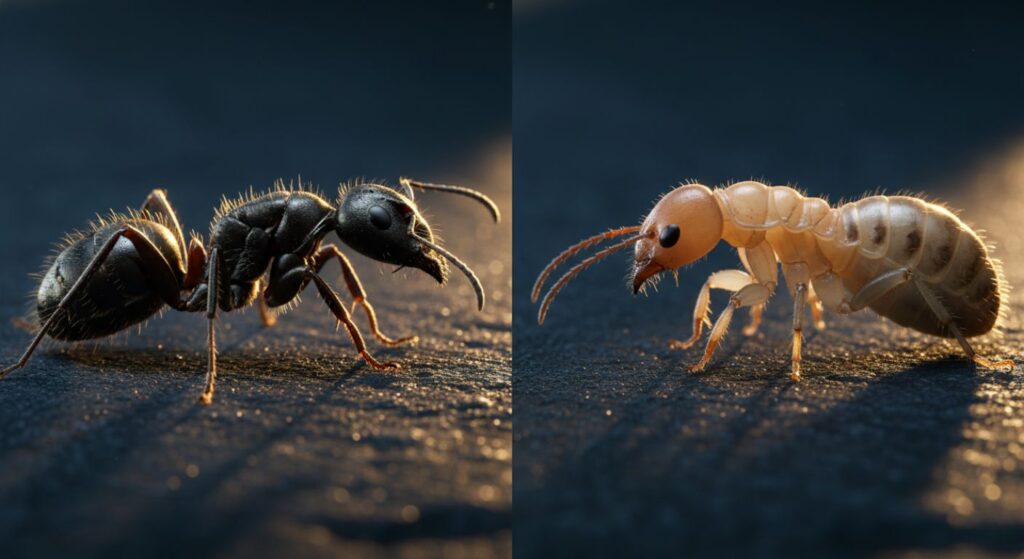
Many people get confused between carpenter ants and termites. They mistake carpenter crafts for termites. Termites are dangerous, they eat up the entire house. The question that comes to people’s minds when they see carpenter ants is, is not it a termite? The good news is, carpenter ants are not termites. But they still need to be taken seriously.
Carpenter ants are large insects, ranging from 6 to 13 mm long. And the most important thing to understand is that they don’t eat wood, they build their homes in wood. They create smooth galleries inside damp or decaying wood, creating a sensation of tunnels. Over time, they seriously weaken beams, joists, and wall studs. They don’t necessarily colonize a single area; they can also colonize various dry areas of the house. Therefore, it’s important to treat them promptly.
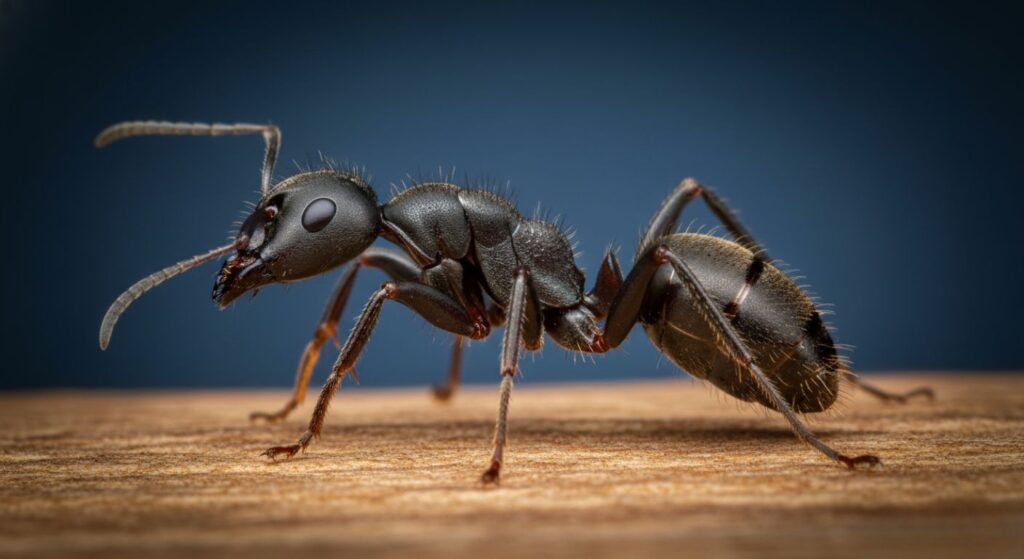
In the table below, we’ve provided some specifications that can help you quickly identify a carpenter’s ant.
| Features | Detail |
| Size | 613 mm |
| Color | Black, reddish-brown, or dual-colored |
| Antennae | Elbow-like folded |
| Waist | Pinched, single node |
| Food | Sugar, protein, wood, no |
| Colony Size | 3,000 to 1,00,000+ workers |
Why do carpenters come to the inner house?
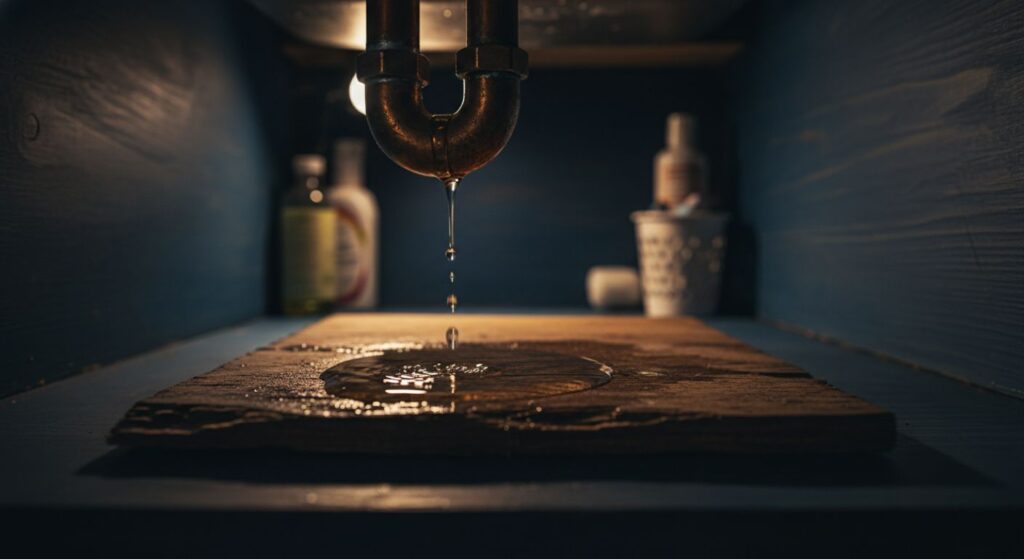
My house is absolutely clean. I even keep the food containers closed. Still, why did these ants come? I used to wonder about this. Almost everyone asks this question. And you might be a little surprised to hear the answer: Carpenter ants don’t search our food, they search for wet wood in our house.
If there’s that slow drip under your bathroom sink that you’ve been saying “I will take a look tomorrow” for the last four months? That’s their invitation letter. They don’t care about the cleanliness of your house. They just want a damp, slightly decayed wood where they can colonize. And there’s a specific fix for every cause. Unless the cause is removed, ants will keep coming back, no matter how many times you treat them.
Let’s quickly look for causes and fixes.
| Cause | What happenes | Fix |
| Pipe leak, roof leak | Damp wood becomes a nesting site | Fix leak, replace damaged wood |
| Humidity in basement or crawl space | Colony remains active year-round | Install a dehumidifier, improve ventilation |
| Decayed or damp wood | Perfect spot for a parent nest | Remove and replace rotting wood |
| Food crumbs, sugar spills | Foraging workers are attracted | Clean surfaces, use sealed containers |
| Tree branches that touch the house | A highway forms directly inside the house | Trim branches 12+ inches away from the roofline |
| Firewood near the foundation | Parent colony settles nearby | Keep firewood 20+ feet away, off the ground |
Signs of a Carpenter Ant Infestation
When you read the signs below, you’ll understand one thing clearly – “Dude, they are in my house too.” These signs are not just seeing and forgetting things. Each sign tells you something specific about the infestation.
- Frass – Dust-like particles
A friend of mine from the neighborhood was telling me that yesterday her floor was perfectly clean. Today, she found a small, pencil shaving like particle near the baseboard. I then told her it was frass. Fine wood shavings mixed with insect body parts that carpenter ants push out of their galleries. This is what I’ve encountered too. It’s exactly like someone sanding the inside of your wall. Carpenter ant frass is different from termite frass. It’s coarser, cleaner, and doesn’t contain mud. You’ll find it mostly near baseboards, under windowsills, or around the foundation.
- Sounds from Inside the Wall
Have you ever noticed that at night, when everyone is asleep and the house is completely quiet, you hear a faint crinkling sound coming from the wall. As if someone is opening a package inside? This isn’t your imagination. These are worker ants actively working at night, digging into wood and expanding galleries.
- Seeing Winged Ants Inside
Seeing large winged ants inside the house between March and June is a red alert. This simply means the colony is at least two years old and is now reproducing. But don’t confuse them with termite swarmers, which many people do. If you can’t identify them, take a photo of the ant in a ziplock bag; the local extension office can identify it for free. Alternatively, you can tell by these specifications:
Carpenter ant: Elbowed antennae, pinched waist, front wings longer than back wings
Termite: Straight antennae, thick waist, both wings equal length
- Seeing a Consistent Trail of Ants
When I woke up at night, I saw a long line of ants in the bathroom. A random ant wandering here and there is one thing. But a straight, consistent trail is one that moves along wires, pipes, carpet edges, or tree branches. These are foraging workers, regularly traveling between the nest and the food source. This trail acts as a map for you to reach the nest.
- Wood’s Hollow Sound Appears
Now, when I tapped my hand near the window where I was seeing the sawdust, I heard a papery sound. If you also hear a hollow or papery sound, understand that there are galleries inside. Press here with a screwdriver. If the wood feels soft and slightly crumbly, the nest is nearby.
Where do carpenter ants build their nests?
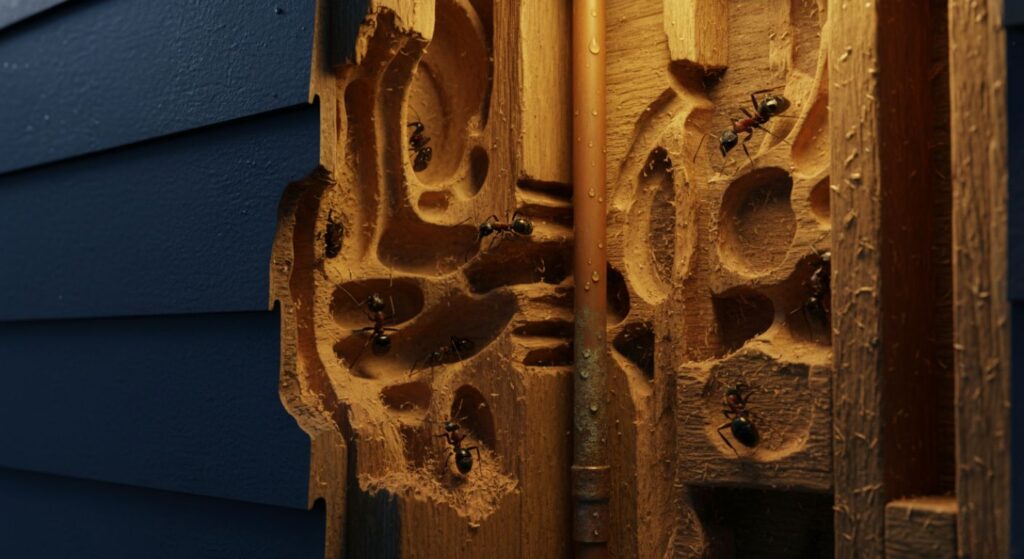
“I looked all over the house but couldn’t find any. I couldn’t figure out where all this was hidden?” That’s the main problem. Carpenter ants deliberately build nests where you can’t easily see them. The parent nest will always be in moist wood, and satellite nests are located in separate, dry locations. A single infestation can have 5-6 different locations.
Check these areas first:
- Wall voids, especially near plumbing or in exterior walls
- Under sinks, around leaky pipes
- Bathroom walls and shower surrounds
- Roof eaves and soffit areas
- Water-damaged window and door frames
- Kitchen cabinets that are near moisture
- Outdoor tree sap, dead trees, wooden decks, firewood piles
How to get rid of carpenter ants step by step?
When carpenter ants started taking up residence in my house, I tried a lot of things. I tried some chemical methods, some natural remedies, and finally found a solution. In most cases, you can handle it yourself for about ₹2,000 to ₹3,000. Call a professional only when the activity persists after 6 weeks. That’s when it’s genuinely necessary. But first, complete these 6 steps properly. You’ll need the following.
Flashlight – to track the trail at night
Screwdriver – to probe suspected wood
Drill with 1/8″ bit – for wall void access
Bulb duster or bellows applicator – to inject dust
Caulk gun + silicone caulk – to seal entry points
Step 1: Confirm – Is it a Carpenter Ant or Termite?
This confirmation is crucial before treatment. Otherwise, you’ll end up with the wrong pest, the wrong treatment, and a waste of time and money.
I’ve already explained how to identify a Carpenter Ant in the article above.
Step 2: Track the Trail at Night, Locate the Nest
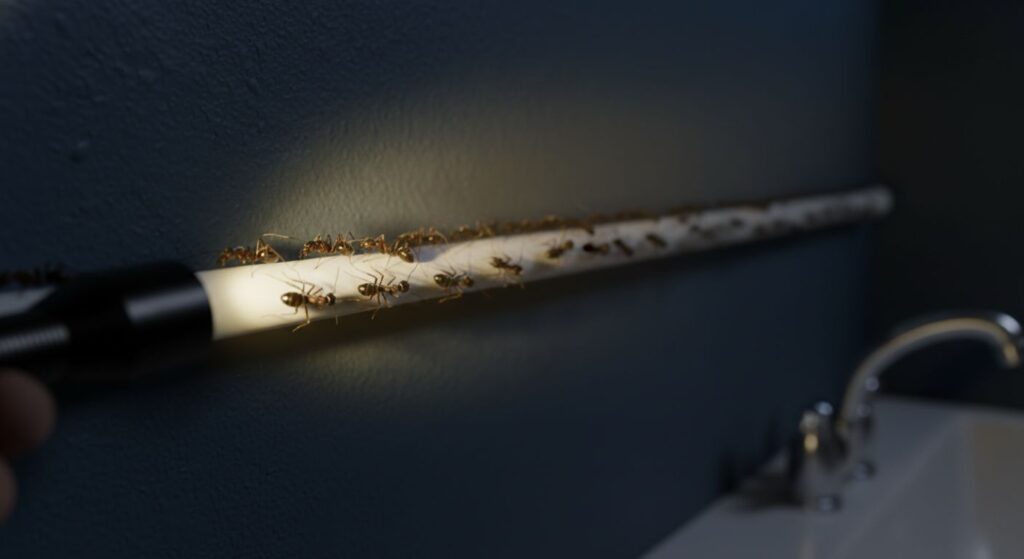
I ignored this step for several days. And that’s why my treatment didn’t work. It’s crucial to best locate the ants. Find the active trail with a flashlight after dark, ideally around 10-11 p.m. Follow the worker ants backward from their food source. Focus on areas under sinks, around pipes, along bathroom walls and roof eaves, and in exterior corners. Probe suspect areas with a screwdriver. Soft or crumbling wood means the nest is nearby.
Step 3: Deploy Bait on Active Trails
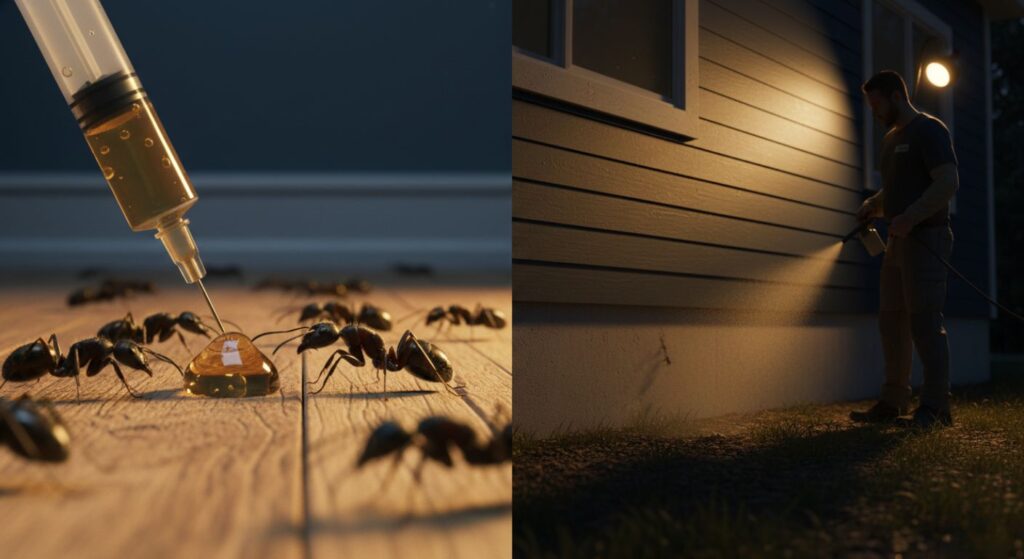
Bait is the most effective solution. My neighbor was making a recurring mistake: using a spray along with the bait. This is a serious mistake. It’s important to remember: don’t spray any repellent or non-repellent near the bait. The spray smell causes the ants to leave a trail. They stop picking up the bait, and the colony survives. Your effort is completely wasted. You need to place the slow-acting bait directly on the trail. The workers pick it up and take it to the nest, it reaches the queen, and the entire colony is destroyed from within.
Recommended bait options:
- Advion Ant Bait Gel (indoxacarb) is the most effective.
- Tero Liquid Ant Baits (borax-based)
- DIY option: Dissolve 3 parts sugar and 1 part borax in warm water. Keep the concentration at 0.51%, making a stronger mat.
Step 4: Treat the Nest Directly with Dust or Foam
I was using bait. Then my grandmother suggested using both dust and bait together. Bait’s job is to kill the colony from within. Dust’s job is to destroy the nest directly. Use both together. One alone won’t do the job. Drill small holes in wall voids with a 1/8″ drill bit and inject boric acid dust or Deltamethrin dust inside.
Foam products are better. They expand and reach deeper galleries where dust can’t reach.
If the nest is exposed outside in tree sap or deck, pour non-repellent liquid insecticide directly into the nest opening.
Step 5: Install a Perimeter Barrier
After treatment, the colony inside your home is gone. Now you need to stop new ants from entering. Spray fipronil in a 3-foot band around the foundation outside the house. This barrier prevents new ants from entering and supports the treatment being carried out inside. Focus specifically on a few areas:
- Where pipes or wires come through the wall
- Window frames
- Door thresholds
Step 6: Monitor and Refresh the Bait for 28 Weeks
My neighbor came over and said, “I put down bait powder. It’s been three days, and the ants are still there. Is the treatment not working?” This is the most common frustration. The answer to this is that it is working. Just be patient. The bait is slow-acting. If it were fast-acting, the workers would die before reaching the queen. You should refresh the bait every 72 hours. Continue monitoring for 60 days after the last sighting. If activity is still visible after 6 weeks, then call a professional.
Best Carpenter Ant Treatments What to Use
| Treatment Effectiveness | Is the colony being abolished? | Best For |
| Gel Bait (Advion) | Yes, high | Trail on colony elimination |
| Liquid bait (Terro) | | Yes, high | Sugar-seeking worker ants |
| Insecticidal dust Medium-High | Partial | Wall void direct treatment |
| Non-repellent spray (Taurus SC) | High | There is no barrier. Perimeter defense |
| Diatomaceous earth | medium, no | Supplement in dry areas |
| Contact spray (Raid) low | Absolutely not | NOT recommended for carpenter ants |
| Essential oils | Low, no | Only, temporary deterrent |
Which one to choose – a quick guide
- Visible trails, peak infestation – gel bait
- Inside nest wall – dust or foam injection
- Outdoor nest (soap, deck) – direct liquid insecticide
- Pet-safe – enclosed bait stations, out of reach
- Outdoor protection – on Taurus SC foundation
Natural Methods – I’ve Experienced Results
“I have a 3-year-old child and a dog at home. I don’t want to use chemical sprays inside. Is there a natural solution?” Yes, there are many. But the thing is, most natural remedies don’t eliminate carpenter ant colonies. They smell good, temporarily disrupt pheromone trails, but don’t reach the queen. There’s only one natural method that can actually reach the colony. That’s
- Borax Bait
This is a genuinely effective natural option. I’ve used it personally. The results are quite good. Borax is a slow-acting stomach poison. Workers pick it up and take it to the nest, unaware that it’s poison. It reaches the queen, destroying the colony from within.
Recipe: Dissolve 1 part borax with 3 parts sugar in warm water. Borax is available at any major grocery store for ₹150 to ₹200.
Concentration: Strictly 0.51%. If made stronger, the workers die before reaching the colony, leaving the queen unharmed.
Safety: Toxic to children and pets. Use in an enclosed bait station; do not leave it in the open.
- Diatomaceous Earth (Food-Grade) Supplement
DE has also produced very good results. Ants had established an entire colony in my sister’s house. She tried this and found it very effective. It damages the ants’ exoskeletons, causing them to dehydrate and die. But it only works in dry areas. It becomes completely useless when wet. This supplement is suitable for wall voids, attics, and crawl spaces. It alone may not eliminate the colony because it doesn’t reach the roots.
- Essential Oils
This is a remedy my grandmother taught me. Peppermint, clove, and tea tree oil are all commonly found in our homes. These oils disrupt the pheromone trails of ants. Mix 15 to 20 drops in a cup of water and spray. Once you eliminate the colony, apply it to the ants’ entry points. This will prevent new insects from entering.
- Vinegar Spray
I use this for a quick fix. Mix half vinegar with half a cup of water. This temporarily destroys the scent trail. Ants get temporarily confused, but they come back, and the colony returns. So, this isn’t a permanent solution.
- Cinnamon and Boiling Water
Cinnamon is readily available in everyone’s home. It’s a mild repellent due to its scent. It has zero colony killing power. Boiling water is also a good option, but it only works if the outdoor nest is directly exposed and you pour it directly into its opening. It won’t work inside a wall.
Solution Based on the Ants’ Location
If we saw ants in the kitchen, we’d think their colony would be in the kitchen as well. But one thing many people miss is that the location of the ants isn’t necessarily the “problem area.” Therefore, it’s important to first identify where the ants are and apply the solution based on their location. You’ll get the best results.
- Carpenter Ants in the Kitchen
“At 11 o’clock last night, when I went to the kitchen to get a drink, 8-10 large ants were marching near the sink.” Then I realized they weren’t in the line…they were just some ants. This means they don’t have a home here; they’ve come looking for food. To find their nest, follow the instructions you gave me:
- Follow the trail at night and locate the nest.
- Clean all surfaces, store food in sealed containers.
- Place bait at trail entry points, like under cabinets, near the dishwasher.
- Carpenter Ants in the Bathroom
One morning, after a shower, I noticed 4-5 ants roaming around the grout line. This genuinely disturbed me.” Seeing ants in the bathroom is a different situation than in the kitchen. There’s likely a nest there, not just a trail. Moisture is high enough for a parent colony to establish itself.
- Carefully check under sinks, tub/shower surrounds, and behind the toilet.
- Identify and fix all leaks first. If moisture persists, the treatment will be temporary.
- Inject dust or foam into wall voids.
- Carpenter Ants in Walls
“Lying in bed at night, I felt as if I was hearing something crumpling inside the wall. I was scared.” If carpenter ants are building a nest in your home, you’ll hear the sound of crinkling or rustling. This confirms the nest is inside the wall. To do this, you’ll need to systematically treat the entire suspected hole. Drill and inject dust or foam.
- Carpenter Ants in the Yard
One day, I was wandering in my garden. There’s an old tree sap there, where ants always crawl. I never took it seriously. But now understand that the nests are also coming from there. The outdoor parent colony is in tree saps, dead trees, or landscape timbers. From here, satellite nests are established inside the nest. To get rid of this:
- Pour liquid insecticide directly into the nest opening.
- Remove dead wood and saps where possible.
- Keep firewood 20+ feet away from the nest, elevate it above the ground.
How long will it take? Realistic Timeline
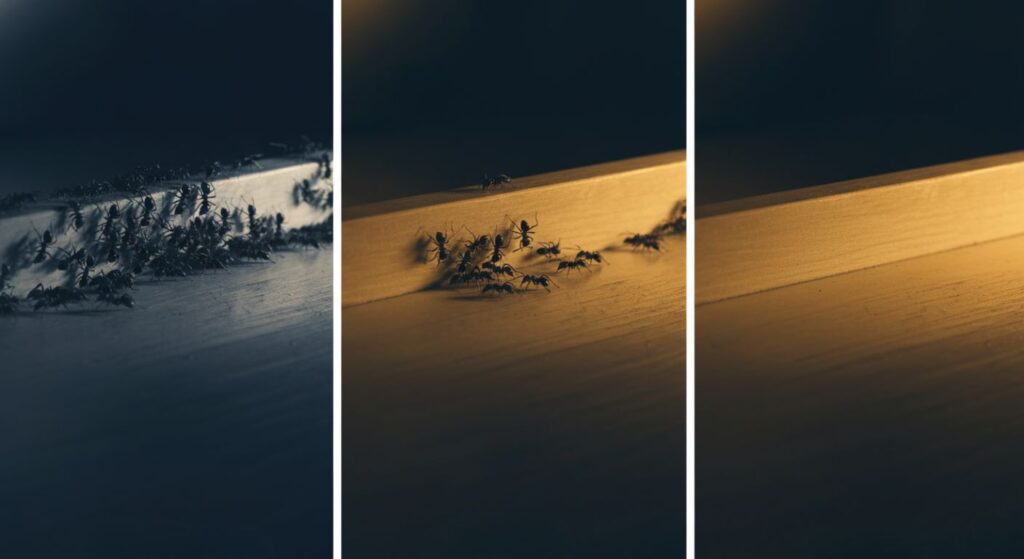
Will you tell me, quite simply and to the point, how many weeks will this problem last?
| Colony Size | DIY Bait + Dust Method | Professional Treatment |
| Small single nest | 12 weeks | 37 days |
| Medium 12 satellite nests | 35 weeks | 12 weeks |
| Large multiple nests | 68+ weeks | 24 weeks |
Remember one thing: if activity is still visible after 6 weeks, call a professional. Some deep satellite nests are genuinely beyond the reach of DIY tools. This is not a defeat, it’s a practical decision.
Mistakes to Avoid
Here are some mistakes I’ve repeated, and I now suggest you avoid them:
Mistake 1. I used repellent spray before the bait. This disperses the colony, driving new nests deeper inside. This is the biggest and most common mistake. The ants don’t die, they just burrow deeper into the walls.
Mistake 2: Ignoring the Moisture Problem
Kill all the ants today, but if the pipe is still leaking, they’ll come back next season. I only killed the visible ants. But the problem only occurred after fixing the root cause. Any treatment without it is only temporary.
Mistake 3: Making Borax Bait Too Strong
When concentrating, people often make it too thin. Do not use a concentration higher than 1%. Too strong a bait kills the workers before they can reach the queen. The queen survives, the colony survives, and you think the treatment has failed.
Mistake 4: Treating Only One Area
Now, I was making the mistake of treating only one area, but carpenter ants have multiple satellite nests. I treated only the visible nest and ignored the rest. This will allow the infestation to continue. It is essential to systematically treat the entire suspected area.
Mistake 5: Treating once and then stopping monitoring
This was also a big mistake of mine. I did a complete treatment once and thought the problem was resolved, but within about 30 to 35 days, concerns arose again. Continue monitoring for 60 days after the last sighting. Ants sometimes become temporarily quiet, they never go away. If monitoring is stopped too soon, the colony will rebuild.
FAQ
What will keep carpenter ants away?
Cinnamon, vinegar, and peppermint oil
How do you find a carpenter ant nest?
By tapping into wood surfaces and listening for a hollow sound.
What smells attract carpenter ants?
Sugary foods
How do I know if I have carpenter ants?
For the identification of carpenter ants, please read the specification given in the above article.
What is the fastest way to kill carpenter ants?
Apply insecticide
Conclusion
Friends, I’ve shared my personal experience in this article. If you also want to get rid of carpenter ants, try the remedies provided in this article. Follow this guide, don’t miss any steps, and be sure to fix the most important moisture source. Carpenter ants are tough, but manageable. And you can handle them yourself. If you have any questions, please ask us in the comments section.