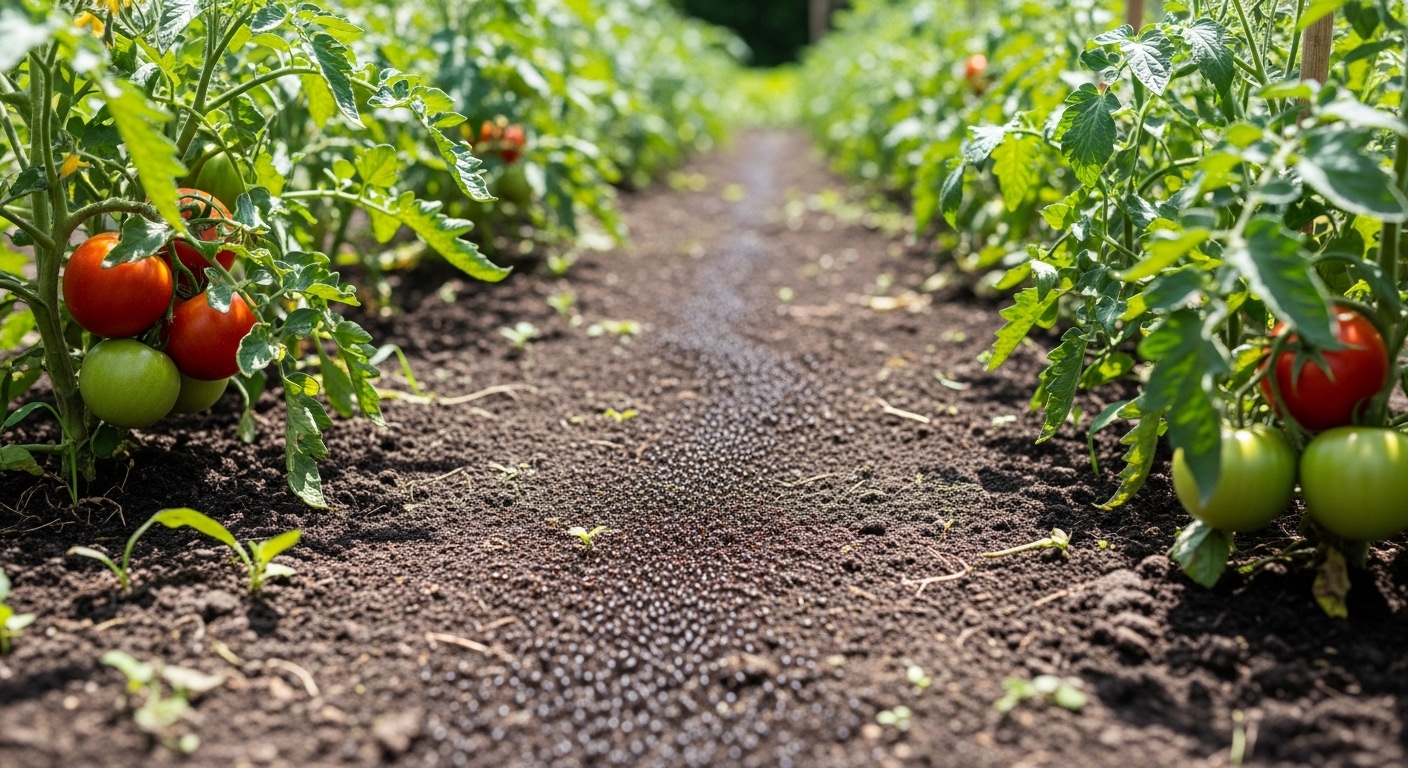
So last summer I walked out to water my tomatoes and just stopped. There was a full ant highway running straight through my garden bed. Hundreds of them, marching like they had somewhere important to be. I grabbed a spray bottle and soaked them. I felt good about it but the next morning they were back. More of them this time.
That’s when I realized spraying visible ants does nothing. The colony underground is untouched. It just sends more workers out. I have adopted some methods which really work to get rid of ants and through this article I am going to share all those methods with you. Lets know how to get rid of ants in the yard, garden and lawn.
Why Are Ants Even There?
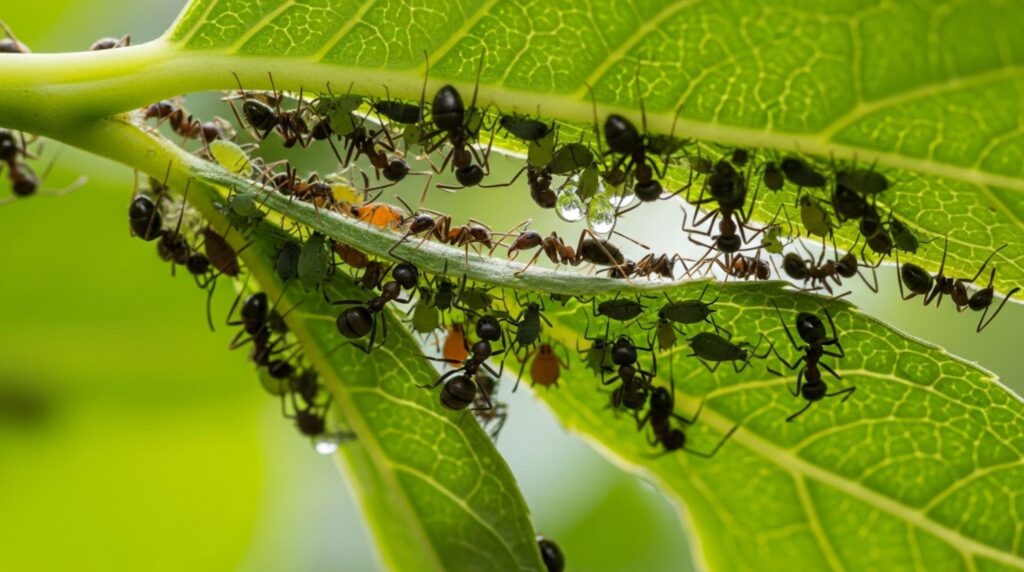
Ants want three things – Food, water, and soft soil to dig through. Our garden has all three. And if you have aphids on your plants, that’s the real reason ants keep coming back. Aphids produce a sweet liquid called honeydew. Ants love it so much they actually protect aphids from other insects just to keep it flowing.
One ant finds your garden, leaves a chemical trail back to the colony, and everyone follows. That neat single-file line you see? All following the same invisible road. So it’s very important to break the trail and kill the colony. That’s it.
Self Used 7 Methods that Actually Works
- Diatomaceous Earth
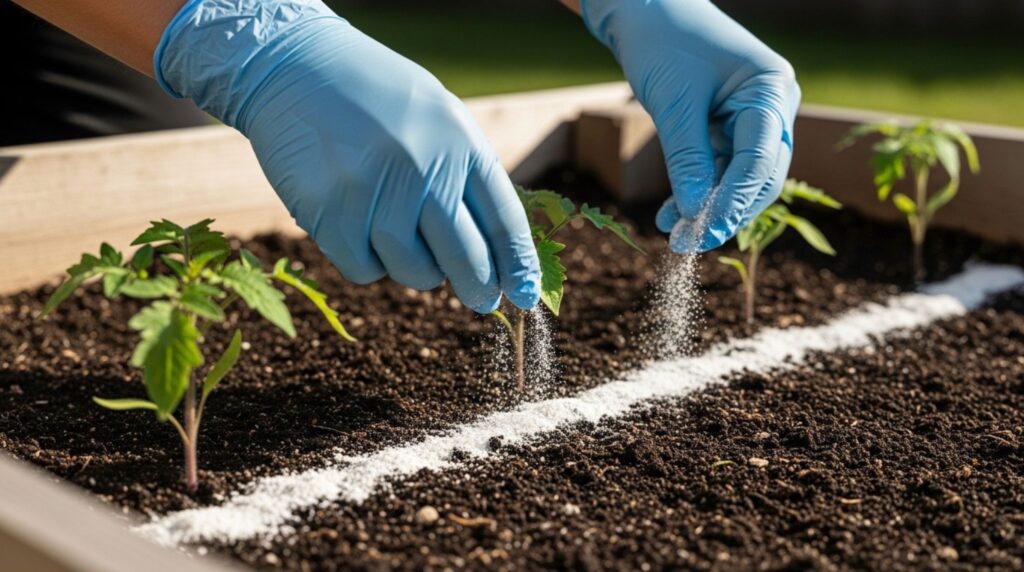
This is the first thing I reach for. It’s a white powder from any garden store which looks like flour but works like broken glass for ants.
Why it works: It has microscopic sharp edges that cut through the ant’s outer shell. They dry out and die within 48 hours. No chemicals, so ants can never build resistance to it.
How to use it: Sprinkle a line around garden beds, along trails, and near plant bases. Reapply after rain because wet DE stops working until it dries. Get food-grade DE, not pool-grade. Wear a mask while applying. The dust irritates your lungs.
- Boiling Water
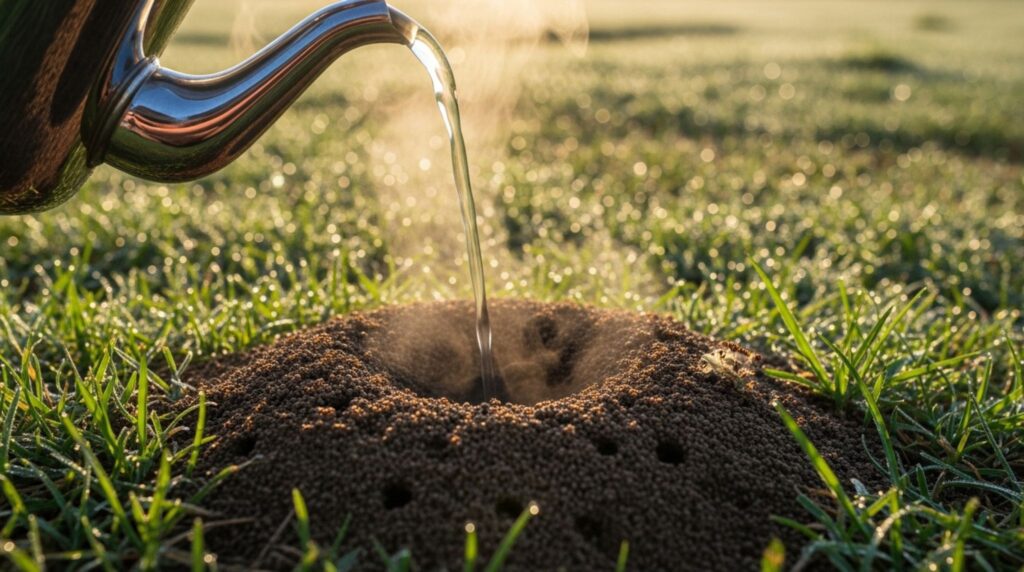
My grandfather used this for every single mound in his yard. Never bothered with anything else.
Old school and it works. Best for mounds sitting in open lawn areas.
Why it works: Kills ants instantly on contact. Pour enough into the mound and it reaches the queen. No queen, no colony.
How to use it: Boil at least a gallon of water. Pour it slowly into the center of the mound. Repeat for two or three days to reach deeper chambers. Early morning works best because the whole colony sits deeper in the mound at night for warmth.
Warning: It kills surrounding grass too. Only use this on open lawn mounds, not inside garden beds near roots.
- Boric Acid Bait
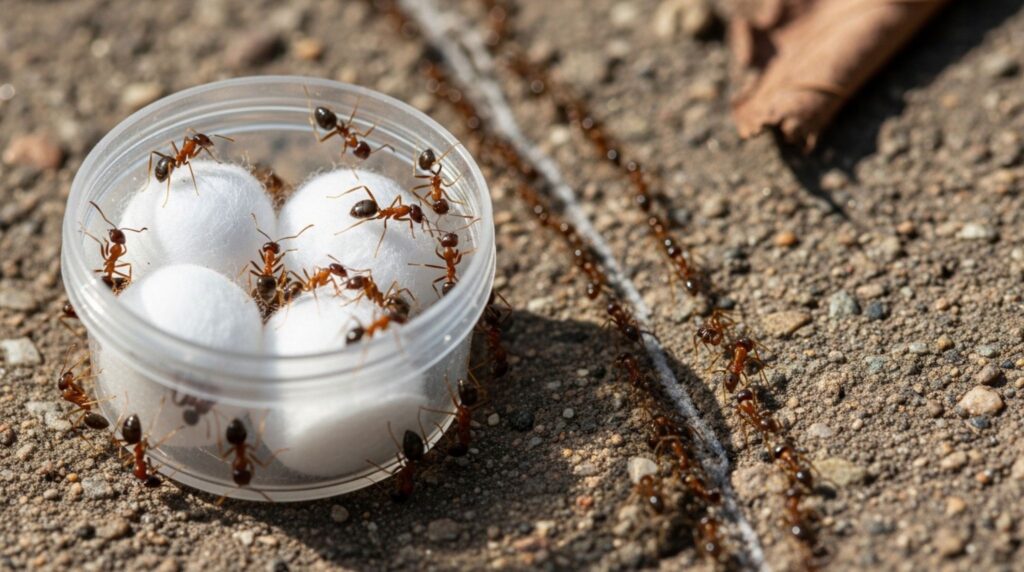
This is the real colony killer. If you want ants fully gone and not just relocated three feet away, use this.I had a colony under my patio for almost a full season. Boric acid bait finished it in 12 days. I used this and it really works.
Why it works: You mix boric acid with sugar water so it smells like food. Worker ants eat it and carry it back to share with the queen and larvae. It’s slow-acting so the whole colony eats it before anything happens. Fast sprays kill the ant before it gets home. This one travels all the way to the source.
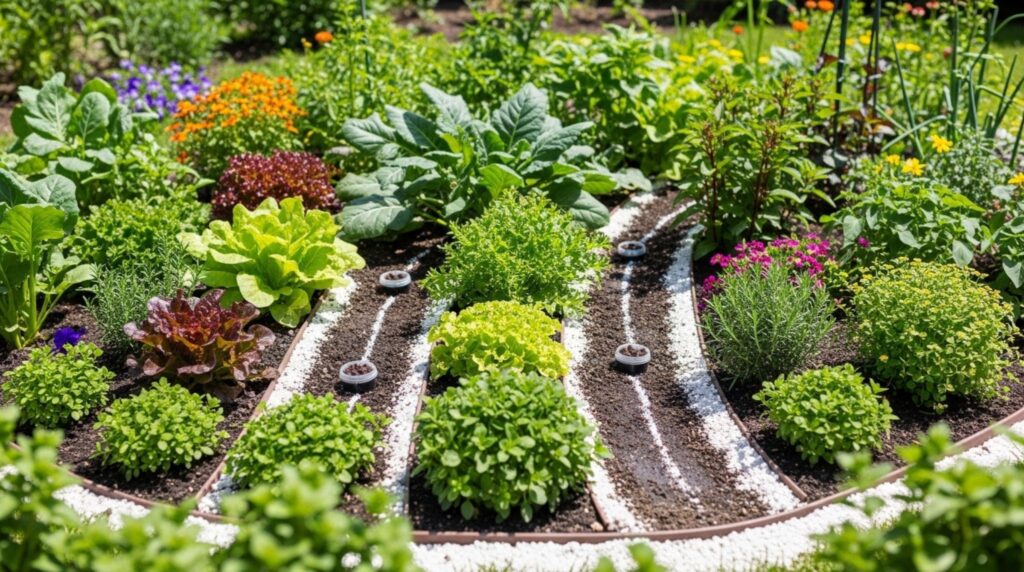
How to use it: Mix 1 teaspoon boric acid with 1 cup sugar in 1 cup warm water. Soak cotton balls in it and place them near active trails. Put them in a small container with tiny holes so ants can enter but rain can’t wash it away. Replace every 3-4 days.
Warning: Keep it away from kids and pets. Don’t make the mix too strong, ants will sense something is wrong and avoid it. One teaspoon per cup of sugar is enough. You’ll see more ants at first. That’s good, they found the bait and are taking it home. Give it two weeks.
- White Vinegar Spray
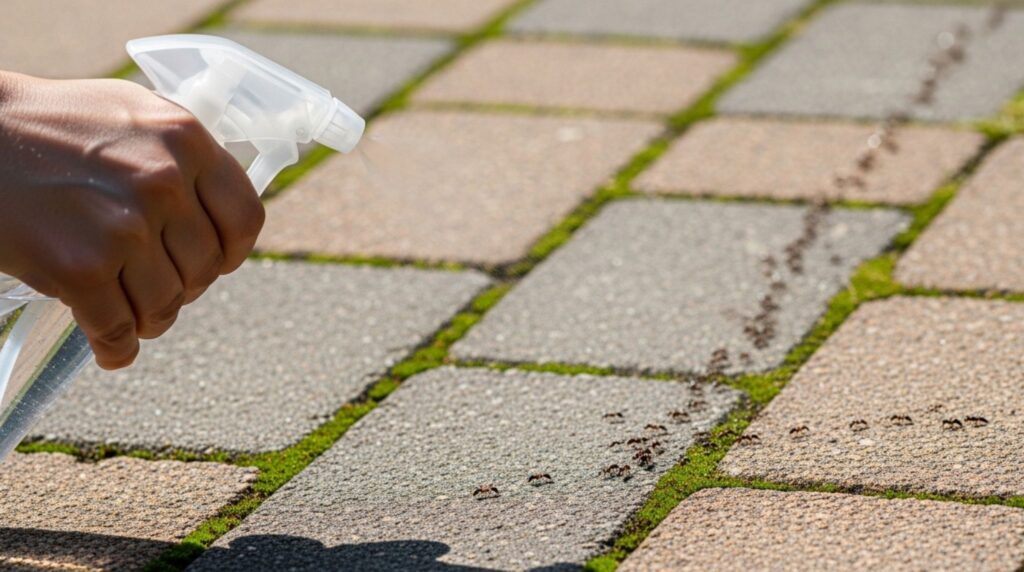
As per my Nani advice, I keep a spray bottle of this in my shed all summer. First thing I use when I spot a new trail.
Why it works: Vinegar destroys the chemical trail ants follow. Spray it on the trail and the ants behind it completely lose their path. Also kills ants on direct contact.
How to use it: Mix equal parts white vinegar and water. Spray on trails, around mound openings, and along garden borders. Repeat every few days or after rain.
Warning: Don’t spray on plant leaves or soil. It’s acidic and burns roots and leaves. Stick to hard surfaces like paths and paving.
- Cinnamon
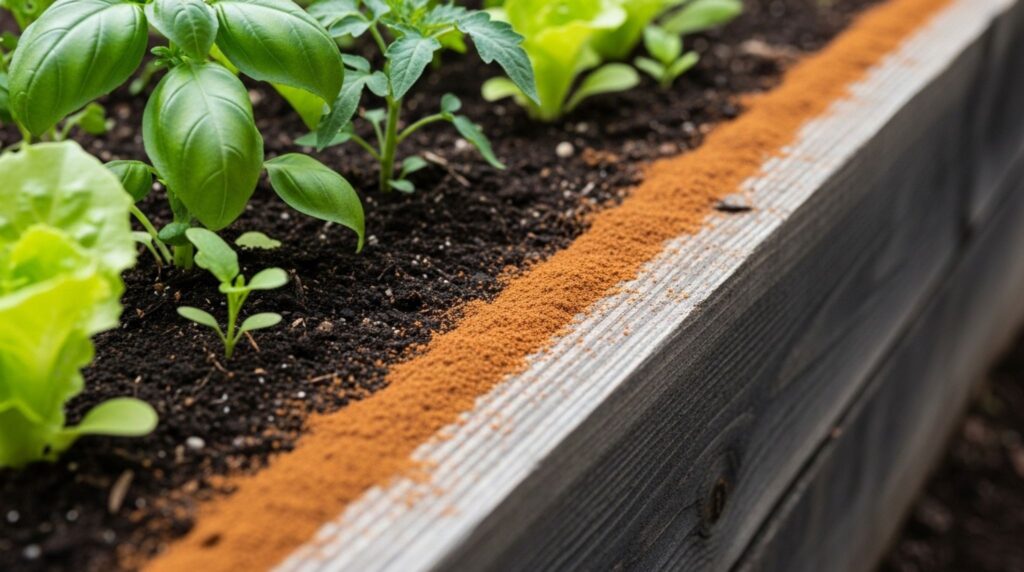
Cinnamon won’t kill a colony but keeps ants out of specific spots really well. I use it as a border around my vegetable beds.
Why it works: Ants navigate by scent. Cinnamon’s strong smell overwhelms their navigation completely. They avoid areas that smell heavily of it.
How to use it: Sprinkle ground cinnamon along trails and around garden beds. Reapply after rain. It is totally safe for kids and pets.
- Coffee Grounds
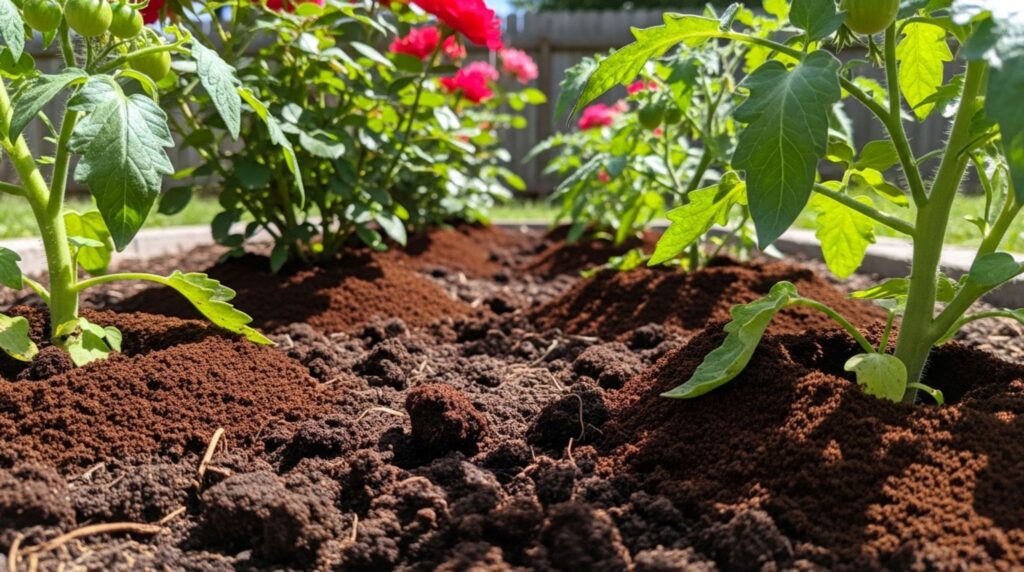
Every Sunday I scatter the week’s used coffee grounds around my garden borders. Two minutes, costs nothing. My grandmother always does this.
Why it works: Ants dislike both the smell and the texture of coffee grounds and avoid areas where they are scattered. They also slowly break down and add nitrogen to your soil.
How to use it: Scatter used grounds around plant bases and along garden borders. Refresh every week. Works especially well around tomatoes, roses, and blueberries.
- Neem Oil
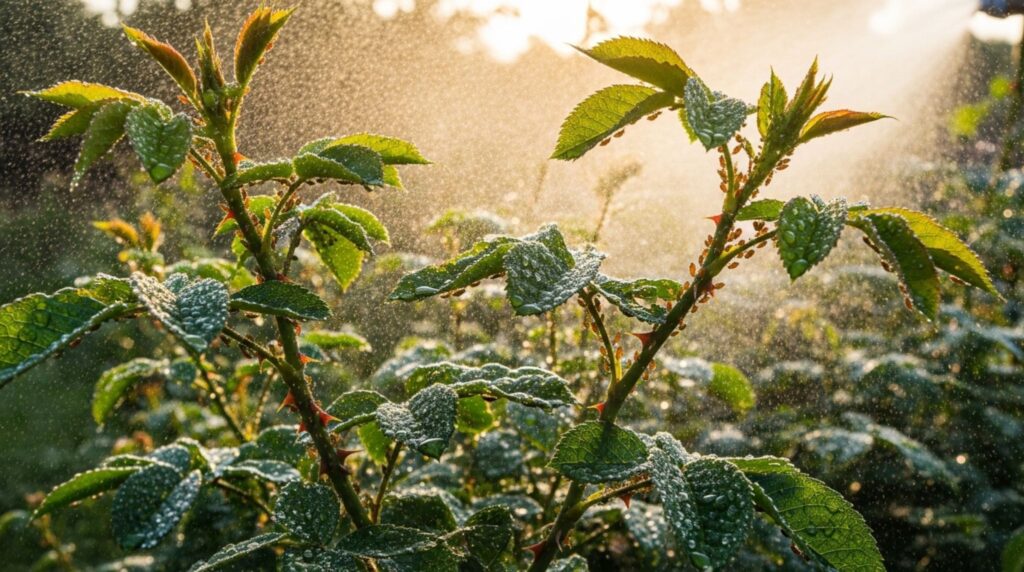
My grandmother is very fond of gardening. She grows a lot of vegetables in her kitchen garden, that is why she has a lot of remedies. This one fixes two problems at once – ants and aphids together.
Why it works: It kills aphids on your plants. No aphids means no honeydew. No honeydew means ants have no reason to be there. Cutting off the food source works better than anything else for plants with heavy ant activity. I spent two years fighting ants on my rose bushes. Nothing worked. Then I noticed the stems were covered in aphids. My grandmother suggested, I treat the aphids with neem oil and the ants disappeared from those roses in three weeks. I was treating the symptom the whole time.
How to use it: Mix 2 tablespoons neem oil with 1 tablespoon dish soap in a gallon of water. Spray on plant leaves and stems in early morning or evening not in direct afternoon sun.
Warning: Harmful to bees on direct contact. Don’t spray on open flowers when bees are active. Keep away from ponds. It’s toxic to fish.
Use These Together for Best Results
One method alone rarely solves everything. What actually works is layering a few together. Put out boric acid bait near the mound. Lay diatomaceous earth around garden beds. Spray vinegar on any active trails you see. Check plants for aphids and treat with neem oil if needed. You’re cutting off their food, blocking entry, and poisoning the colony all at the same time. That’s what gives lasting results.
Fire Ants — Handle Differently
Fire ants sting and some people react badly to them. Never disturb the mound with your hands. Don’t just pour water on it, they will relocate nearby. Use boric acid bait made for fire ants or get fire ant granules from a garden store. If they keep coming back despite everything, one professional treatment is worth it.
FAQ
Why do ants keep coming back after I spray them?
Sprays only kill what you see. The colony underground is untouched and just sends more workers out. Use boric acid bait to go after the source.
Is it okay to leave ants in the garden?
A few ants here and there are actually fine – they aerate soil and help break things down. The problem is large colonies near plant roots, aphid farming on your plants, or mounds spreading across your lawn.
How long does it take to get rid of them?
Boric acid bait takes about two weeks to collapse a colony. Barrier methods like DE and cinnamon work within a day or two. With a combined approach, most people see real results in 2-3 weeks.
Will these methods hurt my plants?
Food-grade DE, cinnamon, coffee grounds, and orange peel spray are all safe for soil and plants. Vinegar only goes on hard surfaces, never on soil or leaves. Neem oil is safe when properly diluted and applied at the right time.
What’s the best single method if I only want to try one thing?
Boric acid bait. It’s the only method that actually eliminates the colony instead of just chasing ants away.
Do ants actually damage plants?
Directly, not really. But the aphids they protect cause serious damage, wilting, yellowing, stunted growth. That’s where the real harm to your plants comes from.
Why are there suddenly so many ants after rain?
Heavy rain floods their underground tunnels so they come to the surface. It looks alarming but usually settles down within a day. Not a new infestation, just displacement.
Can I use these around the vegetables I’m going to eat?
Yes. Food-grade DE, cinnamon, coffee grounds, and citrus spray are all safe around edible plants. With neem oil, avoid spraying directly on parts you’ll harvest and give it a couple of days before picking.
Conclusion
Through this article, I have shared with you the remedies that I have personally tried and now you must have known how to get rid of ants in your yard or garden. Once you understand why they’re there and stop just spraying the ones you can see, everything gets easier. Pick two or three methods from this guide, stay consistent, and give it two to three weeks. That’s really all it takes.
Start with boric acid bait if there’s an active colony. Add a diatomaceous earth border around your beds. Check your plants for aphids. Done.
Most people quit after three or four days because they don’t see instant results. Don’t do that. Boric acid bait in particular needs time to work through the whole colony. The day you see fewer ants at the bait station is the day you know it’s working.
You can DM us for any questions related to this.