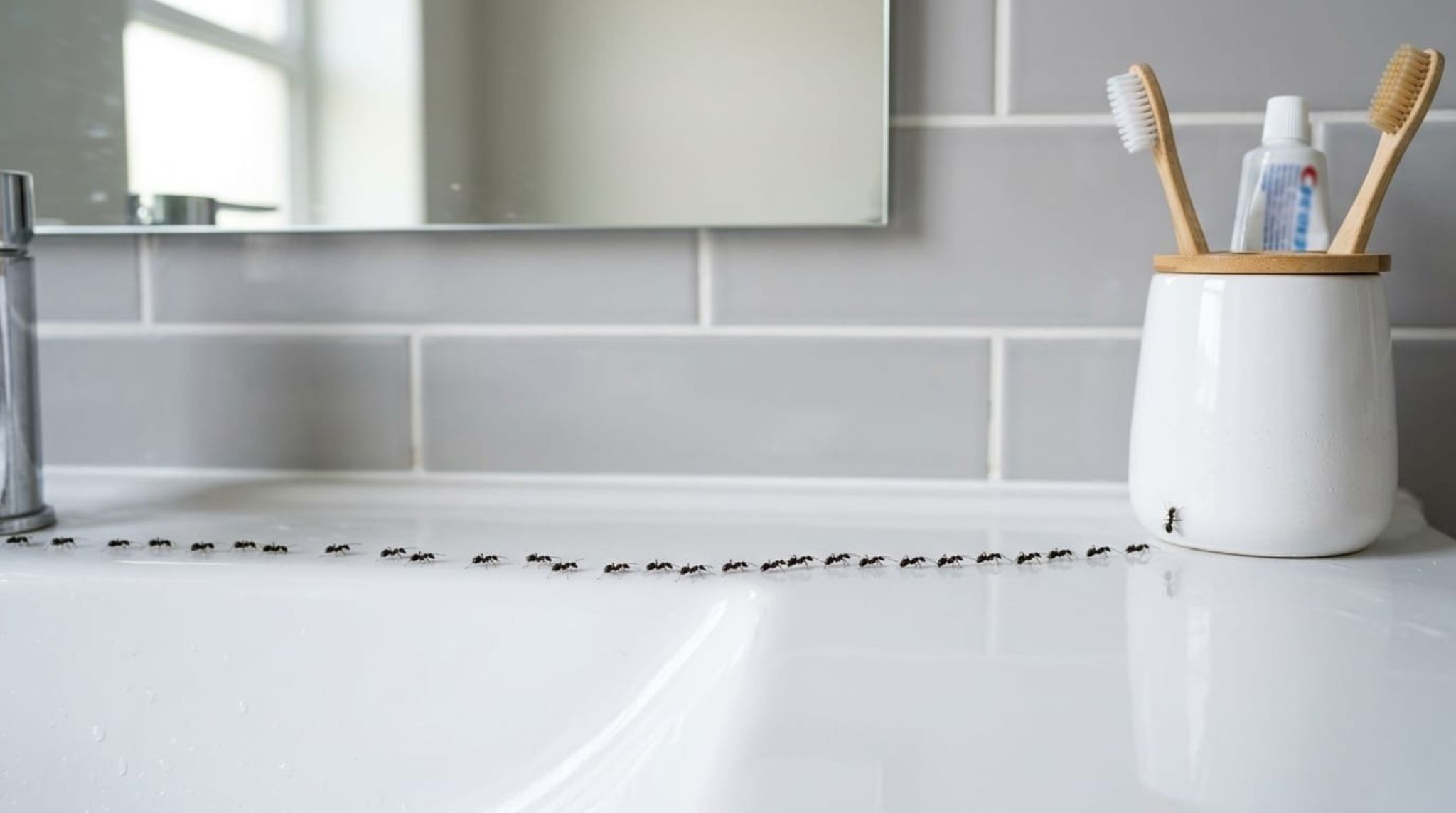
How to Get Rid of Ants in Bathroom: It is my routine to clean the bathroom thoroughly before taking a bath. My bathroom is always dry. But one day when I woke up in the morning and went to the bathroom, a line of tiny black ants started from the corner of the sink and went straight towards the toothbrush holder. I started thinking that there is no edible thing in the bathroom, yet not one or two but a whole regiment of worries is roaming in the bathroom.
I adopted many methods to get rid of this problem. But here I am going to share those effective remedies after using which there are no worries in my bathroom now. You must have faced this problem too. I’m going to provide you with a solution to this problem in this article. In this article, we’ll cover why ants come into the bathroom, which species are common, and most importantly, 10 effective methods to permanently remove them.
Why do ants come into the bathroom?
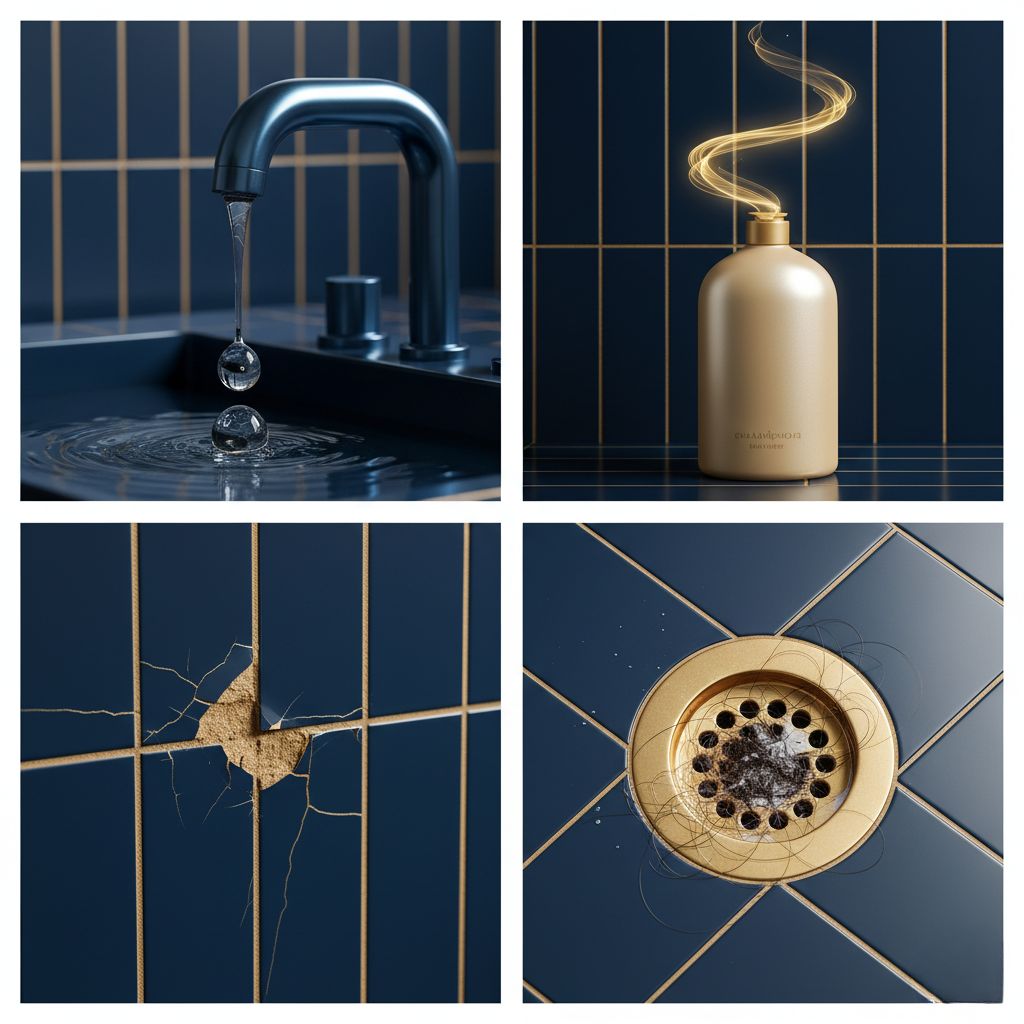
Just as we have some basic needs, ants also basically need three things: water, food, and shelter. Our bathroom fulfills all three needs, and that’s why they come there frequently. My elder sister once had such a large infestation that she thought there was a serious structural problem. Later, it turned out it was just a leaky pipe dripping from the wall. Now, I’m making some pointers to help you understand more clearly:
1. Moisture and Water Availability
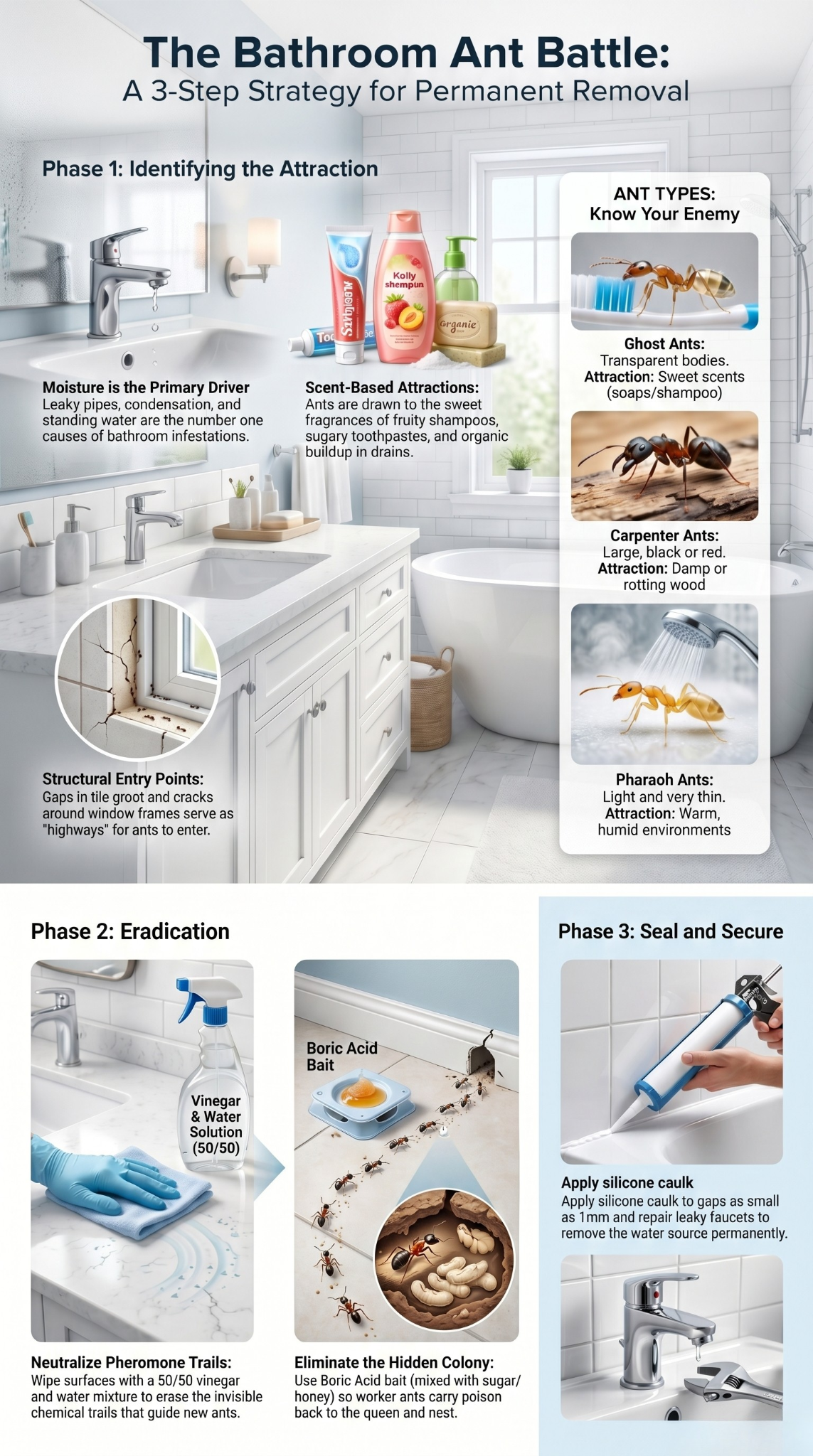
Ants are moisture-driven insects. The naturally damp environment of our bathrooms— post shower steam, wet tiles, and condensation on pipes are all open invitations for them. Even a single dripping faucet is enough to sustain and multiply an entire colony. Therefore, leaky pipes and standing water are the number one cause of ant infestations in bathrooms.
2. Fragrance of Soaps, Shampoos, and Toiletries
Ants have an extraordinary ability to sense smells. And you might be surprised to know that ants in the bathroom are happily attracted to the fragrance of your fruity shampoo, sweet-smelling body wash, or the sweetening agents of toothpaste. When I discovered this, I replaced the scented soap in my bathroom and started using the unscented version. This one change significantly reduced ant activity.
3. Tile Grout, Cracks, and Entry Points
If your bathroom has old tiles, the grout between them, gaps around pipe joints, and cracks near window frames are all like highways for ants. Once a single ant enters, it leaves behind pheromone trails that guide other ants. This is why their numbers increase rapidly after a single sighting.
4. Hair, Dead Skin, and Organic Matter
When we shower, our hair falls out, dead skin is shed, and soap residue accumulates—all of which become a food source for ants. Organic buildup near drains, dirt on bathroom mats, and tissues in the trash can also cause ants to flock to the bathroom. Regular cleaning dramatically reduces this problem.
What types of ants are found in the bathroom?
What types of ants are there? It’s important to identify which ants are in your bathroom, as this can lead to appropriate treatment. In India, the following ants are commonly found in bathrooms:
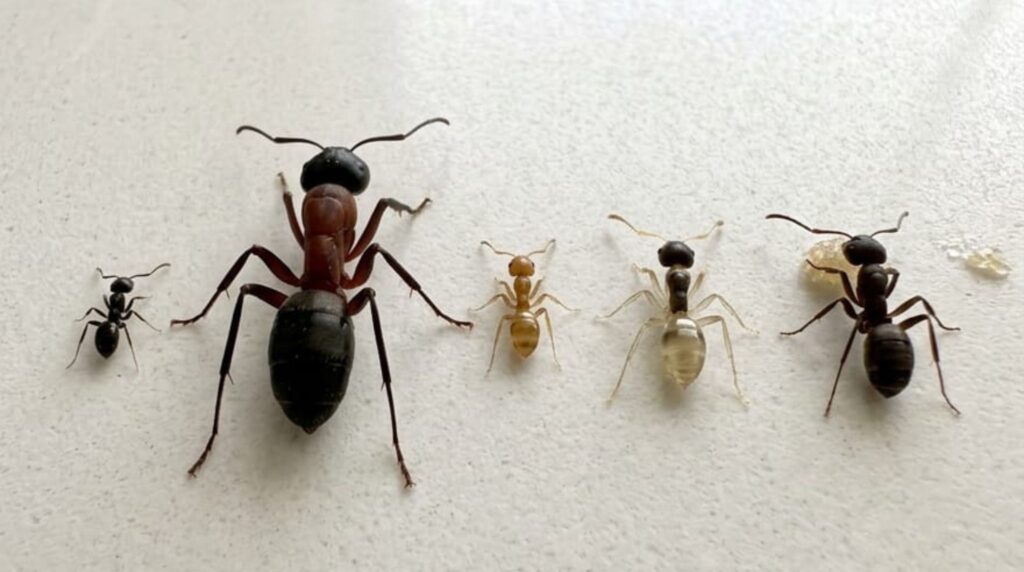
Little Black Ants – These are the most common. They are attracted to moisture. Although their lines are not large, their trails are very visible.
Carpenter Ants – These ants are large black or red ants. They nest in damp or rotting wood. If your bathroom has water damage, they can create structural problems.
Pharaoh Ants – These are light, thin ants. They are very small and prefer warm, humid environments. Killing them is a task because colonies split and create multiple nests.
Ghost Ants – These ants have almost transparent bodies. These are the ants attracted to sweet scents, which is what you’ll find near soaps and shampoos.
Sugar Ants / Odorous House Ants – These ants seek out sweet substances.
10 Effective Ways to Get Rid of Ants in the Bathroom
The methods below are a combination approach using just one method is less effective. My personal experience has been that a permanent solution requires using at least 3-4 methods simultaneously.
Method 1: Deep Cleaning
How it works – This is the first and most important step. Ants leave an invisible pheromone trail that guides other ants. If you simply kill the ants without cleaning the trail, new ants will follow.
What to do – Wipe down all bathroom surfaces—sink, tub, countertops, floor tiles—with an equal mixture of white vinegar and water. Vinegar effectively neutralizes pheromone trails. I always clean behind the toilet, under the sink, and around tile joints especially carefully. These are the spots where ants most commonly nest.
Method 2: Fix Leaky Pipes and Moisture
Why it Works – It’s important to close leaky pipes because even a slow drip can provide a sufficient water source for ants.
How to Use – In my own situation, I had a slow drip under the sink that I ignored for months. That drip was the root cause of the entire problem. Check all faucets, showerheads, and visible pipes. If you have a leaky pipe in your bathroom, repairing it is the most urgent step—all other methods won’t be fully effective until then.
Whenever you use the shower, run the bathroom fan or ensure ventilation afterward to quickly dissipate humidity. Exhaust fans are a simple but highly effective tool that disrupts the ants’ preferred damp environment.
Method 3: Seal Entry Points
Why it works – Sealing entry points blocks ants from entering the bathroom.
Ants are very tiny, so they can enter through gaps as small as 1mm. Carefully inspect cracks in tile grout, gaps around pipes, window frames, and openings near baseboards. Seal them all using silicone caulk or sealant. This is a one-time effort, but it’s the most effective long-term prevention.
Method 4: Vinegar Spray
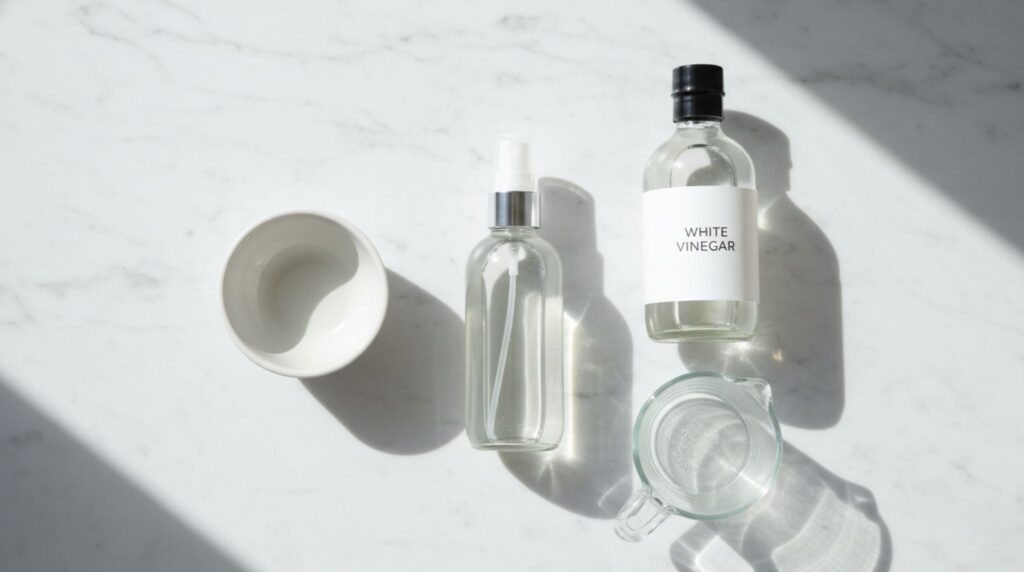
Why it works – Its smell disturbs ants.
How to use – White vinegar is a powerful natural ant repellent. I have also used it. It is very easy to make. Mix equal parts white vinegar and water in a spray bottle. Spray wherever you see ant activity – trails, entry points, floor corners. This destroys pheromone trails and produces a smell that ants dislike. Applying 2-3 times a day gives best results.
Warning – Avoid using vinegar on marble or natural stone surfaces – it can damage the surface.
Method 5: Boric Acid Ant Bait
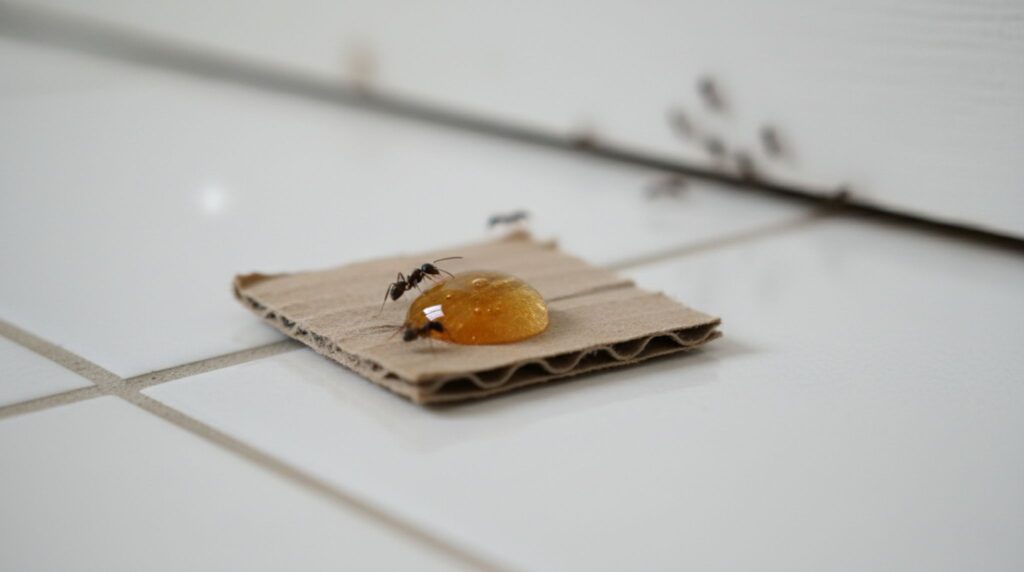
Why it works – The entire colony gets killed by consuming boric acid due to greed for sugar.
How to use – Whenever I used to see ants in the bathroom, I used to take a jug of warm water and pour it on them and the ants would die. But within a few hours, the ants would start coming to the bathroom again. Then I understood that killing only the visible ants is not the solution.
They have made a complete home and I will have to kill them all. I used boric acid bait. It is quite effective. To prepare it, mix boric acid powder in sugar solution or honey. Do not add too much boric acid otherwise the ants will avoid it before carrying it back. Place this mixture on small pieces of cardboard or bottle caps near ant trails.
Worker ants carry this bait into the nest and pass it on to the queen and other ants—the entire colony is wiped out. This process can take 1-2 weeks; be patient.
Warning – Boric acid is readily available and relatively safe, but kept out of reach of children and pets.
Method 6: Ant Bait Traps
Why it works – They are convenient, mess-free, and highly effective.
How to use – I have also used ready-made ant bait stations. They are very easy to use. HIT Ant Killer, Terro Liquid Ant Bait, and similar products. I place them near ant trails like under the sink, behind the toilet, or wherever you see activity. The ants carry the poison from the bait station back to the colony. 2-3 bait stations are enough for a standard bathroom.
Method 7: Essential Oils
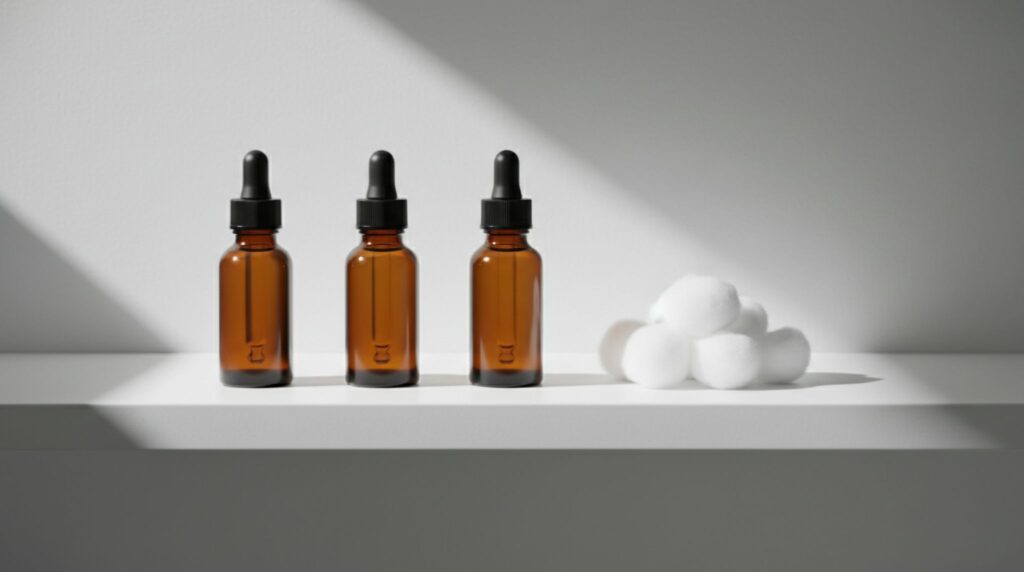
Why it works – Peppermint oil, tea tree oil, and clove oil are natural ant repellents.
How to use – This is my grandmother’s remedy. It provides a temporary repellent for ants. You can simply dilute it in water and spray it on, or dab it on cotton balls and place them near entry points. Peppermint oil is especially effective and also leaves the bathroom smelling fresh. This dual benefit makes it one of my favorite methods. A mixture of 15-20 drops of oil and 1 cup of water makes an effective spray.
Method 8: Diatomaceous Earth
Why it works – Food-grade diatomaceous earth (DE) is a powder that damages the outer skeleton of ants. They dehydrate and die.
How to use – It is completely natural and non-toxic to humans and pets. It is very easy to use. Sprinkle it near ant trails, along tile grout, and around entry points. Humidity makes it less effective, so use it in dry areas. This method is a bit slow but very thorough.
Method 9: Drain Cleaning
Why it works – Clogged drains, stagnant water and organic matter accumulate which is perfect food for ants. Maintaining a monthly drain cleaning routine is a smart prevention step.
How to use – For this I have poured a combination of baking soda and vinegar in the drain. It naturally deodorizes and clears organic buildup. Scrub the area around the drain regularly. Healthy, clear drains make the bathroom significantly less ant-friendly.
Method 10: Professional Pest Control
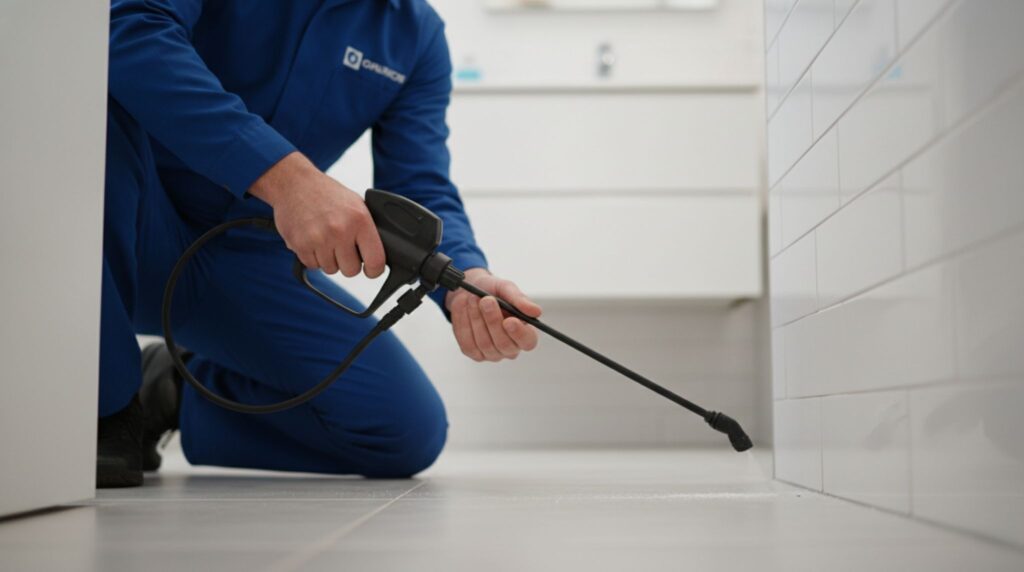
If the problem persists after trying all the methods above, you should call professional pest control. This is especially important if: ants are coming in through walls, the problem returns repeatedly, or carpenter ants are suspected, which can cause structural damage. Professionals locate the nest and provide targeted treatment.
Simple Daily Habits to Prevent Ants from Coming Back
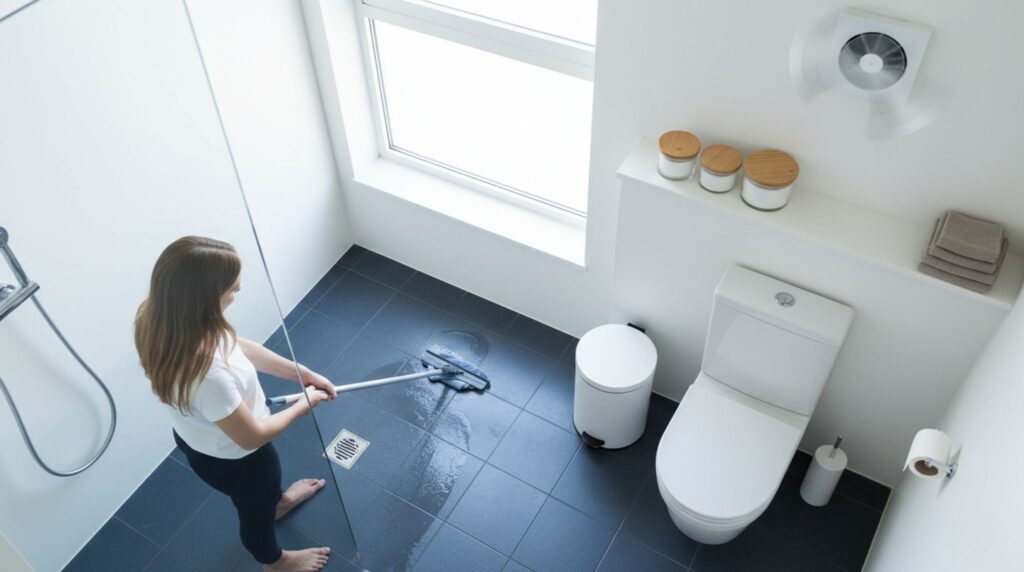
I’ve incorporated some simple daily habits into my routine. Now my bathroom remains permanently ant-free. You too can follow these habits:
- Wipe the bathroom floor and sink area dry after the shower.
- Keep toiletries in sealed containers or closed cabinets.
- Open shampoo bottles or soap bars are easy targets.
- Fix a tight-fitting lid on the bathroom trash can and empty it daily.
- Use the exhaust fan. Run it for at least 20-30 minutes after every shower.
- Schedule a deep clean monthly. Inspect the tile grout, drain, area behind the toilet, and under the sink.
- Inspect pipes and faucets regularly. If there is a slow drip, fix it immediately.
- Seal entry points before the monsoon season. This is when ant activity increases the most.
Don’t Make These Mistakes—What Most People Make
I have made these mistakes myself, and I advise you to avoid them.
- Don’t just kill the visible ants, eliminate their entire colony.
- Check entry points and completely seal them off.
- If you’ve used bait, don’t spray near them. This will drive the ants away.
- Don’t rely on just one method, use two to three methods at once.
- As long as there are leaky pipes or excess humidity, ants will keep coming back. This is the number one root cause that people overlook.
- It is wrong to forget prevention after infestation.
FAQ
Why are there more ants in the bathroom at night?
Ants are nocturnal—they forage more actively at night, when disturbances are less. Tracking them at night is actually helpful for finding entry points.
Are ants in the bathroom harmful to health?
Most bathroom ants are not directly harmful, but they can carry bacteria onto surfaces—especially near toiletries or toothbrushes. Pharaoh ants can spread bacteria. Carpenter ants pose a risk of structural damage.
Why are there more ants in the bathroom during the monsoon?
Rain disturbs outdoor nests—ants seek indoor spaces for shelter. And bathrooms are already more humid during the monsoon, creating an ideal environment for them. Taking preventative measures before the monsoon is a smart move.
Vinegar is not working—what should I do?
Vinegar only masks pheromone trails—it doesn’t kill the colony. If ants keep coming back, use boric acid bait, which eliminates the colony from the root. Don’t forget to seal the entry points as well.
How long will it take to resolve the problem?
Vinegar and cleaning should produce visible improvement within 1-2 days. Complete colony elimination with boric acid baits takes 1-2 weeks. Long-term results are usually clearly visible within 2-3 weeks after sealing entry points.
Conclusion
In this article, I’ve shared methods I’ve personally used. When I first encountered an ant problem in my bathroom, I tried using a spray bottle but it didn’t work. The real solution came when I realized it’s a multi-step process. First, fix the moisture, then clean the pheromone trails, seal the entry points, and then use bait to eliminate the colony. Today, my bathroom has been ant-free for months. If you have any questions, please ask us directly.