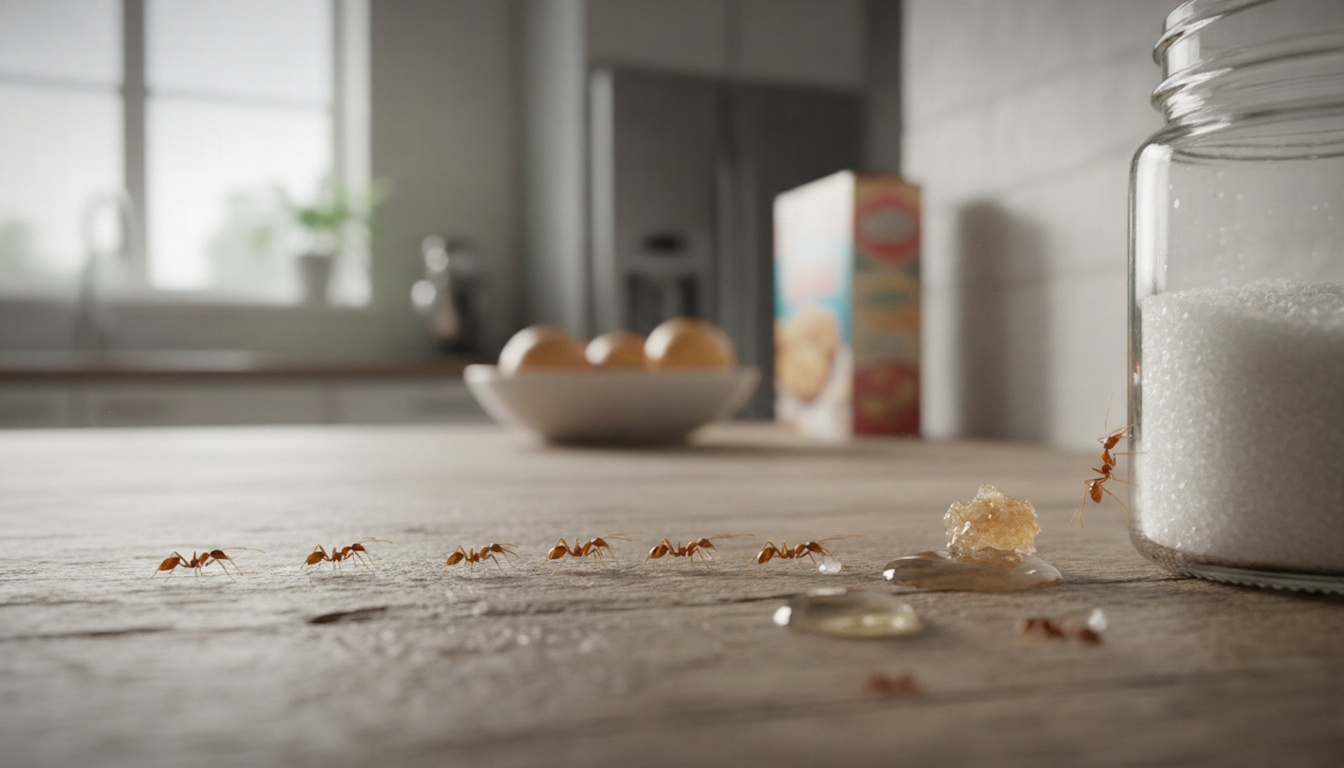
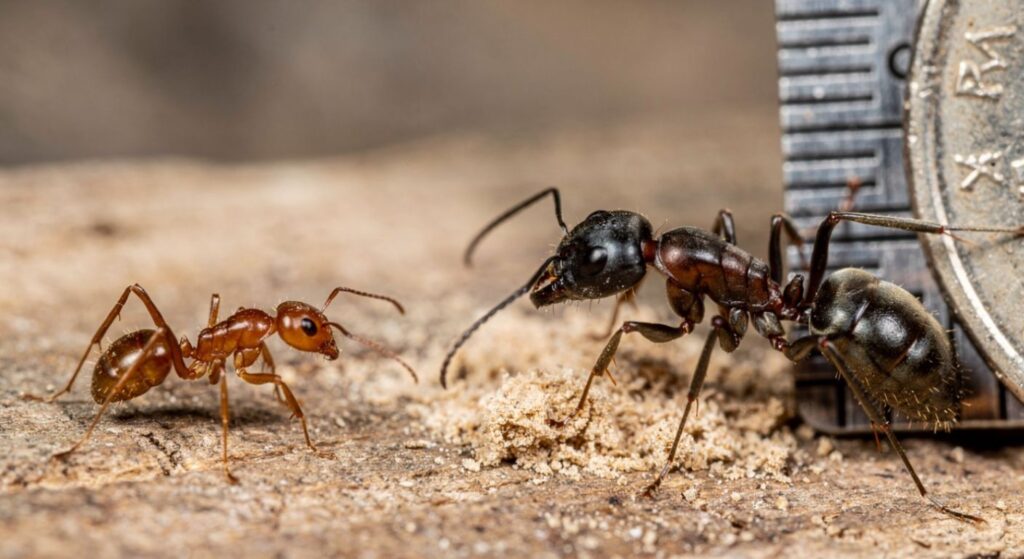
Last month, one day I wiped down my kitchen counters at night. Neat and clean, very spotless. But the next morning, a line of tiny ants is streaming from behind the backsplash toward a single crumb near the toaster. I squish a few, spray some cleaner, and an hour later ants are back. Are you facing the same problem? So you should know that the problem here is not only yours but many people are facing this problem. That is exactly how sugar ants operate.
This guide we are going to cover why sugar ants keep coming back, what species are actually in your home, and the exact steps to eliminate them permanently without making the mistake that turns one colony into five. So let’s start –
Quick Answer – How to Get Rid of Sugar Ants
Sugar ants are eliminated using liquid or gel baits. Place these baits directly on active trails, but remember to never contact sprays. Worker ants carry the slow-acting bait back to the colony and queen. While using the bait make sure to remove all food and moisture sources and sealing entry points for permanent results. Most infestations clear within 3 to 14 days.
The single most important thing to understand is that sugar ants live in colonies. Killing the workers you see on your counter does nothing if the queen and thousands of colony mates are still alive somewhere in your walls, under your floor, or just outside your home. Any treatment that doesn’t reach the colony is temporary at best.
What Are Sugar Ants? (sugar ants are Not What You Think)
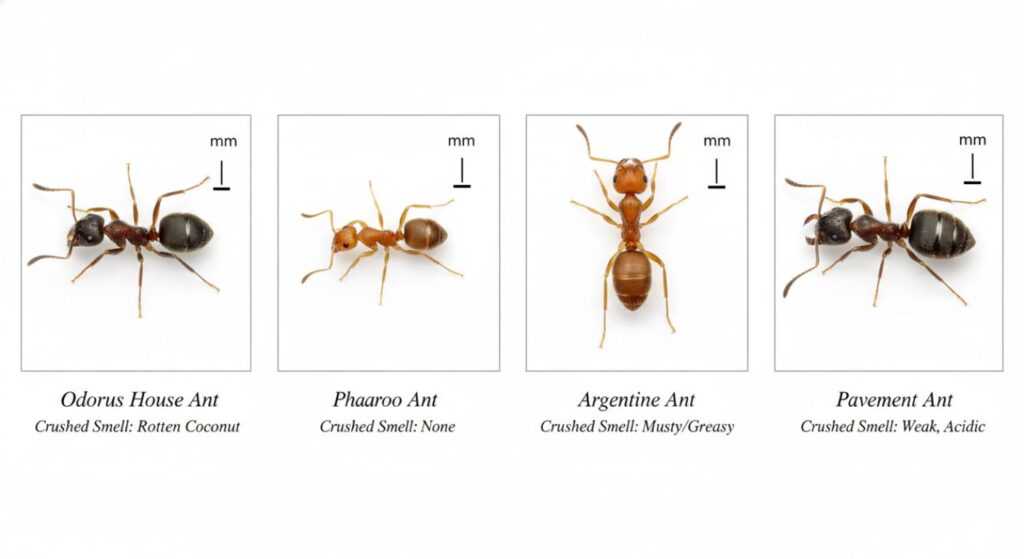
Sugar ants are not a single species. In the United States, the term “sugar ant” refers to a variety of ant species that prefer sweets. Some common house ants include odorous house ants, pharaoh ants, Argentine ants, and pavement ants. Identifying the correct species is essential for proper treatment.
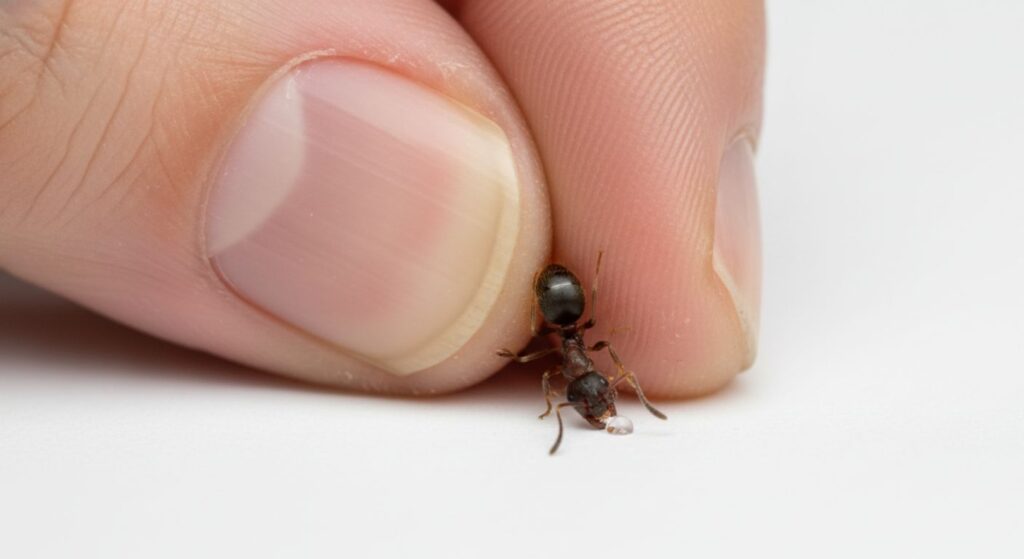
The Crush Test: My Nani told me a very easy method to identify sugar ants. Catch one ant and crush it between your fingers. If it smells like rotten coconut or blue cheese, you have Odorous House Ants – by far the most common ‘sugar ant’ in U.S. homes. No smell? Check color and size against the table above.
Why Do You Have Sugar Ants?
Sugar ants enter homes to find basic requirements like food, water, and shelter. Loose sugar, crumbs, sticky residue, and leaking pipes easily attract sugar ants. Sugar ants don’t need a lot of space to get inside, and can enter through cracks as small as 1 mm. These ants leave behind an invisible pheromone trail that leads thousands of colony mates to the same source.
I used to think my house was absolutely clean, but why are sugar ants still coming? If you’re feeling this way too, let me tell you that sugar ants don’t need dirt. A thin layer of dried juice on the counter, a sticky spot under a honey jar, or a dripping faucet under the sink is enough to draw sugar ants in. Sugar ants aren’t judging the cleanliness of your home. Sugar ants follow chemistry.
Every sugar ant infestation starts with a scout, a single ant that wanders into your home, finds something worth reporting, and lays a pheromone trail on the way back to the colony. Within hours, that invisible chemical highway can have hundreds of workers marching the same route. Understanding the cause helps you eliminate the attractant and stop the cycle.
Cause
What Happens
Fix
Sugar / food residue on counters
Attracts foraging scouts immediately
Wipe surfaces with soap and water daily
Sticky spills (honey, syrup, soda)
Creates a persistent pheromone magnet
Clean with soapy water — dry wipes miss the residue
Open food packaging (cereal, flour)
Sustained food source for the whole colony
Store in airtight containers
Pet food bowls left out
Major attractant, especially wet food
Pick up bowls after feeding; clean the area
Leaking pipes / damp areas
Moisture source — ants need water too
Fix leaks; dry under-sink areas completely
Cracks in foundation or baseboards
Entry points for scouts
Seal with silicone caulk
Outdoor colonies near foundation
Parent colony sends foragers inside
Treat the perimeter; remove mulch contact
Signs of a Sugar Ant Infestation
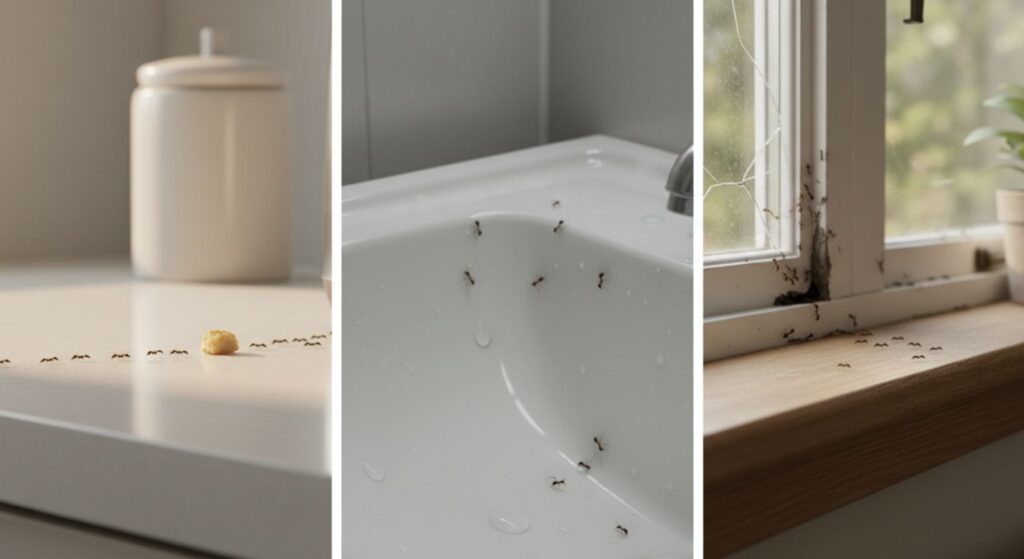
The most obvious sign of sugar ants is a visible trail of small ants moving in a line along countertops, baseboards, or walls. Sugar ant trails follow pheromone paths and lead from an entry point directly to a food or moisture source.
One day I saw one or two ants on the counter, and I ignored them, thinking it was no big deal. When I woke up the next morning to 50 ants roaming the counter, running in a perfect line from the window frame to the fruit bowl. Then I researched and found that the first two were scout and sugar ants, called backup. Scout ants also call the other ants.
Ant Trails (Lines of Ants)
Lines along the edges of counters, walls, and baseboards indicate an infestation is already present. That line is a pheromone trail. It’s an invisible chemical highway. If you see sugar ants coming together, it means the colony has already arrived at that food source and hundreds more are on their way.
Scouts (Lone Ants Wandering)
You may have seen some solitary ants moving randomly, stopping, turning, and changing direction. These ants are scouts in search mode. The sugar ants haven’t found a food source yet. Seeing scouts is an early warning sign. If the sugar ants find a food source, you’ll see a line forming within a few hours.
Ants Near Water Sources
Clusters of ants around sinks, dishwashers, pet water bowls, or bathroom faucets signal that moisture is the primary attractant. This is especially common in dry summer months or in kitchens with slow leaks under the cabinet.
Ants in Pantry or Cabinets
Finding ants inside open cereal boxes, around the lip of a honey jar, or in the bottom of a sugar bag means a food source is actively sustaining the colony. This requires immediate containment to seal everything in airtight containers before placing bait.
How to Get Rid of Sugar Ants 5-Step Protocol
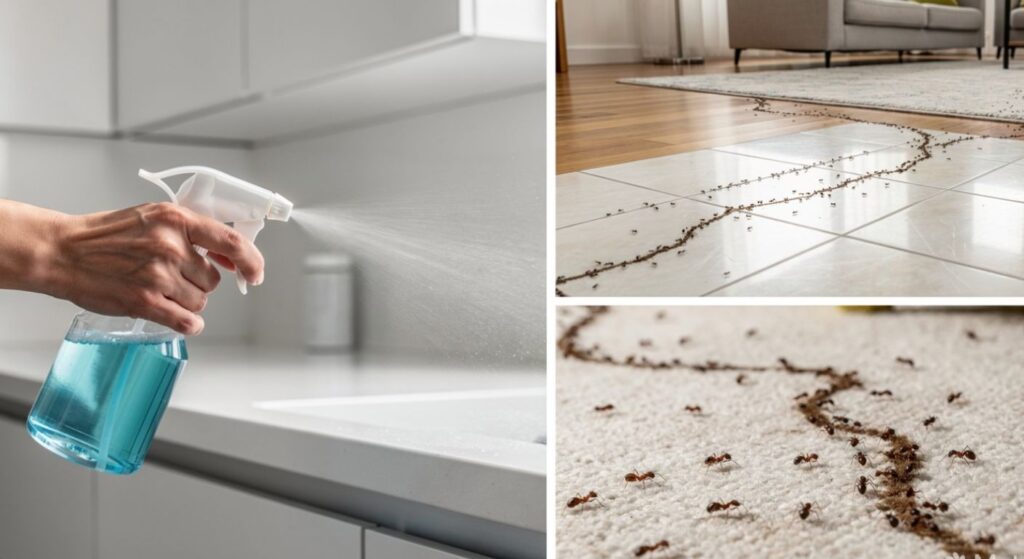
The most effective way to eliminate sugar ants is placing liquid bait on active trails, removing all competing food sources, and sealing entry points after the colony dies. Contact sprays must be avoided because spraying sugar ants causes colonies to ‘bud’ splitting into multiple new satellite colonies that spread throughout the home.
When I identified sugar ants, the first thing I did was pick up some red and spray them all over the counter. You absolutely mustn’t do that. This single step is the most common reason sugar ant problems get out of control. What actually works starts with doing the opposite of what seems natural: let the ants eat.
Stop killing the ants you see
Do NOT spray, squish, or wipe the trail. Worker ants are your delivery system. Sugar ants need to stay alive long enough to carry bait back to the colony and queen.
You will feel this step is wrong, but it is the most critical one in the entire process.
Place liquid bait directly on active trails
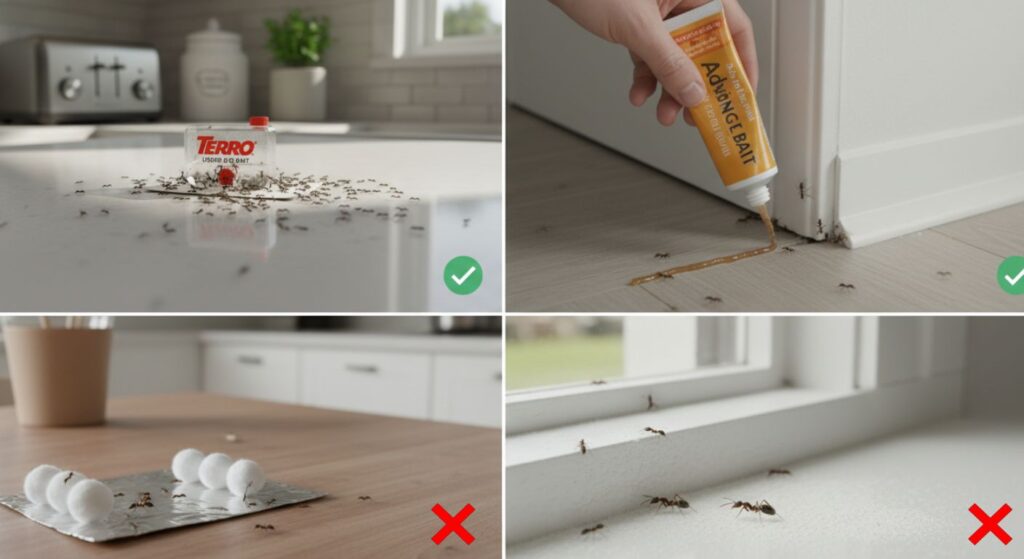
Use sweet liquid bait like Terro Liquid Ant Baits (borax-based) or Advion Ant Bait Gel (indoxacarb). Position bait on the trail itself, not just near it. Ants must walk through it. It is easy to make.
Dissolve 3 parts sugar and 1 part borax in warm water, soak cotton balls, and place on a jar lid.
Seeing more ants at the bait station is a good sign, it means the trail has found the bait and workers are taking it home.
Remove all competing food sources
During the baiting phase, your bait needs to be the most attractive food in the house.
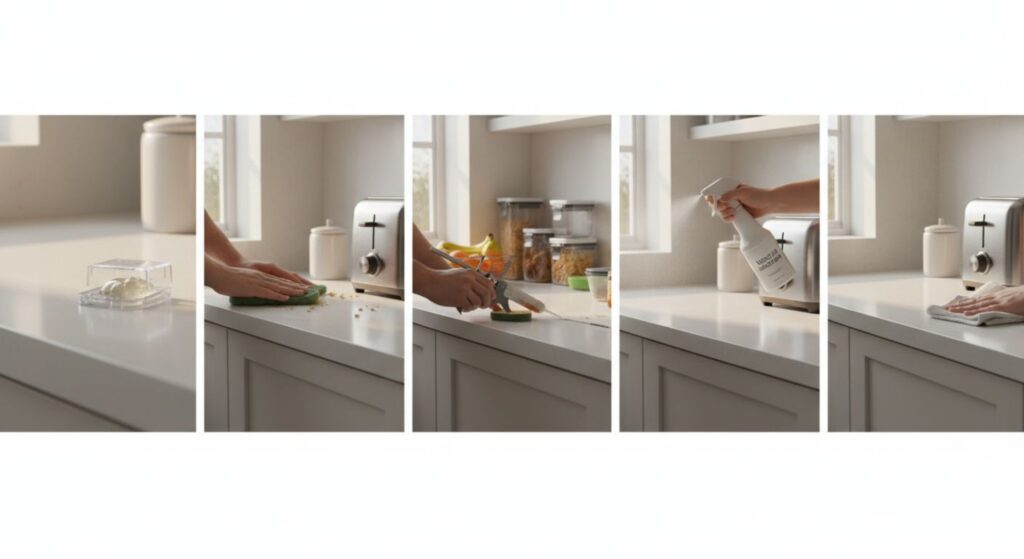
Wipe counters with soapy water. Don’t use vinegar, vinegar disrupts trails you need active.
Seal all food in airtight containers, take out the trash, clean pet bowls, and secure compost.
If ants can find something tastier than your bait, sugar ants will ignore the bait entirely.
Seal entry points but only after activity stops
When you notice that activity is stopped then caulk cracks around windows, doors, baseboards, and pipe penetrations.
Timing matters here. If you seal the entry point before the colony dies, live ants can become trapped inside your walls. Sugar ants can rebuild their nests. So wait until you haven’t seen ants for 3 to 5 consecutive days.
Wipe pheromone trails with vinegar once ants are gone.
Once no ants have been seen for several days, clean all former trail surfaces with a mixture of white vinegar and water solution. Add equal proportions of water and vinegar.
This erases the chemical map. Even after the entire colony is dead, that invisible trail remains on your surfaces. Without erasing it, new scouts from outside will follow the old path right back in.
Best Sugar Ant Treatments Product Comparison
Liquid baits which contain borax or indoxacarb are the most effective sugar ant treatments. Worker ants carry the slow-acting poison back to the colony. If you use spray and essential oils along with bait then this will not eliminate sugar ant colonies. It can cause colonies to bud and spread.
Treatment
Effectiveness
Kills Colony?
Best For
Product
Liquid bait
High
Yes
Colony elimination
Terro Liquid Ant Baits
Gel bait
High
Yes
Targeted trail placement
Advion Ant Bait Gel
DIY borax bait
Medium–High
Yes
Budget / natural option
Homemade (borax + sugar)
Diatomaceous earth
Medium
No
Supplemental barrier
Food-grade DE
Contact spray
Low
No — causes budding
NOT recommended
Avoid for sugar ants
Essential oils
Low
No
Temporary deterrent only
Peppermint, citrus
Vinegar spray
Low
No
Trail erasure (post-treatment)
White vinegar
Decision Tree:
This guide will help you understand which product to use for which condition :-
Standard kitchen infestation → Terro Liquid Baits on trails + sanitation
Persistent or recurring problem → Advion Gel + perimeter treatment
Budget or natural preference → DIY borax bait in enclosed stations
Pets or children present → Enclosed bait stations placed behind appliances
Pharaoh ants suspected → Call a professional; DIY consistently fails with ants species
Natural Remedies for Sugar Ants (An Honest Assessment)
DIY borax bait is the only effective and natural way to eliminate a sugar ant colony. Some methods, such as vinegar, cinnamon, essential oils, and coffee grounds, temporarily deter ants. They don’t reach the queens. Using repellent remedies near active bait stations reduces the bait’s effectiveness.
Some websites claim that cinnamon and peppermint oil will ‘kill ants naturally,’ but the truth is, these baits simply cause ants to avoid the area and find another way because ants don’t like their smell. The only natural ingredient that actually kills a colony is borax, and you can easily find it at the grocery store for about 100-200 rupees.
Borax Bait (The Only Natural Option That Works)
I’ve used it myself. This solution is easy to make.
Dissolve sugar and borax in a 3:1 ratio in warm water. Soak cotton balls in the solution and place them on the lid of a jar directly over active sugar ant paths.
The sugar attracts the worker ants. The borax acts slowly enough that the ants carry it back to the colony before killing the sugar ants.
Expect to see a significant reduction in 3 to 7 days.
Vinegar (Trail Eraser Not a Killer)
If you want a quick fix of this problem this method will be helpful for you –
A 50/50 solution of white vinegar and water is excellent for erasing pheromone trails after the colony is eliminated.
It does not kill ants, harm nests, or deter scouts from creating new trails.
Use it as a post-treatment step, not a primary treatment.
Essential Oils (Temporary Deterrent Only)
This is also a temporary solution but it’s effective for quick fix :-
Peppermint, tea tree, and citrus oils suppress pheromone signals, temporarily blocking ant paths.
Ants readily reroute around treated surfaces.
But always remember to use these baits near active bait stations, as using them may hinder bait intake and prolong the infestation.
Cinnamon and Coffee Grounds (Minimal Effect)
This is my Dadi’s remedy, which is effective but temporary:-
These block the sense of smell. The ants change their path but then resume their search for food a few hours later.
Neither of these has the potential to destroy the colony.
Diatomaceous Earth (Useful as a Supplement)
Food-grade diatomaceous earth damages ant exoskeletons on contact and causes dehydration.
It works only in dry areas like moisture renders it ineffective. Apply along baseboards and behind large appliances as a supplemental barrier.
It is not a primary treatment. Keep it away from bait stations.
Sugar Ants by Location – Why It Matters
Sugar ants appear in different locations for different reasons. Kitchen sugar ants are primarily foraging for food. Bathroom sugar ants are seeking moisture. Understanding the location helps identify the attractant and target treatment correctly.
Has this question ever crossed your mind: ants in the kitchen understand their food, but ants in the bathroom? You’re right. Sugar ants go into the bathroom not for food, but for water. They have different rooms, different underlying causes, and different solutions.
Sugar Ants in the Kitchen
Kitchen ants are almost always attracted to food. Check under the toaster, behind the coffee maker, near pantry shelves, and inside cabinets.
If you see ants, place bait directly in their path, remove all food, and clean sticky residue from jars and appliance surfaces.
Sugar Ants in the Bathroom
Ants in your bathroom are a sign of a moisture problem. Dripping faucets, standing water from the shower, leaking pipe connections, and wet towels on the floor commonly attract ants.
To get rid of them, fix any leaks, improve ventilation, dry surfaces daily, and place bait near the area where ants appear, usually under the sink or near baseboards.
Sugar Ants on Windowsills
Window entry points are a very easy route for ants to enter and exit the house.
To eliminate this route, place bait along the route, then seal the entry point with silicone caulk after the colony is gone, not before.
Sugar Ants in Walls
Wall ants usually mean that a colony of stinkhorn ants or pharaoh ants has nested in a wall cavity.
This is one of the most difficult situations because direct treatment isn’t possible without professional tools.
Place bait on every visible entry and exit hole. Never spray insecticide directly onto the wall, doing so will cause immediate regrowth.
Why Spraying Sugar Ants Makes It Worse
Spraying sugar ants with repellent insecticide causes a survival response called ‘budding.’ When a colony senses a chemical threat, queens separate and establish new satellite colonies in different locations throughout the home and turning one infestation into several.
You sprayed the ants along the kitchen counter. Sugar ants disappeared for two days. Then sugar ants turned up in the bathroom, the bedroom, and the laundry room. You didn’t solve the problem, you multiplied it. Here’s why that happens every time.
Contact sprays kill the workers on the trail but don’t reach the nest.
The colony senses the chemical threat, surviving queens panic, split from the primary colony, and relocate with a group of workers.
Within days, what was one infestation becomes three or five, each in a new location, each requiring fresh treatment.
Pharaoh ants are especially prone to this response, a single spray application near a Pharaoh ant colony can produce up to five daughter colonies.
The rule is simple: never spray near active bait stations. Never spray ant trails you are currently baiting. If spraying is needed, use a non-repellent insecticide such as Termidor or a product containing fipronil, which ants cannot detect and pass on contact.
How Long Does It Take to Get Rid of Sugar Ants?
Sugar ant colonies are typically eliminated within 3 to 14 days using liquid bait. Small infestations with a single colony may clear in 3 to 5 days. Larger infestations or colonies that have budded may take 2 to 4 weeks.
Timeline expectations depend on colony size, the number of active trails, and whether the infestation has spread to multiple locations. More bait points and stricter sanitation shorten the timeline. Patience matters and resist the urge to check whether bait is working by spraying or cleaning the trail.
Situation
Bait Method
Professional Treatment
Small (single trail, one entry point)
3–5 days
1–3 days
Medium (multiple trails, kitchen + bathroom)
7–14 days
5–7 days
Large / budded colony
2–4 weeks
1–2 weeks
Mistakes That Make Sugar Ant Problems Worse
The most common mistake is spraying contact insecticides directly on sugar ants. This causes the colony to budding and spreads the infection. The second most common mistake is removing the bait prematurely when more ants appear. This is a mistake, assuming the ants have taken the bait, but this only worsens the problem.
This happened to me, I put out bait, and suddenly there are more ants than before. So I throw the bait away and spray everything. That’s the worst possible sequence and almost everyone does it at least once. Here’s what’s actually happening: more ants at the bait station means it’s working. Sugar ants find the bait and recruit colony members to follow the same trail toward the food source. That’s exactly what you want.
Spraying ants before or during baiting – triggers budding and spreads colonies into new rooms.
Removing bait when you see more ants – this activity is confirmation that the bait is being taken back to the colony. Leave it.
Using only vinegar or essential oils – masks trails temporarily, leaving the colony completely intact.
Not removing competing food – ants will ignore bait if anything tastier is available nearby, so remove competing food items.
Sealing entry points too early – traps living ants inside walls, forcing sugar ants to nest deeper in the structure.
Cleaning ant trails – while actively baiting destroys the pheromone path ants use to find your bait station.
Pet and Child Safety
Sugar ant baits containing borax are toxic if ingested by pets or children in large quantities. All bait stations should be enclosed and placed in areas inaccessible to pets and children, such as behind appliances, inside cabinets, or under sinks.
Borax is a low-toxicity ingredient at the concentrations used in ant bait far lower than in laundry products, but it should still be kept out of reach of pets and young children. The good news is that enclosed commercial bait stations, such as the Terro T300, limit access effectively while still allowing ants through the small entry points.
Use enclosed bait stations rather than open cotton balls if pets or children are present.
Position stations behind the refrigerator, under the stove, and inside cabinets with child locks.
DIY borax bait: place inside a sealed container with ant-sized entry holes cut into the sides.
Wash hands after handling any bait product.
If a pet ingests bait, contact a veterinarian borax toxicity is dose-dependent.
When to Call a Professional Exterminator
Call a professional exterminator if sugar ant baiting has not reduced activity after 2 to 3 weeks, if the infestation involves Pharaoh ants, or if colonies have budded into multiple locations throughout the home.
You’ve been baiting for three weeks, fixed every leak, cleaned everything and sugar ants are still coming. Or sugar ants disappeared from the kitchen and showed up in three new rooms. At this point, you are likely dealing with budded colonies or Pharaoh ants, and a professional with commercial-grade non-repellent products will resolve it significantly faster.
Contact a pest control professional if:
Baiting shows no meaningful reduction in activity after 2 to 3 weeks.
Ants appear in new rooms after treatment begins. It’s a sign of budding.
The ants are very small, yellowish, and found near electrical outlets, a strong indicator of Pharaoh ants.
Infestations recur every season despite consistent prevention efforts.
The property is an apartment or condo with shared walls, the colony may be in a neighboring unit.
How to Prevent Sugar Ants Permanently
Sugar ant prevention requires eliminating food and moisture attractants, sealing all exterior entry points, and erasing pheromone trails. A home without exposed food, standing water, or unsealed gaps gives sugar ants no reason to enter.
Most sugar ant infestations are repeat visitors to the same trails, the same entry points, the same attractants. Permanent prevention means eliminating all three. Run through this checklist after any infestation and maintain the habits monthly.
Wipe counters and stovetops daily with soapy water.
Store sugar, honey, cereal, and flour in airtight containers.
Rinse dishes immediately never leave sugar ants in the sink overnight.
Pick up pet food bowls after every feeding and clean the surrounding area.
Take out trash daily and use bins with tight-fitting lids.
Fix all water leaks in the kitchen, bathroom, and laundry area.
Dry under-sink areas completely after any moisture exposure.
Caulk cracks around windows, doors, baseboards, and pipe entries with silicone caulk.
Clean sticky residue from jars, bottles, and appliance surfaces weekly.
Replace exterior mulch touching the foundation with gravel to reduce nesting habitat.
Trim plants and branches away from exterior walls ants use sugar ants as bridges.
Wipe former trail areas with a vinegar solution monthly to erase any residual pheromone traces.
Sugar Ants vs. Carpenter Ants – Know the Difference
Sugar ants are small, seek food and moisture, and cause no structural damage. Carpenter ants are large, excavate galleries inside wood, and can compromise structural integrity. Sugar ants are a nuisance pest, carpenter ants are a structural pest that’s why it requiring different treatment.
Feature
Sugar Ants
Carpenter Ants
Size
1/16 – 1/8 inch (tiny)
1/4 – 1/2 inch (large)
Color
Brown, black, or yellow
Black or reddish-brown
Structural Damage
None — nuisance only
Yes — wood galleries
Nesting Location
Wall voids, soil, under sinks
Inside moist or decaying wood
Primary Attractant
Sugar, sweets, moisture
Moisture-damaged wood
Key Sign
Trails on counters and sinks
Sawdust piles (frass) near wood
Best Treatment
Liquid bait + sanitation
Bait + direct nest treatment
Quick Rule: If the ants are tiny and near food or water → sugar ants. If the ants are large and near wood, sawdust, or a structural beam → carpenter ants. The treatments are different, so the ID matters.
Permanent elimination requires killing the queen, not just the visible worker ants. Place liquid bait like Terro or a DIY borax solution on active trails, remove all competing food sources so ants focus on the bait, and seal entry points after the colony is dead. The process takes 3 to 14 days in most cases.
Why do I suddenly have sugar ants?
Sugar ants appear suddenly when scouts find a food or moisture source and recruit the colony to follow. A sticky spill, an open sugar bag, or a dripping faucet can trigger an overnight invasion. Seasonal weather changes especially heat, drought, or cold also push outdoor colonies to forage indoors.
Do sugar ants bite?
Most common sugar ant species do not bite humans. Stinking house ants and Argentine ants are not actually harmful to humans. Pharaoh ants have functional jaws but rarely bite. Sugar ants are a nuisance but do not pose a health or safety threat.
What attracts sugar ants to my house?
Sugar ants are attracted to any exposed food residue, sugary spills, open packaging, pet food, standing water, leaking pipes, and accessible entry points. Even a completely ‘clean’ kitchen can harbor attractants invisible to the human eye dried juice rings, sticky appliance bases, or crumbs under the refrigerator.
Will sugar ants go away on their own?
Rarely. Sugar ant colonies persist as long as there is a food or moisture source available. Without intervention, a small scout trail can grow into a sustained infestation within days. Seasonal outdoor colonies may reduce activity in winter, but indoor-nesting colonies remain active year-round.
Is it safe to use borax bait around pets?
At the concentrations used in ant bait, borax poses low toxicity risk for pets if small amounts are incidentally ingested. However, bait stations should always be placed out of pets’ direct reach behind appliances, under sinks, inside cabinets to prevent intentional consumption. If a pet ingests a significant amount, contact a veterinarian.
Why do I have more ants after putting out bait?
More ants after baiting is the expected and desired response. It means workers found the bait and are recruiting colony mates to collect it. This temporary surge typically lasts 24 to 72 hours before the colony begins declining. Do not remove the bait or spray the trail doing so resets the process and potentially triggers budding.
How do I know if I have Pharaoh ants?
Pharaoh ants are among the smallest household ants about 1/16 of an inch with a yellowish or pale brown, almost translucent body. sugar ants are often found near electrical outlets, inside wall voids, and in hospital or apartment settings. If DIY baiting has caused the infestation to spread to new rooms, Pharaoh ants are a likely culprit and professional treatment is strongly recommended.
Can sugar ants damage my home?
Standard sugar ant species Odorous House Ants, Argentine Ants, Pavement Ants cause no structural damage. sugar ants are classified as nuisance pests. Carpenter ants, which are sometimes mistakenly called sugar ants due to their attraction to sweets, are the ones capable of structural wood damage. Size is the easiest differentiator: if the ant is larger than 1/4 inch, it is not a sugar ant.
Can sugar ants live in walls?
Yes. Odorous House Ants and Pharaoh Ants frequently nest inside wall voids, behind baseboards, and near electrical outlets.
What attracts sugar ants the most?
Sugar ants are most attracted to liquid sugars like honey, syrup, soda, juice and followed by solid sweets, fruit, grease, and moisture. Even microscopic food residue on counters can attract sugar ant scouts.
Why do sugar ants come back every spring?
Sugar ants become more active during warm weather and come indoors in search of food. If the previous colony wasn’t completely eradicated or entry points weren’t sealed, the remaining colonies begin searching for food again each spring.
Conclusion
In this article you known about how to get rid of sugar ants permanently. Sugar ant infestations feel overwhelming because the standard instincts spray, wipe, squish don’t address the source. The colony is the target, and the only way to reach it is through the workers you see on your counter. Bait sugar ants, give it time, clean up the attractants, and seal the entry points once sugar ants are gone. Most infestations are fully resolved within two weeks when this sequence is followed correctly.
If the problem persists past three weeks or spreads to new locations despite consistent baiting and sanitation, a professional exterminator with access to non-repellent commercial products is the fastest remaining path to resolution.