
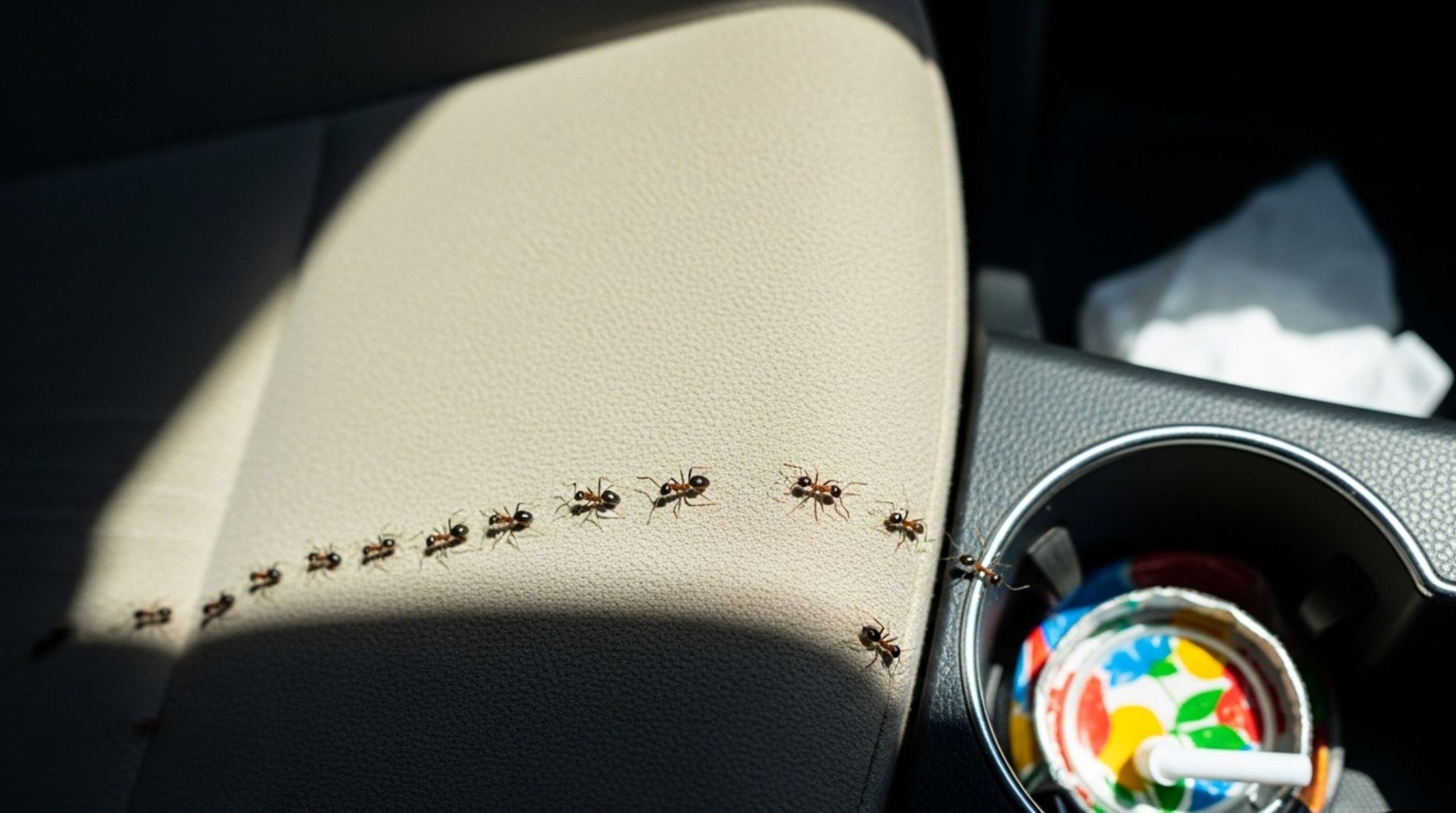
So I opened my car door one Monday morning, sat down with my coffee, and felt something on my hand. I looked down. It’s ants. Not just one or two. Dozens of them. On the seat, up the steering wheel, inside the cup holder. It was horrifying honestly.
That week I tried everything I could find. Some things worked, some were a complete waste of time. This article covers how to get rid of ants in car fast – natural home remedies, chemical treatments, what’s safe to use inside your vehicle, and how to stop ants from coming back.
Why Do Ants Come Into Your Car in the First Place?
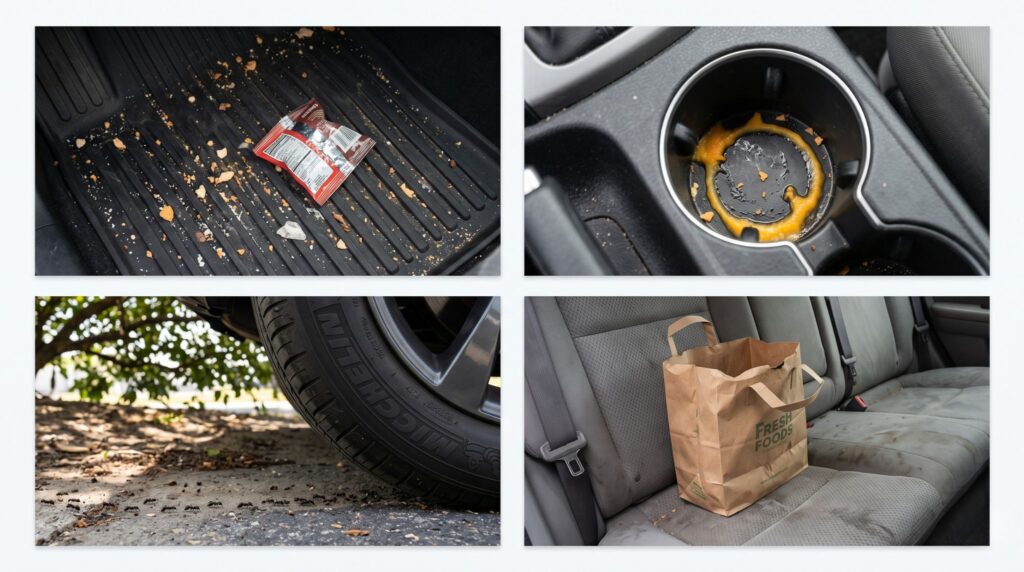
They come for food. That’s it, really. If you eat in your car, leave wrappers around, or park near an anthill for too long – you’re basically putting out a welcome mat. One ant finds a crumb, leaves a chemical trail back to the colony, and within hours you have got a full parade happening inside your dashboard.
These chemical signals are called pheromones. The tricky part is, even after you clean up the food, the trail smell can stick around for days. Which is why just removing food is not always enough to get rid of ants in your car permanently.
Common reasons ants invade cars:
- Old food crumbs stuck in seat crevices or under mats
- Spilled sugary drinks in cup holders. This was my problem – a forgotten juice box my kid left.
- Parking under trees or near garden beds regularly
- Leaving grocery bags inside overnight
Methods: How To Get Rid of Ants in Car
Step 1: Deep Clean First – Don’t Skip This
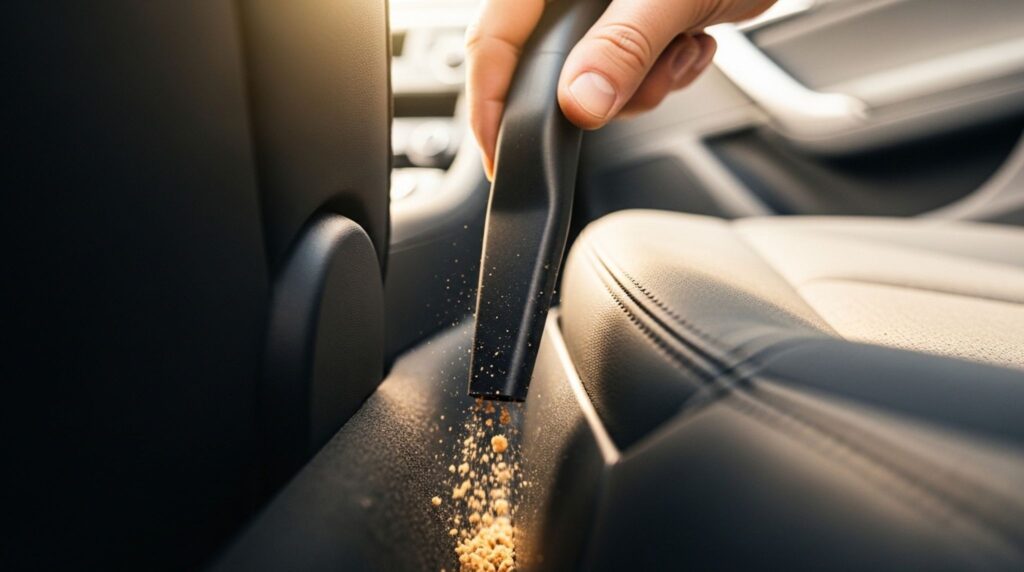
Honestly, this step alone fixed the problem for my neighbor. His infestation wasn’t even that bad, so one thorough vacuum and wipe-down and they were gone. He takes everything out – mats, bags, all of it. Shake the mats out away from the car.
Then vacuum everywhere like under seats, inside seat crevices, cup holders, the trunk, door pockets. Use a slim attachment nozzle if you have one. Ants like hiding in tight spots and so does their food.
After vacuuming, wipe down the hard surfaces – dashboard, console, door panels, cup holders – with a damp cloth. Any sticky residue from drinks needs to go.
Why this matters: You are cutting off their food supply and physically disrupting the pheromone trails on surfaces. Without both of those things, most ant methods won’t stick long-term.
Step 2: Natural Home Remedies to Get Rid of Ants in Car
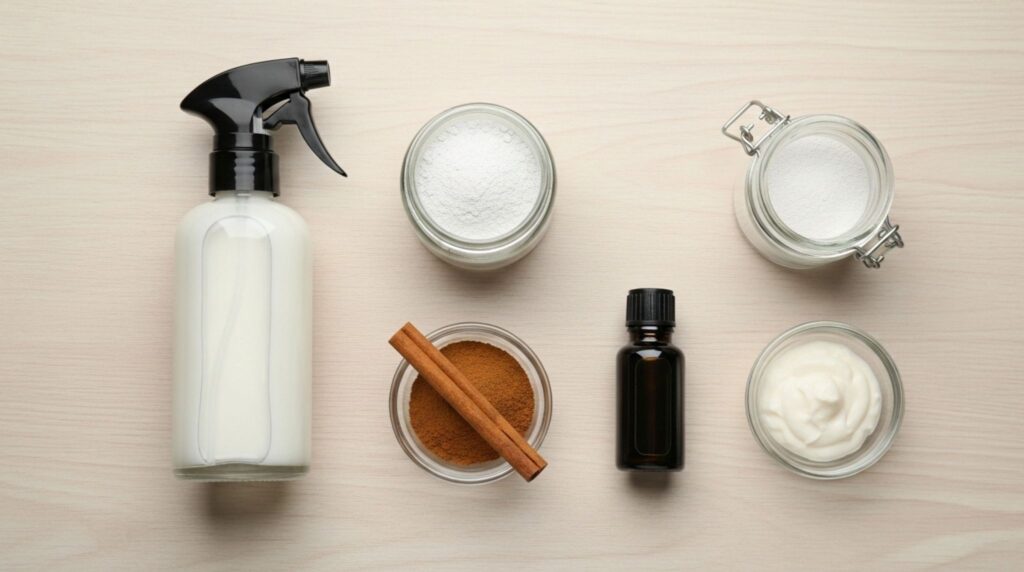
These are great if the infestation is not too severe, or if you have kids or pets and don’t want chemicals inside the car.
White Vinegar Spray
Mix equal parts white vinegar and water in a spray bottle. Spray the floor, seats, dashboard, door panels, cup holders. Leave the windows open and let it dry. The smell goes away in like 30–40 minutes so don’t worry about your car smelling weird all day.
Why it works: The acetic acid in vinegar destroys those pheromone trails ants follow. Once the trail is gone, they genuinely lose their way and stop coming. I was skeptical when I first tried this, not going to lie. It felt too simple. But after two days of spraying every other evening, the trails were completely gone. Do it every 2–3 days for about a week for best results.
Diatomaceous Earth (Food Grade)

This one sounds fancy but it’s just powder made from fossilized algae. Sprinkle a thin layer along floor edges, under seats, near door seals.
Why it works: Under a microscope the particles are razor sharp. When ants walk through it, it cuts their outer shell and they dry out and die. Sounds brutal but it’s completely harmless to humans and pets. It’s actually used in food storage. Leave it 48–72 hours then vacuum it up. Reapply if needed. You can find it at hardware stores or online.
Peppermint Oil
Add about 10–15 drops of peppermint essential oil to a cup of water. Soak cotton balls in the mix, place them under seats, in cup holders, and door pockets.
Why it works: Ants hate strong smells. It messes with their ability to communicate through scent. Peppermint is particularly overwhelming for them.
Your car ends up smelling really fresh which is honestly a nice side effect. My friend got into my car after I started doing this and said “oh did you get one of those new diffusers?” She had no idea it was my ant solution. Replace the cotton balls every 3–4 days.
Cinnamon Powder or Oil
Sprinkle cinnamon powder along door sills, under floor mats, near the trunk entrance. Or put cinnamon oil on a cotton ball and place it in problem areas.
Why it works: Cinnamon has a compound called eugenol that ants absolutely will not cross. It works as a barrier. They smell it and just… turn around. I tried this one night after noticing a trail along my passenger door sill. Next morning, nothing. Gone. Reapply every few days.
Boric Acid Bait
Mix 1 teaspoon of boric acid with 2 tablespoons of sugar and a little water to make a paste. Put small amounts in bottle caps near where you see ant activity.
Why it works: Ants think it’s food, carry it back to the colony, share it. The boric acid slowly disrupts their digestive system and wipes out the whole colony – not just the visible ones.
Safety note: Keep this away from kids and pets. Don’t touch your face after handling it, wash hands after. It’s low toxicity but still – don’t eat it.
Step 3: Chemical Methods to Remove Ants from Car
Sometimes natural methods just don’t cut it, especially with a bigger infestation. Chemical options are faster and more powerful – you just need to use them right.
Ant Bait Stations – Safest Chemical Option
Products like Terro Liquid Ant Bait or Raid Ant Bait Gel work really well. Place them under seats, in the trunk, along floor edges. The trick is – don’t move them. I know it’s tempting to keep checking but you have to leave them alone. Ants need time to find the bait, eat it, and carry it back. The formula is slow-acting on purpose so they have time to share it with the colony.
I placed two under my front seats, left them for a week, and barely touched them. Day five, zero ants. These are also the safest because the bait is enclosed – kids and pets can’t easily get into it.
Safe? Yes. Just keep away from toddlers who might chew on anything.
Ant Spray
Products like Raid Ant & Roach Killer work fast. Spray directly on trails, entry points, anywhere you’re seeing activity. After spraying open all doors and windows and let the car air out for at least 30–60 minutes before sitting inside. Don’t spray on leather seats directly, it can stain.
Safe once dry, but ventilate properly. If anyone in your family has asthma or breathing issues, skip this one and stick to bait stations.
Permethrin Perimeter Spray
This one goes on the outside of the car – around the wheels, door sills, undercarriage. It creates a barrier so ants can’t climb in from the ground.
Safe for humans, but toxic to cats and fish. If you have a cat, let everything dry completely before they can come in contact with the treated area. Reapply after rain or every couple of weeks.
Ant Killer Granules
Scatter these around your parking area, especially near the tires. Water lightly to activate. Ants carry them back to the colony.
Keep away from garden beds, water sources, and play areas. These are for outside use only – never scatter them inside the car.
What NOT to Use Inside Your Car
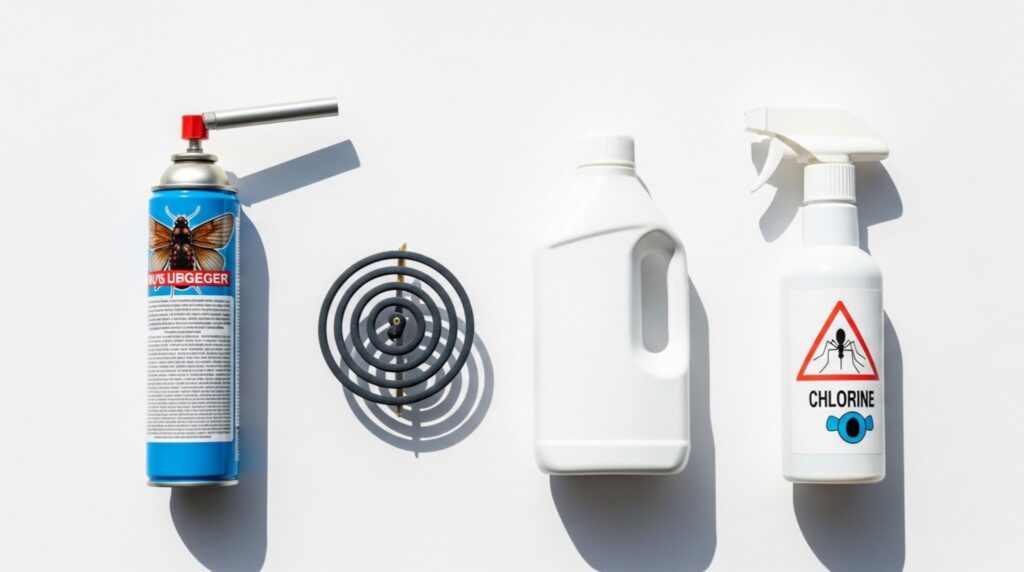
This is important. Some common pest control methods are actually dangerous inside an enclosed vehicle.
Bug Foggers / Bombs – These flood the interior with chemicals. The residue coats everything, your steering wheel, seats, gear shift. You touch those surfaces constantly. Not safe for car interiors.
Bleach – Yes it kills ants. It also wrecks your upholstery and releases chlorine gas in an enclosed space. Just don’t.
Smoke Coils – Made for open outdoor use. Inside a closed car the smoke concentration becomes genuinely dangerous.
Strong Chlorine Sprays – Damaging to plastic, electronics, fabric, and not fun to breathe in a small space. Stick to bait stations, natural sprays, or low-toxicity options inside the cabin. Strong chemicals belong outside only.
Step 4: Check Your Parking Spot
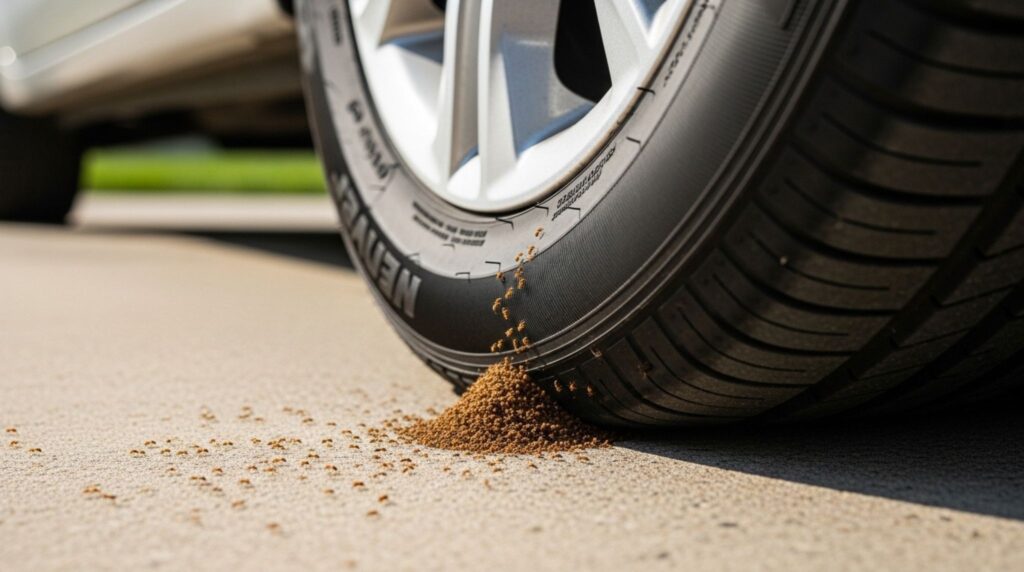
Here’s the thing nobody tells you, if you keep treating the car but not fixing where the ants are coming from, they’ll just keep coming back.
I made this mistake. Treated my car twice. Ants returned both times. Finally I actually looked at my parking spot and found a small anthill sitting right next to my front tire. I’d been parking there for weeks. Moved the car, poured boiling water on the mound, and the problem stopped within two days.
I felt pretty silly honestly. But now I always check.
If you find ant activity near your parking space, pour boiling water on mounds, scatter granules around the area, or just move where you’re parking temporarily while you treat.
Step 5: How to Prevent Ants in Car – Keep Them From Coming Back
Once they’re gone, keeping them out is mostly about habits. Follow some basic steps –
- Don’t eat in the car if you can help it, or clean up immediately after.
- Wipe cup holders every week – that sticky residue is a magnet.
- Never leave grocery bags or food in the car overnight.
- Shake out floor mats every few days.
- Replace peppermint cotton balls under your seats once a month.
- Check door seals occasionally – gaps are easy entry points. Small stuff. But it makes a real difference.
When to Just Call a Professional
If ants keep coming back after 3–4 weeks of trying everything, or if you’re finding nests inside the dashboard or near the wiring – call pest control. Ants nesting near electrical components can actually chew through wire insulation over time. It’s rare but it happens, and that’s a much more expensive problem than a pest control visit.
Conclusion
In this article you know how to get rid of ants in car. I explained all the things on behalf of my experience. It’s simple. Clean the car. Break the trail. Kill the colony. That’s really the whole formula. Natural methods work well if you catch it early – vinegar and peppermint got rid of mine mostly. Bait stations finished the job. And moving away from that anthill near my parking spot stopped them from returning. Pick what works for your situation and be a little patient. They will leave.
FAQ
How long does it take to get rid of ants in a car?
Mild cases – 3 to 5 days with a clean and vinegar spray. Bigger infestations with bait stations – give it 1 to 2 weeks. Don’t stop too early even if you stop seeing them.
Why do ants keep coming back after I treat the car?
Usually means either the food source is still there, or there’s a colony near your parking spot. Check both. The pheromone trail can last for days even after cleaning, so you need to actively break it with vinegar or peppermint.
Is it safe to use ant spray inside the car?
Yes, if you ventilate properly. Spray, then open all doors and windows for 30–60 minutes before getting inside. Skip sprays if anyone in your family has asthma – bait stations are safer in that case.
Can ants actually damage my car?
If they nest near electrical wiring, yes – they can chew through insulation. It’s not super common but it does happen. Don’t let a big infestation sit untreated for months.
What’s the fastest way to get ants out?
Vacuum immediately, then spray ant killer on visible trails. That handles what you can see within hours. For the full colony – add bait stations and give it a few days.
What home remedy kills ants in a car?
White vinegar spray is the most effective home remedy – it breaks ant trails and is safe on all surfaces. Boric acid mixed with sugar works as a bait and kills the whole colony. Peppermint oil and cinnamon are better for repelling and prevention rather than killing.
Are ants in car dangerous?
For you – not directly. But if ants nest inside the dashboard or near wiring, they can damage electrical insulation over time. Also if you have small kids who eat in the car, ant bites are a real concern. Best to deal with it early before it becomes a bigger problem.