
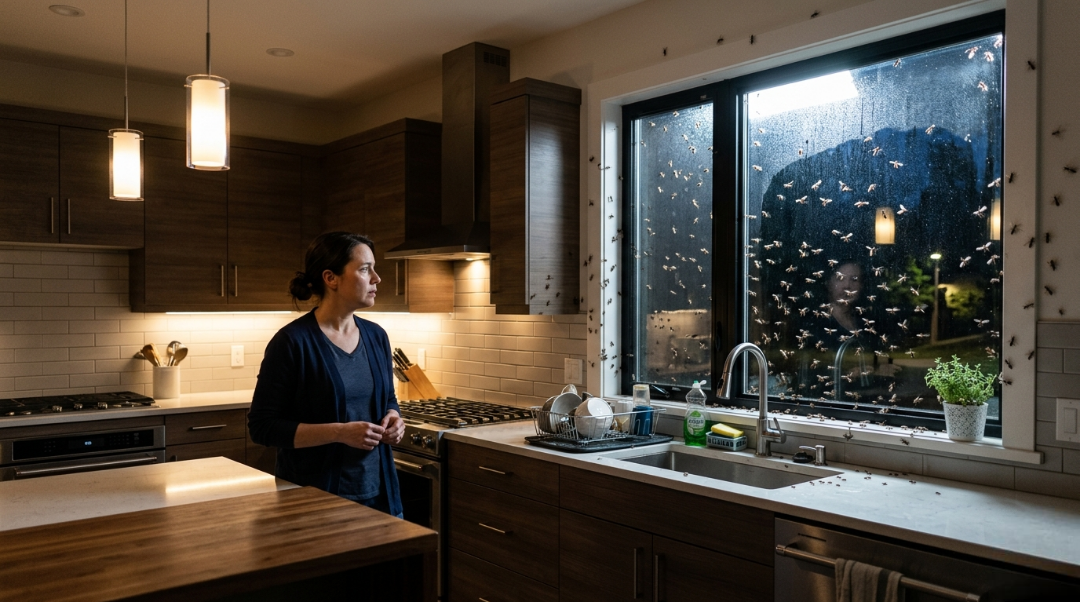
It was almost midnight. I had just gone to the kitchen for a glass of water. When I turned on the light, the window near the sink was covered with winged insects, crawling over the glass, bumping into the light, dropping onto the counter. My first thought was termites. My second thought was panic.
I called my son. He Googled it and told me, ‘Relax, those are flying ants. They show up every year around this time. I didn’t feel relaxed. But he was right.
Flying ant swarmers are common during warm and humid months. Most homeowners see them at least once, usually after a rain, usually near a light. The good news is that most flying ant infestations are completely manageable once you figure out where they’re coming from.
This guide covers everything – how to identify flying ants, why they suddenly appear inside the house, how to remove them fast, and what it actually takes to stop them from coming back.
Quick Answer – How to Get Rid of Flying Ants
Flying ants can be eliminated with three methods: first by vacuuming the visible swarm, second by placing slow-acting bait near the activity zone, and third by treating the parent colony directly. Flying ant swarms are only permanently eliminated when the queen and worker ants inside the nest are eliminated. Most flying ant infestations clear up within a few days to a few weeks, depending on the size of the colony and the location of the nest.
The biggest mistake most people make and I made this too. I sprayed on the flying ants and called it done. That kills the ones in front of you. The colony behind the wall keeps going. Swarmers keep coming. You need to get to the source.
What Are Flying Ants?
Flying ants are reproductive ants called alates or swarmers. Flying ants emerge from larger ant colonies during warm and humid weather to mate and form new colonies. Flying ants are not a separate ant species, but a temporary life stage.
You may have seen winged ants suddenly gathering around a ceiling light, wondering where they came from. In fact, before swarming season arrives, a large colony exists quietly inside a wall, attic, or outdoor structure for months.
It took me a while to understand this part. Flying ants aren’t a new problem that started yesterday. They’re the result of a colony that grows over many months or even a year, eventually reaching the stage where it begins producing reproductive members.
The colony sends these winged ants males and would-be queens to mate and form a new colony elsewhere. This is what you see when they swarm around your porch light or kitchen window. It seems sudden because it happens suddenly. But it grew slowly and quietly.
Common species that produce flying swarmers include carpenter ants, odorous house ants, and pavement ants. Most flying ant swarmers die within a few days if mating doesn’t work out. So sometimes the problem genuinely does go away on its own. But if flying ants are coming from a nest inside your walls or under your floors, that colony stays active even after the swarmers are gone.
Flying Ant Identification – Key Features
| Feature | Flying Ants |
| Antennae | Bent / elbowed |
| Waist | Narrow and pinched |
| Wings | Front wings longer than back wings |
| Body Shape | Segmented |
| Behavior | Swarm around lights and windows |
| Swarm Season | Spring through Summer |
| Main Goal | Mating and colony expansion |
Flying Ants vs Termites – How to Tell the Difference
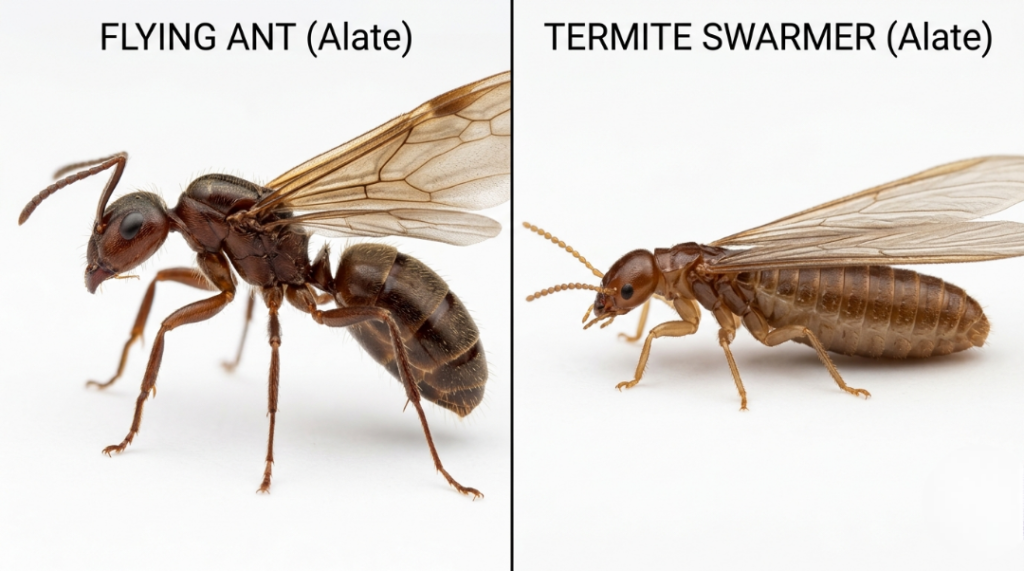
Flying ants and termite swarmers are commonly confused because both insects emerge with wings during warm weather. Flying ants have bent antennae, narrow waists, and uneven wing lengths. Termites have straight antennae, thick waists, and equal-length wings.
When I first saw those winged ants on my kitchen windowsill, my immediate thought was termites. I started Googling the damage. Turns out they were flying ants.
| Feature | Flying Ants | Termites |
| Antennae | Bent / elbowed | Straight |
| Waist | Narrow and pinched | Thick, no pinch |
| Wings | Unequal length | Equal length |
| Color | Dark brown or black | Pale cream or light brown |
| Damage Risk | Usually nuisance level | Structural damage |
| Nesting | Soil, walls, wood | Inside wood |
| Movement | Fast-moving | Slow-moving |
Quick rule: Pinched waist and bent antennae are flying ants.
Thick waist and straight antennae are termites.
Why Are Flying Ants Suddenly Appearing?
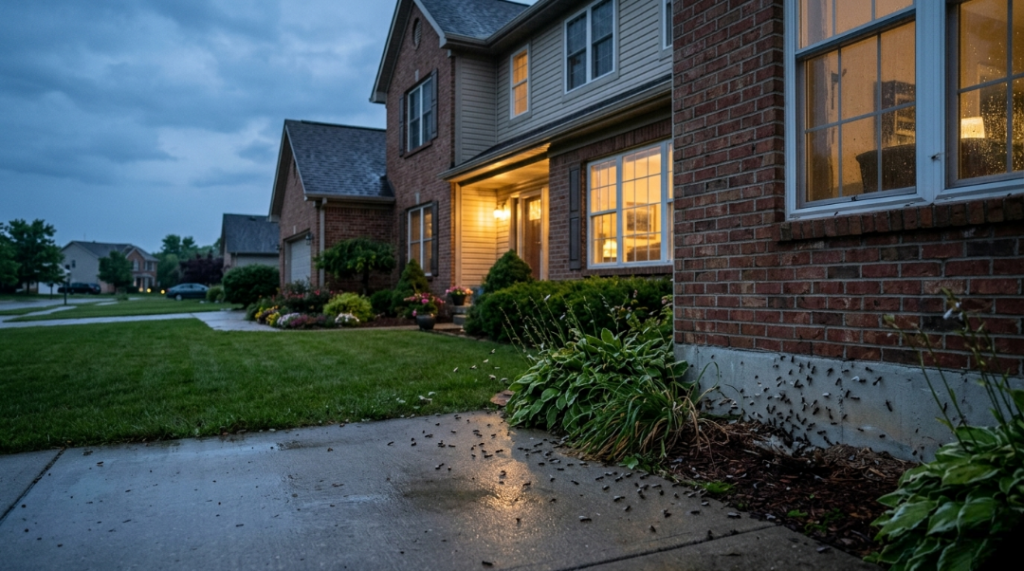
Flying ants appear suddenly when large ant colonies leave their nests during warm and humid weather. Rain, humidity, evening heat, and artificial lights often trigger ant swarms. Indoor ant colonies often indicate ants hiding inside walls, attics, or near foundations.
Dozens of flying ants suddenly appear around a light. Flying ant swarms are timed to coincide with increased humidity and the aftermath of a rainstorm. Each time has a specific weather pattern that triggers them to fly warm evenings, high humidity, recent rain, and the glint of light in the dark. Flying ant swarm activity almost always follows the same pattern.
When swarms form inside a home, it means the colony is already somewhere inside the structure. The swarms aren’t flying in from outside – ants are emerging from a wall void, attic, or moisture-damaged wood near a window frame. This is the situation that needs attention.
| Cause | What Happens | Fix |
| Warm humid weather | Triggers mating swarms | Seasonal monitoring |
| Colony inside wall | Indoor emergence | Nest treatment required |
| Outdoor colony near house | Swarmers enter indoors | Seal entry gaps |
| Porch or window lights | Attracts swarmers | Reduce nighttime lighting |
| Moisture-damaged wood | Supports nesting | Repair leaks and wood rot |
| Foundation cracks | Indoor access point | Caulk and seal openings |
Signs of a Flying Ant Infestation
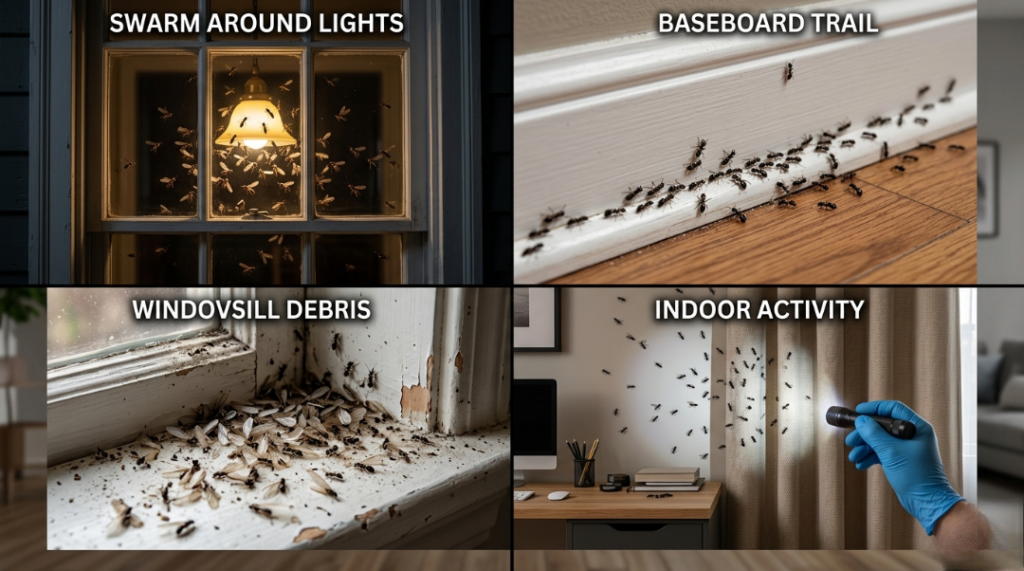
The most common sign of flying ant activity is the sight of winged ants near lights and windows. Piles of scattered wings and frequent swarms indoors are sure signs of a nearby colony. Worker trails of flying ants often reveal hidden nest sites.
- Swarms Around Windows and Lights
Flying ant swarmers are strongly attracted to artificial light sources during mating flights. Porch lights, ceiling lights, illuminated TVs, and bright windows commonly pull swarmers indoors during humid evenings.
This is usually the first sign people notice. A bunch of winged insects circling a ceiling light or crawling along a window frame. Activity often peaks after sunset and can intensify noticeably for a few hours before slowing down.
- Piles of Shed Wings
Discarded wings indicate successful mating activity inside or near the home. Flying ant queens remove wings after mating and begin searching for nesting locations. Finding tiny wings – scattered on windowsills, along baseboards, near door frames – is actually a sign that mating already happened. The queens are now wingless and looking for somewhere to start a new nest. Small wing piles indoors are worth taking seriously.
- Repeated Indoor Swarms
Repeatedly seeing swarms of flying ants inside your home is usually a sign of a colony lurking nearby. Some swarms may appear every night, while others may appear once a week. These are a little more dangerous.
I kept seeing a swarm of flying ants near my home’s window. At first, I thought they had wandered in from outside. But when it kept happening repeatedly, in the same spot, on different nights. I realized there was a colony inside that area, regularly creating new swarms.
- Worker Ant Trails
Before flying ants appear, there’s often a trail of regular worker ants that you might not have noticed much. These trails are usually in crevices and damp areas like under cabinets, along baseboards near the bathroom, behind the refrigerator. Follow the trail and you’ll often find where they’re coming from.
Where Flying Ants Actually Come From
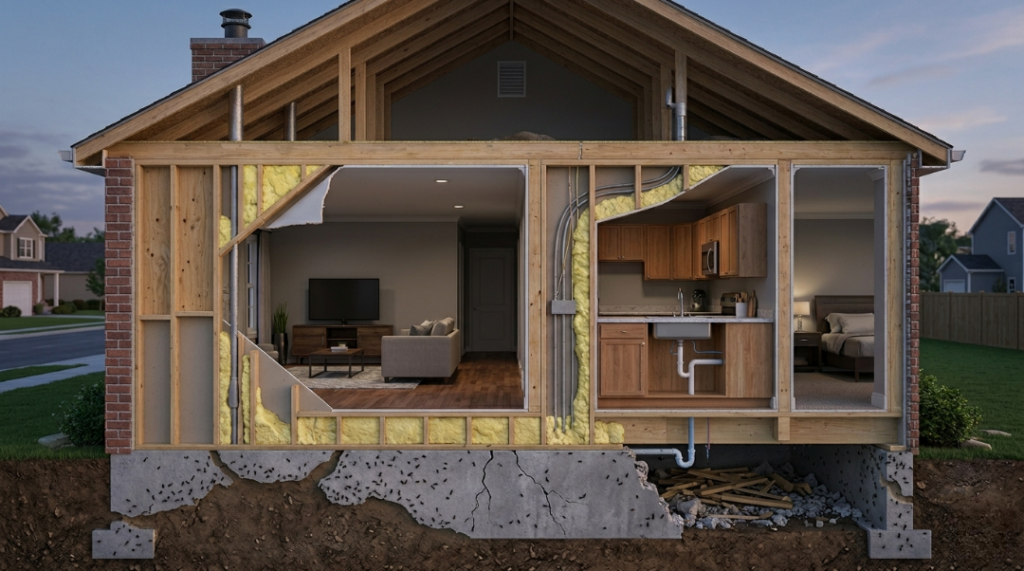
Flying ants originate from large colonies hidden inside or near buildings. Indoor flying ant colonies often form in wall voids, damp wood, attic spaces, and inside foundations. Outdoor colonies typically nest in mulch beds, tree stumps, and landscape wood.
Flying ants kept appearing near a bathroom window every evening. Moisture damage hidden behind the wall often creates the perfect conditions for ant colonies to nest.
I finally found a colony in my house. Water was slowly leaking under the bathroom sink, which I’d been trying to fix for months. Behind the cabinet wall, the wood had softened. They were nesting right there. Once I fixed the leak and treated the wall void, the problem stopped.
Common nest locations to check:
- Wall voids near bathrooms, kitchens, and laundry areas
- Attic spaces, especially near roof penetrations
- Window and door frames with moisture exposure
- Under sinks with even minor drip history
- Foundation cracks and expansion joints
- Tree stumps and mulch beds right against the house
- Deck structures and landscape timbers
- Crawl spaces with soil contact
How to Get Rid of Flying Ants – 6-Step Removal Protocol
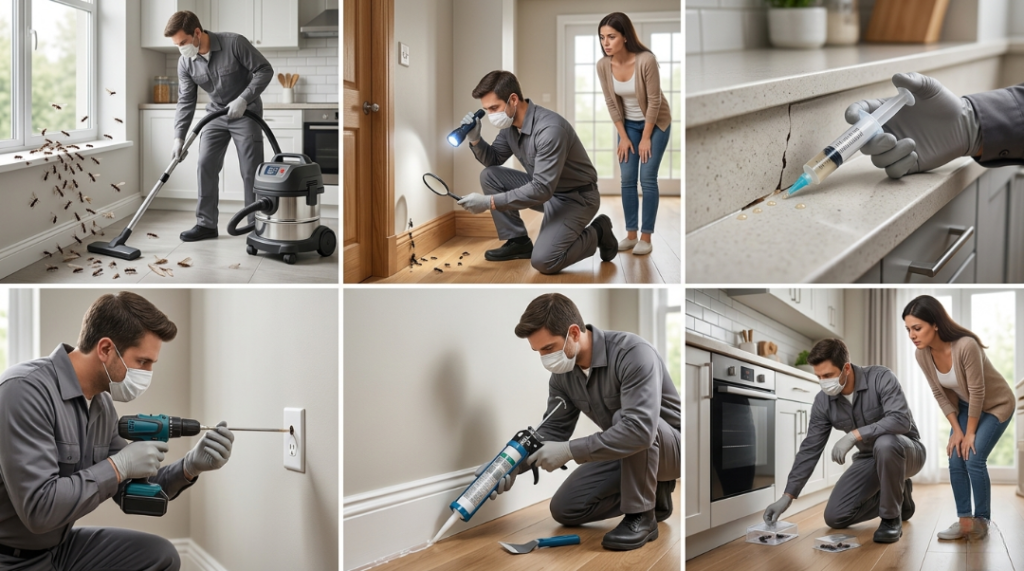
To permanently control flying ants, it’s important to eliminate both the visible swarm and the parent colony that produces new ants. Vacuuming the visible swarm only temporarily removes the newly born ants. Baiting and treating the nest directly eliminates the colony long-term.
I spray the swarm near the dining room light and feel relieved for one night. The next evening another wave of flying ants appears because the hidden colony remains active behind the wall.
This is the method I wish someone had told me when I started. You need everything on this list, don’t leave any steps out. This is why most people struggle with the same problem for weeks.
What you’ll need:
- Vacuum cleaner with hose attachment
- Gel ant bait (Advion Ant Gel or similar)
- Flashlight for inspection
- Caulk gun with silicone sealant
- Insecticidal dust (Delta Dust works well)
- Sticky traps for monitoring
- Screwdriver for probing suspect wood
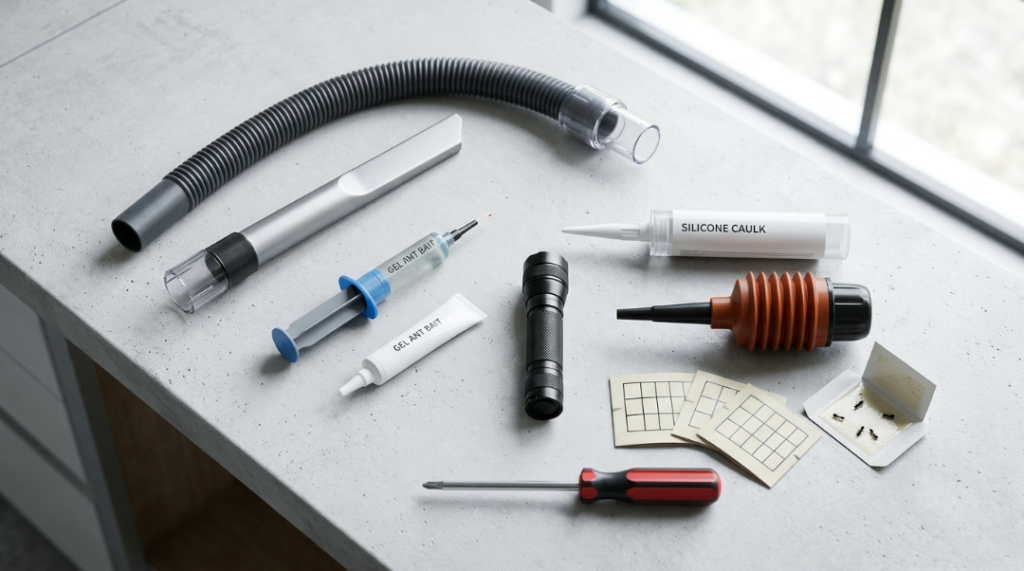
Follow the given steps:
- Vacuum up all visible swarmers immediately. Use the hose attachment around windows, light fixtures, and baseboards. This quickly removes active swarmers and prevents them from spreading further indoors. Empty the vacuum bag or canister outside immediately.
- Thoroughly inspect the kitchen, bathroom, attic, and window frames. Use a flashlight and look for worker marks, piles of feathers, and soft or discolored wood. If the wood sounds hollow when tapped, there may be a nest inside.
- Place slow-acting gel bait along worker ant trails. Worker ants carry the bait back to the colony, which eventually poisons the queens and other members. This is the step that actually kills the colony. Use Advion Ant Gel or Terro liquid bait stations – do not mix with repellent sprays.
- Treat wall voids and hard to reach areas with insecticidal dust or foam. Delta Dust applied through small holes reaches deep into areas where sprays can’t. This is especially important for carpenter ant colonies in wood.
- Seal entry points after colony treatment. Seal cracks in the foundation, gaps around window frames, and openings around pipes and drains. Wait at least a week before sealing until the bait is working so you don’t trap the problem inside.
- Monitor for one to two weeks. Use sticky traps near previous activity areas. If the swarm persists two weeks after baiting, revisit the nest site or consider a professional inspection.
Fastest Way to Get Rid of Flying Ants
The quickest treatments for flying ants are vacuum removal, slow-acting bait placement, and direct nest treatment. Small indoor swarms often disappear within 24 to 72 hours after initial treatment. Repeated infestations require colony elimination rather than superficial spraying.
I had guests over yesterday, and flying ants suddenly appeared around the dining room chandelier. Immediate reduction of the swarm became a priority, so I tried a few methods, but for permanent control, I had to treat the colony itself.
For same-day results: vacuum everything visible, place sticky traps near the swarm area, turn off unnecessary lights, and get gel bait down on any worker trails you can find. This combination usually reduces visible activity within 24 hours.
Products that work quickly for visible control: Advion Ant Gel for bait transfer, Delta Dust for void treatment. For immediate swarm knockdown, any aerosol ant spray handles the visible insects – just know that’s not treating the colony.
Best Flying Ant Treatments – Product Comparison
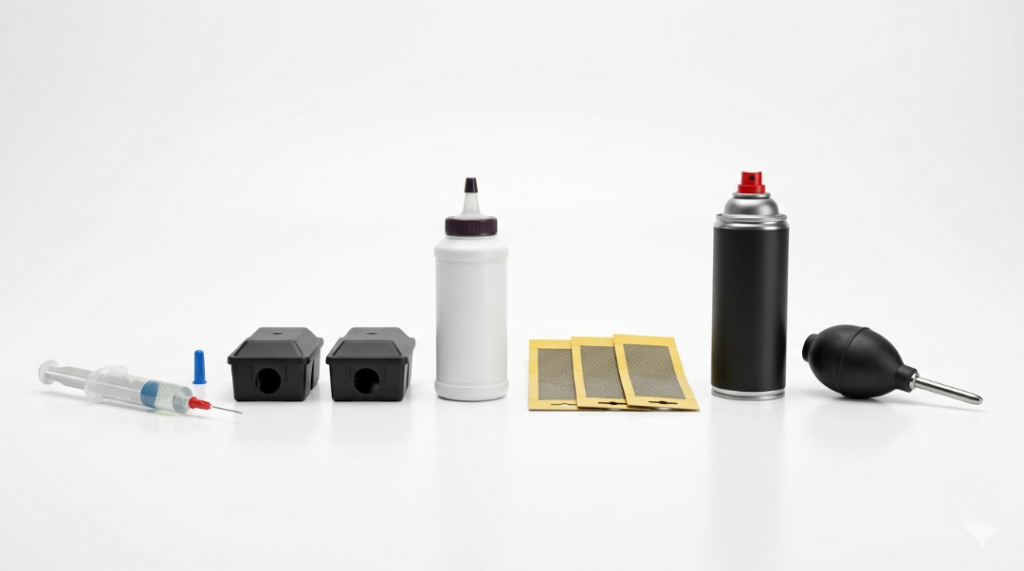
Gel bait and non-repellent ant treatments are the most effective long-term solutions for flying ant infestations because worker ants carry poison back to hidden colonies. Aerosol sprays kill visible swarmers quickly but do not eliminate queens. Combination treatment produces the fastest permanent results.
| Treatment | Effectiveness | Kills Colony? | Best For |
| Gel bait | High | Yes | Indoor colonies – Advion Ant Gel |
| Liquid bait | High | Yes | Worker trails – Terro Liquid Baits |
| Vacuum removal | Medium | No | Immediate cleanup |
| Insecticidal dust | High | Partial | Wall void nests – Delta Dust |
| Sticky traps | Low | No | Monitoring activity |
| Aerosol spray | Low | No | Visible swarm – temporary only |
| Essential oils | Low | No | Temporary deterrent |
Best Flying Ant Killer for Indoor Use
Slow-acting gel baits and enclosed bait stations are best for indoor flying ant infestations. Indoors, the key is to get the bait to the colony without creating safety issues for children or pets. Enclosed bait stations work best for this – they contain the bait inside a plastic cover that ants can get into but children and pets can’t easily reach.
Best indoor products: Advion Ant Gel, Terro Liquid Ant Baits, Combat Indoor Ant Station. Place baits in kitchens, bathrooms, laundry rooms, and near windows – wherever workers can move. Place baits behind appliances and under sinks where pets can’t reach them.
Best Flying Ant Spray for Walls and Void Spaces
Flying ant nests hidden inside walls require dust or foam insecticides. These can reach deep voids. Repellent sprays alone often spread colonies further into buildings. Non-repellent void treatments provide long-term elimination.
Repellent sprays are actually counterproductive for nests in wall voids. When ants sense a repellent near their entry point, they move deeper into the wall or split into satellite colonies, making the problem more difficult to resolve. Non-repellent dusts and foams penetrate the space without alerting the colony.
Delta Dust is the most recommended product for wall voids – it acts as a dry dust that remains effective for months. Alpine Foam and Boric Acid Dust are also effective options. Apply through any small access holes using a hand duster.
Natural Ways to Get Rid of Flying Ants

Natural remedies reduce flying ant activity temporarily but rarely eliminate colonies completely. Borax bait is the only natural option capable of reaching queens through worker transfer. Essential oils and vinegar mainly disrupt scent trails and movement patterns.
Online searches recommend vinegar, peppermint oil, and lemon spray everywhere. Most natural remedies only reduce visible activity temporarily while the hidden colony remains active.
I went through the natural remedy phase too. Sprayed white vinegar along the windowsills. Mixed peppermint oil with water and went to town on the kitchen. The ants avoided those spots for a day or two and then just showed up somewhere else. The colony was still very much alive.
- Borax Bait – Most Effective Natural Option
Mix 3 parts sugar with 1 part borax and a little water to form a syrup. Place small amounts on cotton balls near active trails. The sugar attracts workers, the borax kills slowly, and workers carry it back before they die. Too much borax kills workers too fast for transfer – the 3:1 ratio is important.
- Vinegar Spray
Vinegar destroys pheromone trails used by worker ants for navigation. Vinegar spray does not eliminate hidden ant colonies.
- Essential Oils
Peppermint and citrus oils temporarily repel flying ants from treated surfaces. Essential oils do not kill queens or destroy nests.
Useful around window edges and door frames as a minor deterrent during swarm season. Don’t rely on them as a primary treatment.
- Diatomaceous Earth
Diatomaceous earth damages flying ants exoskeletons through dehydration. Dry placement conditions are required for effectiveness. Works as a supplemental treatment in dry areas – inside wall voids, around entry points in dry basements. Becomes ineffective when wet. Food-grade diatomaceous earth is safe around people and pets in small amounts.
Flying Ants in the House – What It Usually Means
Flying ant colonies inside homes often hide in walls, ceilings, or damp wood. Ant colonies inside homes are most commonly seen near windows and artificial light sources. If ants are repeatedly appearing inside your home, you may need to treat the nest directly.
In my home, flying ants were seen in only one upstairs bedroom every evening. A search pointed to a nearby wall or attic colony. Common places inside the home where colonies hide include: near plumbing in kitchens, in bathrooms with a history of moisture, in attics, especially near ceiling vents, in basement ceiling joists, in laundry rooms, and around ceiling light fixtures where wiring creates small gaps in the insulation.
Flying Ants Outside Around Lights
Outdoor flying ants swarm heavily around porch lights, garage lights, and lighted windows during mating season. Artificial light attracts swarms on humid evenings. Most outdoor swarms disappear on their own within a few hours or days. You may have noticed hundreds of winged ants circling around porch lights when you go outside after sunset.
Swarms outside around lights are the most troublesome. Ants aren’t interested in your porch – they’re just swarming around the light to mate. By morning, most of them will be gone. Installing warm yellow LED bulbs outside also helps – flying ants are less attracted to warm-spectrum light.
Flying Ants at Night – Why It Happens
Flying ant swarm activity often peaks in the evening because humidity levels rise and artificial lights become more visible. Nighttime swarms typically occur in the summer after rain and warm temperatures.
Swarm activity typically peaks in the evening because temperature and humidity conditions are consistent – warm air, high humidity, and low wind. Artificial lights that are invisible or dim during the day suddenly become extremely attractive after dark.
That’s why infestations feel so sudden. Everything was fine all day. You turned on a light at 9 p.m., and suddenly dozens of winged ants appeared. By morning, most are dead or gone but the colony that sent them is still active.
Flying Ants in Winter – When to Be Concerned
If your home doesn’t have active colonies due to heating or hidden structures, flying ants rarely swarm in winter. Flying ant activity inside your home during winter may indicate a warm nesting site or moisture problem.
Winter flying ants inside your home are actually more of a concern than summer swarms. Outdoor colonies tend to become quiet in cold weather. So, if flying ants are emerging in January or February, the colony is almost certainly somewhere inside your heated structure, in a wall near a heating duct, in a ceiling void, or in moisture-damaged wood.
Don’t assume winter swarms are a sudden occurrence. A colony that is warm and cool enough to swarm in winter means it has been growing inside the structure for a long time. If swarms continue to appear, put down bait and consider a professional inspection.
Why Flying Ants Keep Coming Back
The repeated appearance of flying ant swarms usually indicates that the parent colonies haven’t been treated or that there are multiple nests nearby. Sealing the entry point before eliminating the colony traps the activity inside the building and worsens the infestation. If nearby colonies remain active, seasonal swarms may recur every year.
You may vacuum up flying ants every night for a week, and the activity returns around the same time. Continuous emergence usually means the hidden nest was never eliminated.
Repeated swarms appearing in the same location indicate one thing: the colony wasn’t treated. Vacuuming visible swarms may be appealing, but it has no effect on the thousands of workers and queens still inside the nest.
Main reasons flying ants keep returning:
- Hidden colony was never located or treated
- Multiple satellite nests in different wall sections
- Moisture damage remains, keeping nesting conditions attractive
- Entry points sealed before colony was eliminated
- Outdoor colonies close to the foundation keep sending swarmers indoors
- Seasonal swarm cycles that repeat annually from established nearby colonies
Mistakes That Make Flying Ant Problems Worse
Spraying visible flying ants without treating the colony provides only temporary relief. Sealing entry points before eliminating the colony traps ant activity within walls and ceilings. Ignoring moisture problems allows hidden nests to remain active.
I made a sealing mistake. After seeing flying ants on a window, I first sealed it. What happened next was even worse – a swarm of ants started coming out of a ceiling light in the same room. Sealing them in, they simply found another way out.
Common mistakes that extend the problem:
- Spraying visible swarmers and assuming the job is done
- Sealing entry points before the colony is eliminated
- Ignoring moisture leaks that sustain the nest
- Leaving bright lights on during active swarm evenings
- Mixing ant bait placement with repellent sprays – repellents stop workers from reaching the bait
- Treating for a few days and stopping before the colony is fully affected
Pet and Child Safety During Treatment
Flying ant bait products can be dangerous if ingested by children or pets. Enclosed bait stations and careful placement reduce the risk of accidental contact with ants. Vacuum removal is the safest way to quickly control a swarm indoors.
Gel baits contain small amounts of active insecticide ingredients – they are generally safe in small amounts, but should not be ingested by children or pets. The safest method is to place enclosed bait stations out of reach of children and pets: behind the refrigerator, under the stove, inside recesses of cabinets, under the bathroom sink.
Safety basics during indoor treatment:
- Use enclosed bait stations whenever possible
- Keep all bait behind appliances and out of reach
- Wear gloves when handling insecticidal dust or gel
- Keep insecticides in original containers and store securely
- Avoid spraying near food preparation surfaces
- Keep pets out of treated rooms until dust settles – usually a few hours
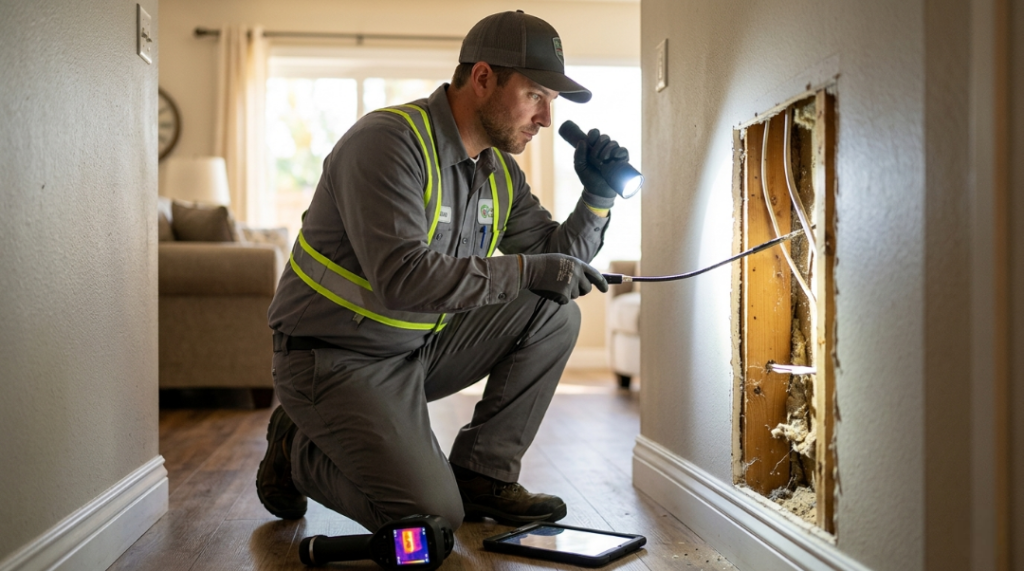
When to Call a Professional Exterminator
Professional pest control is necessary when flying ant swarms repeatedly enter the home, leaving hidden colonies unreachable. Structural moisture damage and recurring swarms often require advanced inspection equipment.
There comes a point when DIY methods are truly insufficient. If you’ve placed bait for a month and swarms are still appearing, or if ants keep moving from room to room, this indicates multiple nests or structural access points that you can’t easily reach without opening walls. Multiple hidden nests or moisture-damaged wall cavities often require professional treatment. A professional inspection typically costs between 9k and 30k depending on location and the extent of the problem.
Call a professional if any of these apply:
- Indoor swarms recur for more than two to three weeks of treatment
- Carpenter ants are confirmed – wood damage risk warrants professional assessment
- Nest is clearly inside walls but location can’t be identified
- Visible moisture damage or soft wood near active swarm areas
- Flying ants emerging from electrical outlets or ceiling fixtures
- DIY bait has been in place for four to six weeks without improvement
How to Prevent Flying Ants Permanently

Long-term flying ant prevention requires eliminating moisture problems, sealing structural entry points, and maintaining yard conditions that discourage outdoor colonies from nesting near the home. Annual inspection during peak swarm season reduces recurring infestation risk.
After dealing with my own infestation, I made a short list of things I do now every spring and it’s made a real difference. Here is the prevention checklist:
- Fix every water leak – under sinks, around window frames, in the attic, anywhere. Moisture is the single biggest reason ants nest inside structures.
- Seal cracks and gaps along the foundation, around plumbing penetrations, and along window and door frames. Focus on the lowest points of the exterior where colonies most commonly enter.
- Move mulch, wood piles, and landscape timbers at least two feet away from the foundation. These are prime outdoor nesting spots right next to your house.
- Switch porch and garage lights to warm-spectrum yellow LEDs during spring and summer. Much less attractive to flying ant swarmers than cool white or standard bulb light.
- Trim tree branches that touch or overhang the roofline. Carpenter ants commonly use branch contact as a bridge from outdoor nests to roof and attic access.
- Do a quick inspection of window frames and exterior wood once a year – tap with a screwdriver and listen for hollow spots that might indicate active nesting inside.
Frequently Asked Questions
Do flying ants bite?
Most flying ant species do not bite humans. Flying ant swarmers are focused entirely on mating and not interested in people.
How long do flying ants last?
An individual flying ant swarm typically lasts a few hours to a day or two. If swarms from the same location keep recurring, the colony behind them is still active.
Will flying ants go away on their own?
Outdoor flying ant swarms usually disappear on their own within a day or two. Indoor flying ant swarms do not reliably go away on their own – they return as long as the colony producing them remains active inside the structure.
How long does it take for ant bait to work?
Gel bait typically starts showing results within three to seven days as worker ants carry it back to the colony. Full colony elimination can take two to six weeks depending on colony size and how actively workers are feeding on the bait. Don’t remove or replace bait too quickly – the slow kill is intentional.
Does one flying ant mean infestation?
One or two flying ants near a window is not necessarily a sign of a major infestation. They may have wandered in from an outdoor swarm. Repeated daily swarming from the same location, wing piles accumulating indoors, or worker trails actively moving through the house are the signs that point toward an established nearby colony.
Conclusion
In this article you know about the flying ants infestation. I’ve shared personal methods that actually work. You’ve clearly understood the mistakes to avoid throughout the article. We hope this information will prove helpful. If you have any questions, please ask us in the comments section.