ans up residue from feeding areas. Vinegar cannot penetrate wall voids or reach pharaoh ant queens. Vinegar is most useful as a cleaning tool after baiting.
I now use diluted white vinegar not during active treatment, but for the final wipe-down after the bait cycle is complete. This removes pheromone trails from surfaces, helping to prevent new workers from following old trails. During active baiting, cleaning around trails is the last thing you want to do.
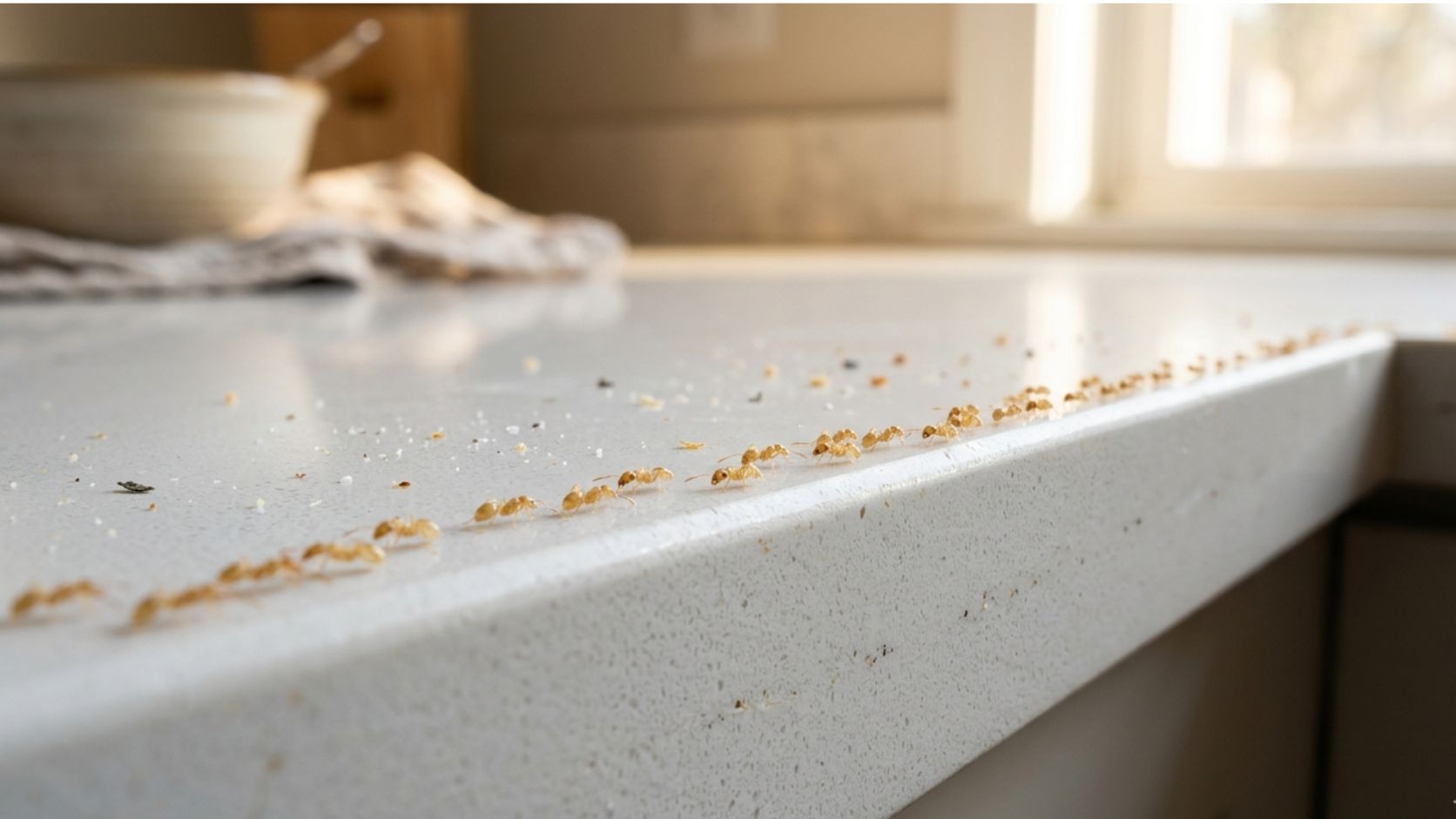
- Essential OilsI still remember that Tuesday morning. I walked into the kitchen at 7 AM to make chai, and there were a line of thin little pale yellow ants which moving along the edge of the counter. I counted maybe 20, 25 of them. Tiny. Almost too small to see. My first thought was, okay, this happens. I’ll spray something, ants will be gone by evening. I had no idea what I was actually dealing with.
By Thursday – just two days later – those 20 ants had turned into hundreds. Trails running from the counter to the cabinet hinge, from the cabinet down behind the stove, from the stove toward the outlet on the wall. My mother-in-law, who already has a weak immune system, was refusing to come into the kitchen.
My six-year-old kept pointing at the floor and saying “Mumma, ants are walking on Bruno’s bowl” – Bruno is our dog. And I was standing there with a can of bug spray wondering why nothing was working.
As I later found out, that spray was the worst thing I’ve ever used. But I’ll get to that.
If you’re reading this because you’ve suddenly had tiny yellow ants in your kitchen and you don’t know what to do, I’ve been exactly where you are. Here’s everything I learned, what I tried, and what actually worked.
Quick Answer – How to Get Rid of Pharaoh Ants
To eliminate pharaoh ants, a slow-acting protein and sugar bait is placed directly on active ant trails. Pharaoh ant colonies expand rapidly after spraying as colonies bud and form many new nests. Most pharaoh ant infestations resolve within 1 to 3 weeks after proper baiting and cleaning.
What Are Pharaoh Ants?
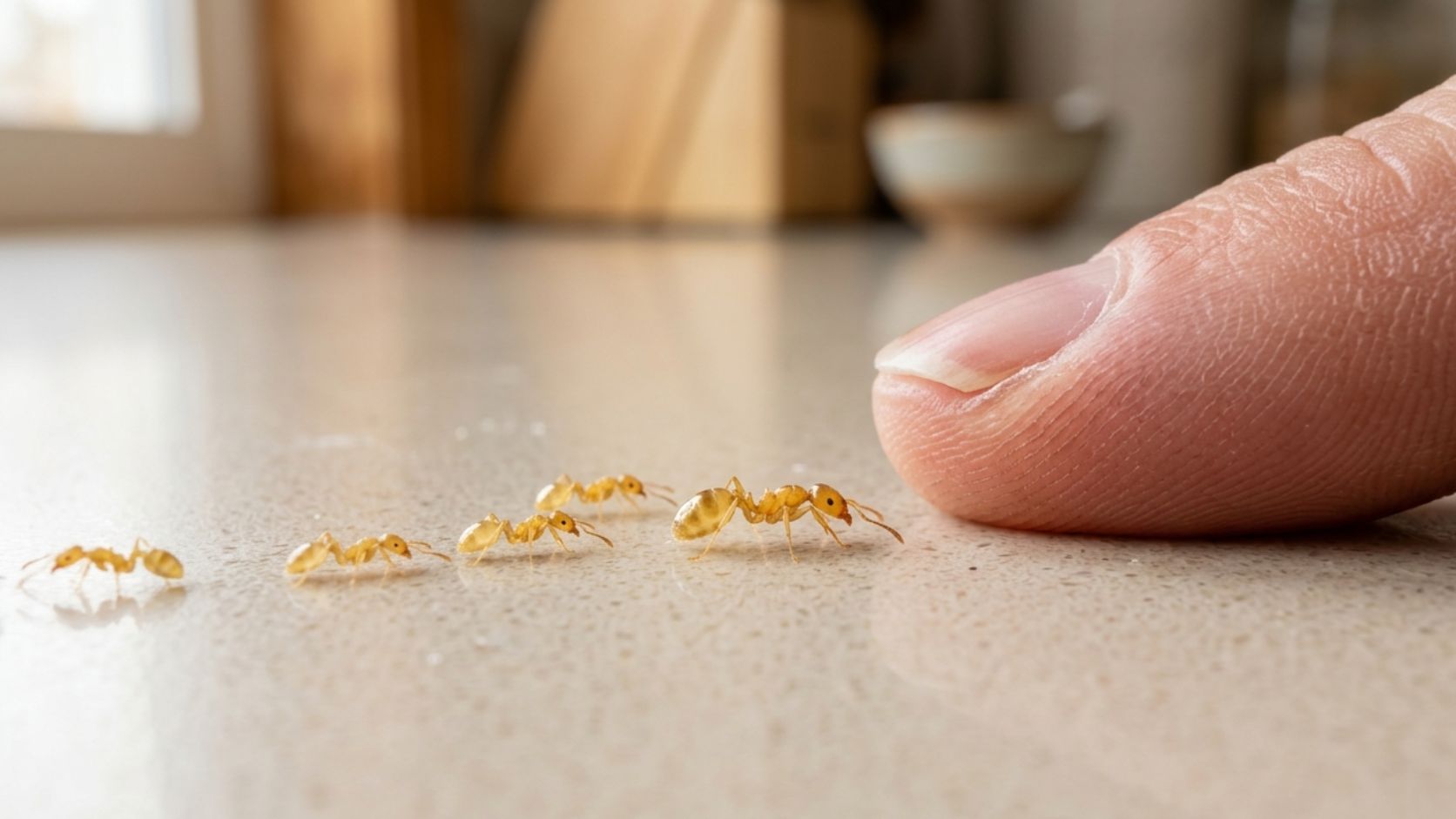
Pharaoh ants are small, yellowish indoor ants known for forming large multi-queen colonies. Pharaoh ants are approximately 1.5–2 mm long and commonly infest kitchens, bathrooms, hospitals, and apartment buildings. Pharaoh ant colonies prefer warm, hidden indoor nesting sites.
When I finally looked at them properly, I realized I’d been giving them the wrong name in my head. I thought they were sugar ants, or maybe regular kitchen ants. They’re not. These are pharaoh ants – scientific name Monomorium pharaonis and they’re a completely different problem than the ants most people have dealt with before.
Pharaoh ants are tropical in origin, which means they’ve evolved to live indoors. They don’t need to come in from outside. Once they’re in a warm home, they stay and grow there.
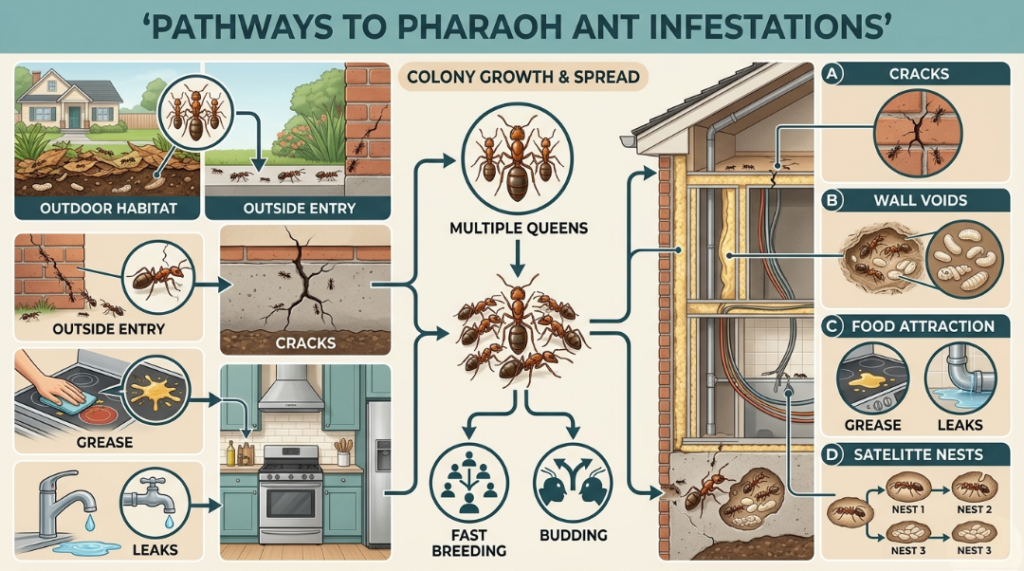
The reason they’re so difficult to deal with and I can’t stress this enough – is because a colony doesn’t have just one queen. There are dozens. Sometimes over a hundred. So even if you kill most of the workers you see on the counter, the queens remain hidden inside your walls, completely untouched, and continue laying eggs every day. That’s why those 20 ants grew into hundreds in two days. The colony was already there. I was just watching the workers.
| Feature | Pharaoh Ants |
| Size | 1.5–2 mm |
| Color | Pale yellow to light brown |
| Movement | Quick and fast-moving |
| Nesting Areas | Warm indoor cracks, crevices, and wall voids |
| Colony Structure | Multi-queen colonies |
| Bite/Sting Risk | Rarely bite or sting |
| Commonly Found In | Kitchens, bathrooms, hospitals, and heated buildings |
Why Pharaoh Ants are There – and What to Do About It (Why Pharaoh Ants Are in Your House)
| Cause | What Happens | Recommended Fix |
| Food crumbs | Attract worker ants | Deep-clean all surfaces regularly |
| Grease buildup | Encourages continuous feeding | Degrease kitchen and cooking areas |
| Plumbing leaks | Creates ideal nesting conditions | Repair leaks and remove moisture sources |
| Shared apartment walls | Helps colonies spread between units | Use coordinated building-wide treatment |
| Open trash bins | Provides a constant food supply | Keep trash in tightly sealed bins |
| Wall gaps & cracks | Creates hidden entry and travel routes | Seal openings after pest treatment |
One thing I learned while doing research – the CDC has listed pharaoh ants as a serious concern in hospitals because they spread bacteria, damage IV lines, and can reach surgical areas.
Signs of a Pharaoh Ant Infestation
The most common sign of pharaoh ant activity is a trail of small, yellow ants near food and water sources. Pharaoh ant infestations often spread to multiple rooms because colonies contain multiple queens. Indoor trail activity typically increases at night.
My infestation followed a very specific pattern that I now know is completely typical for pharaoh ants.
First day at the kitchen counter and sink area. Third day at cabinet hinges and the area behind the microwave. On the fifth day I found a trail in the bathroom near the faucet. By the end of the first week, my daughter came running to tell me there were ants near the charging cable in the living room.
At the time, it felt like a personal failure. Like I wasn’t cleaning properly or not doing my job properly. But that wasn’t the case. Pharaoh ant colonies naturally expand outward because there are multiple queens in multiple locations, all multiplying simultaneously.
- Tiny Yellow Ant Trails
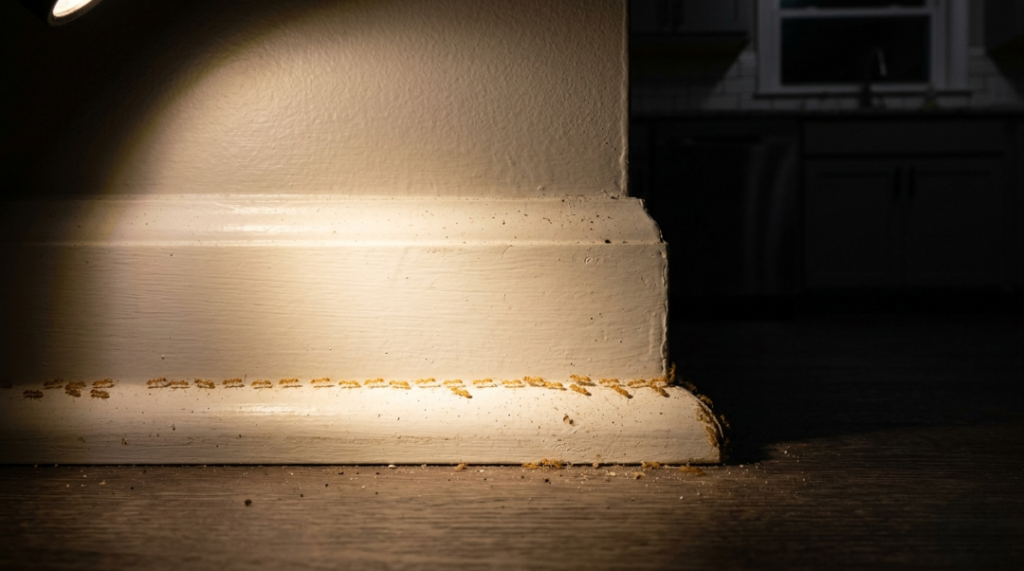
Pharaoh ant workers create narrow food trails along walls, pipes, and power lines. Pharaoh ant trails typically connect hidden nests to food sources. Activity along the trails is highest after dark, when there’s minimal human activity in the home.
In my kitchen, the trail always ran along the wall never through the counter. They ran along the baseboards, the pipes under the sink, the edges of the cabinet doors. Very clean, very organized, and very strange to look at.
I noticed the trails were much more numerous at night. During the day, there were maybe 10 or 15 ants. I once got up in the middle of the night to get some water and turned on the kitchen light – the countertop was covered. That’s how they work. Nighttime is their rush hour.
- Ants Around Warm Areas
Pharaoh ants prefer electronics, appliances, and warm wall voids as nesting sites. Indoor heat accelerates pharaoh ant colony growth and egg-laying. Colonies near heat sources grow faster than those in cooler indoor areas.
When the ants showed up in the living room near the charging cable, I made a mistake I deeply regret – I sprayed that area with the bug spray I had been using in the kitchen. Within 48 hours, there were ants in my daughter’s bedroom.
I didn’t understand why yet. I was about to find out.
- Where Pharaoh Ants Nest
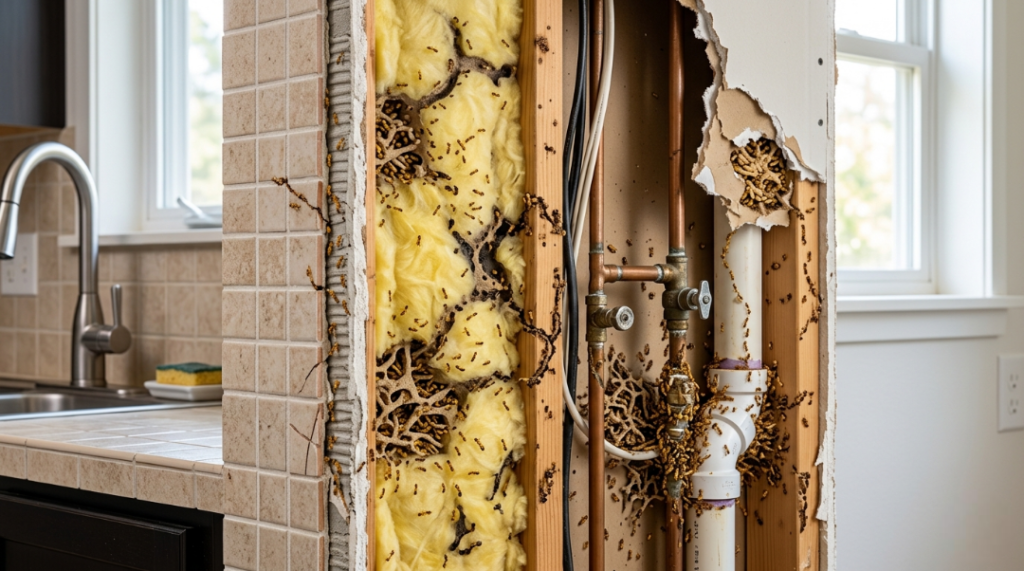
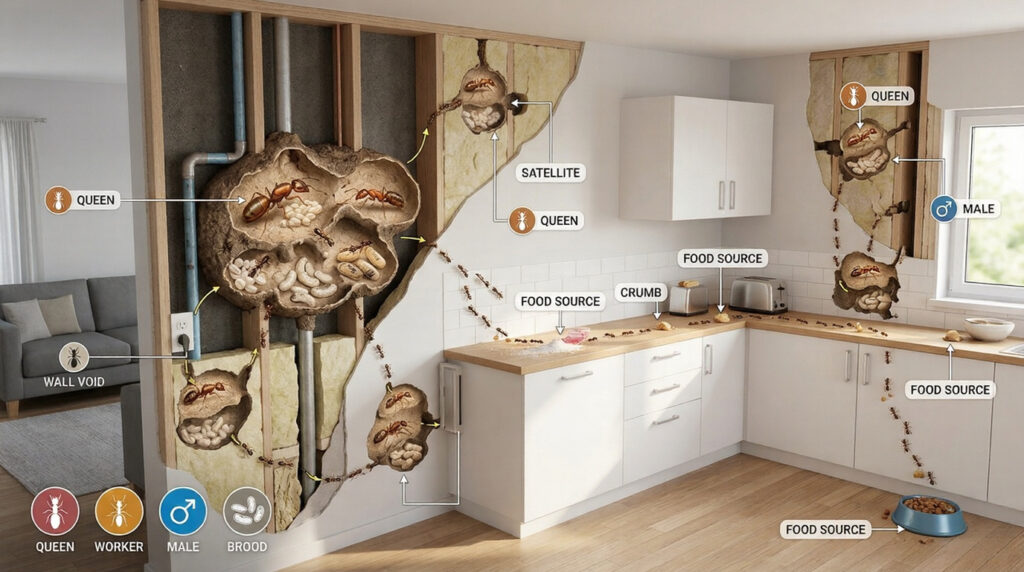
Pharaoh ant colonies nest in moist and warm places. Indoors, nests are typically built behind walls, under floors, inside cabinets, and around plumbing fixtures. Large infestations may consist of dozens of connected satellite nests spread throughout the structure.
I couldn’t find a single nest. Not one. And that’s perfectly normal with pharaoh ants – the nest is almost always somewhere you can’t see or reach. In a void in a wall, behind tiles, under the floor, inside the insulation around an appliance. What I could see was where the workers were disappearing. I watched one trail closely for about ten minutes one evening.
The ants were going into a tiny gap behind the kitchen backsplash – a gap so small I would never have noticed it otherwise. An hour later, a new trail appeared coming out from behind the bathroom vanity on the other side of that same wall. That’s the connected satellite nest system. Multiple small nests linked together inside the structure, workers moving freely between them.
Pharaoh Ants in an Independent House – Why It Can Spread So Fast
Pharaoh ant colonies spread from one house to another through wall voids, plumbing lines, and electrical lines connecting rooms. When nests are located in multiple connected locations within the same structure, treating one area does not provide permanent protection. A full-house treatment approach is necessary to permanently eliminate pharaoh ants in multiple homes. The same thing happened in my house too.
My neighbor, whose house shares a boundary wall with mine, casually mentioned one day that she, too, was bothered by tiny yellow ants in her kitchen. We chatted, and it turned out our infestations had begun around the same time. University entomology research confirms this kind of synchronized spread – pharaoh ant colonies can move between homes through gaps in shared boundary walls, especially in older construction where there are unsealed gaps.
What this really meant to me was that treating just the kitchen would never be enough. The colony had already formed in the bathroom wall, possibly the living room wall, and possibly the boundary area near my neighbor’s house. I had to treat the entire house – every room, every wall edge, every warm, hidden corner.
According to university entomology guidance, controlling pharaoh ants in any multi-room structure requires baiting the entire building. Spot treatments almost always result in re-infestation because untreated satellite nests simply repopulate the treated areas.
Why Spraying Pharaoh Ants Makes Infestations Worse
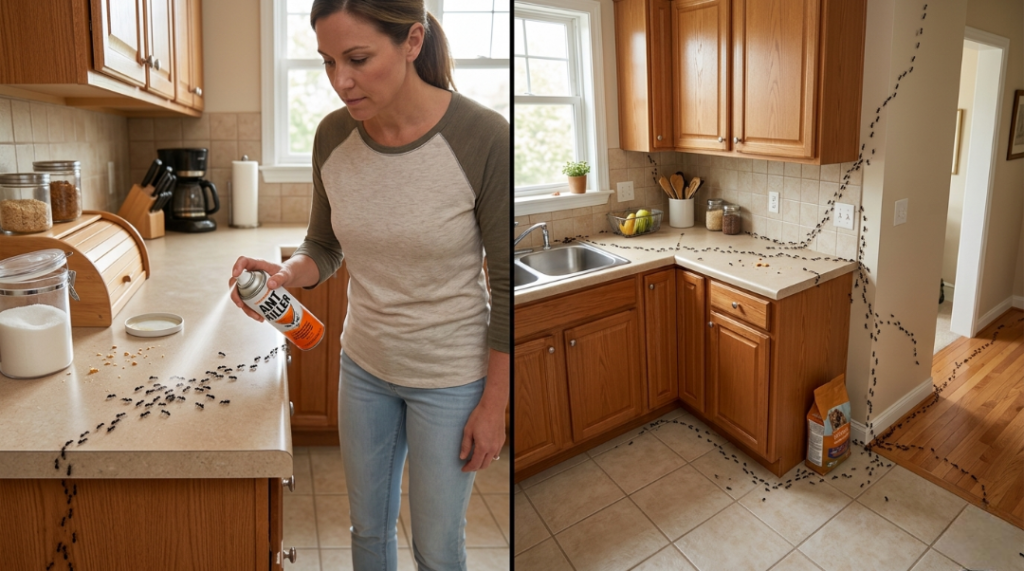
Repellent sprays trigger budding in pharaoh ant colonies. Budding in a colony allows the queen and worker ants to build numerous new nests throughout the house. Minor problems can quickly become a household problem after the wrong spray. Let me tell you exactly what happened when I sprayed.
Day one of the infestation – I sprayed the kitchen counter trail with a standard aerosol bug spray. The ants disappeared within minutes. I felt relieved.
Day two – fewer ants in the kitchen, but a new trail appeared near the bathroom sink.
Day three – I sprayed the bathroom trail too. Ants gone from bathroom.
Day four – ants in the living room near the charging cable. I sprayed there too.
Day five – ants in my daughter’s bedroom.
I systematically chased them from room to room, and each time I sprayed, the situation worsened. The spray killed the visible workers, but the queens inside the walls sensed the chemical’s danger and began a process called colony budding – part of the colony broke up, a queen moved to a new location with a group of workers, and a new satellite nest was formed far from the spray.
As the university’s entomology department consistently points out, pharaoh ants are one of the very few ant species where using repellent pesticides can exacerbate infestations rather than reduce them. I wish I’d known this back in the day. Never spray an active pharaoh ant trail. Not even once. Leave the trail alone. The trail is your path to healing.
How to Get Rid of Pharaoh Ants – 7 Step Removal Protocol
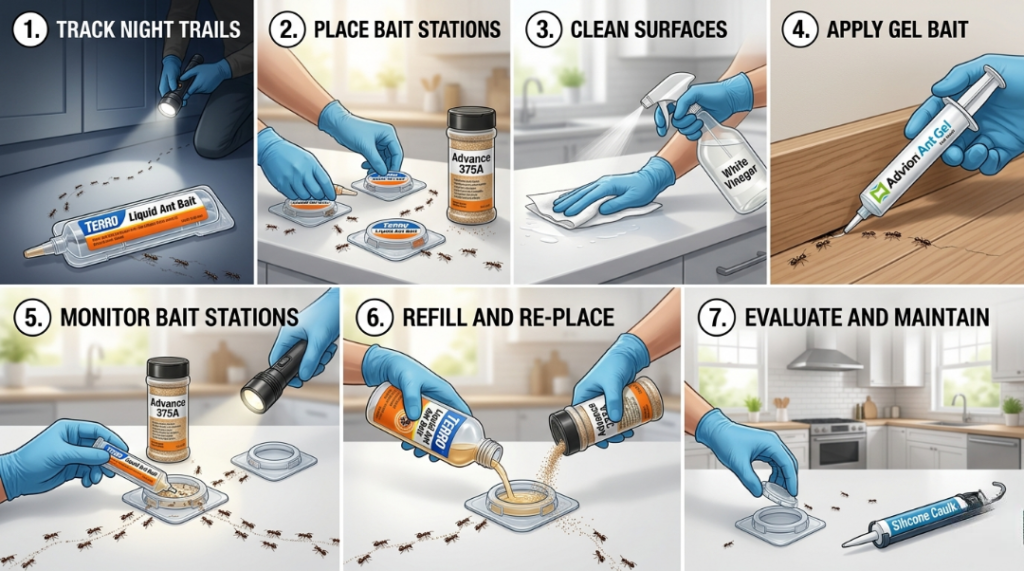
To permanently eliminate pharaoh ants, it’s essential to use slow-acting baits and completely eliminate the colony. A combination of protein baits and sweet baits gives the best results, as pharaoh ants change their food preferences. Consistent baiting and cleaning provide the highest long-term control rates.
By the time I found the right information, my infestation had spread to the kitchen, bathroom, and living room. I’d been spraying for almost a week, making everything worse. I had to stop everything, start over, and be patient.
What I’m about to share is what worked for me. It’s not quick, but yes..It works. What You’ll Need:
- Sweet liquid bait – I used Terro Liquid Ant Bait
- Protein ant bait – Advance 375A
- Gel bait – Advion Ant Gel for tight spots
- A flashlight for nighttime trail tracking
- Gloves
- Caulk – for sealing later, not now
- Paper towels
- White vinegar in a spray bottle
All of this cost me much less than an exterminator visit. More importantly, it actually affected the colony, not just the workers I could see.
- Stop using aerosol sprays immediately
This was the most psychologically difficult step for me, standing in a kitchen full of ants and doing nothing with the spray can sitting right there. But every time the spray is used, it triggers budding and pushes the colony deeper and further. The spray had to be removed.
Place sweet and protein baits along active routes.
I placed Terro liquid bait on the counter trail and Advanced granular bait near the area behind the stove. Pharaoh ants’ food preferences depend on where the colony is in its cycle – both types of ants are covered, which means something is always working.
- Allow worker ants to feed without interruption
This is the part no one warns you about. On the second day of baiting, there were so many ants on the terro station that I almost pulled it off. It felt like I had made everything ten times worse. I left it. This swarm itself tells us that the bait is doing its job. The workers feed profusely and carry the bait back to the queens.
- Remove competing food sources
I had a discussion with my mother-in-law about keeping food sealed and not leaving anything open overnight. When I explained what was happening, she completely understood and supported me. I thoroughly cleaned under the stove, behind the refrigerator, and inside every cabinet. Bruno’s food bowl was placed on a small, elevated platform away from the wall.
- Reduce indoor moisture
I fixed a leaking pipe in the kitchen. I dried out the cabinet under the sink. I started running the bathroom exhaust fan longer after showering. The reduced humidity meant one less reason for the colony to persist.
- Seal cracks only after activity clearly drops
I was tempted to seal every gap on the first day. I’m so glad I didn’t. When ants are active inside walls, sealing can trap fragments of the colony and encourage new nests. I waited until the trail activity had significantly decreased – about three weeks.
- Monitor for several weeks
This took patience I didn’t know I had. Large multi-queen colonies take time to collapse because the bait has to reach queens through multiple satellite nests.I placed fresh bait, checked every few days, and kept track of which routes were still active.
Best Pharaoh Ant Treatments – Product Comparison
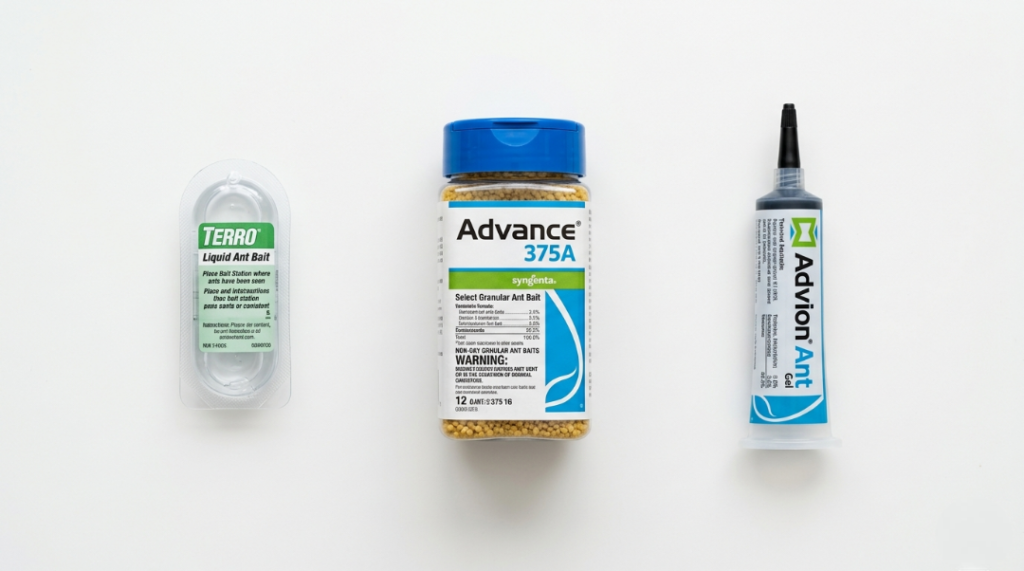
Slow-acting bait products provide the most effective pharaoh ant treatment because worker ants distribute poison throughout the colony. Repellent sprays rarely eliminate queens and commonly worsen infestations. Combination baiting produces higher success rates in large infestations.
Based on my experience and everything I researched during those weeks, here’s how the different options actually compare:
| Treatment Method | Effectiveness | Kills Entire Colony? | Best Used For | Recommended Product |
| Sweet liquid bait | High | Yes | Sugar-feeding ant trails | Terro Liquid Ant Bait |
| Protein-based bait | High | Yes | Grease and protein-feeding ants | Advance 375A |
| Gel bait | High | Yes | Cracks, crevices, and tight indoor spaces | Advion Ant Gel |
| Borax bait | Medium | Partial | Small or early-stage infestations | Homemade borax bait |
| Vinegar spray | Low | No | Removing scent trails and surface cleanup | White vinegar solution |
| Aerosol spray | Low | No | Killing only visible ants temporarily | Not generally recommended |
Best Bait for Pharaoh Ants
Pharaoh ants respond best to slow-acting bait containing sugars, proteins, and oils. Food preference changes during colony development make multiple bait types important for effective control. Single-bait treatments often fail because colonies shift feeding preferences mid-treatment.
In my case, the Terro liquid bait got hit first and hardest – the sugar-feeding workers swarmed it within a few hours. But after about a week, I noticed the Terro was getting less traffic and the Advance granular bait near the stove was suddenly very active. The colony had shifted food preference. If I had only used one type of bait, I would have lost that window. Products that worked consistently for me:
- Terro Liquid Ant Baits
Advion Ant Gel – perfect for the gap behind the backsplash and tight cabinet corners
Advance 375A Granular Bait – the one that finished the job when protein preference kicked in
Where I placed bait:
- Along the sink edge on both sides
- Inside cabinet corners near the hinge gaps
- Behind the refrigerator and stove
- Near the bathroom vanity plumbing
- Around the electrical outlets in the kitchen
The one rule I followed religiously – do not clean around active bait stations. Even wiping the counter nearby removes the pheromone trail the workers use to get back to the bait. I left a full strip of counter visibly unwiped for almost two weeks. It bothered me. But it worked.
Natural Ways to Get Rid of Pharaoh Ants
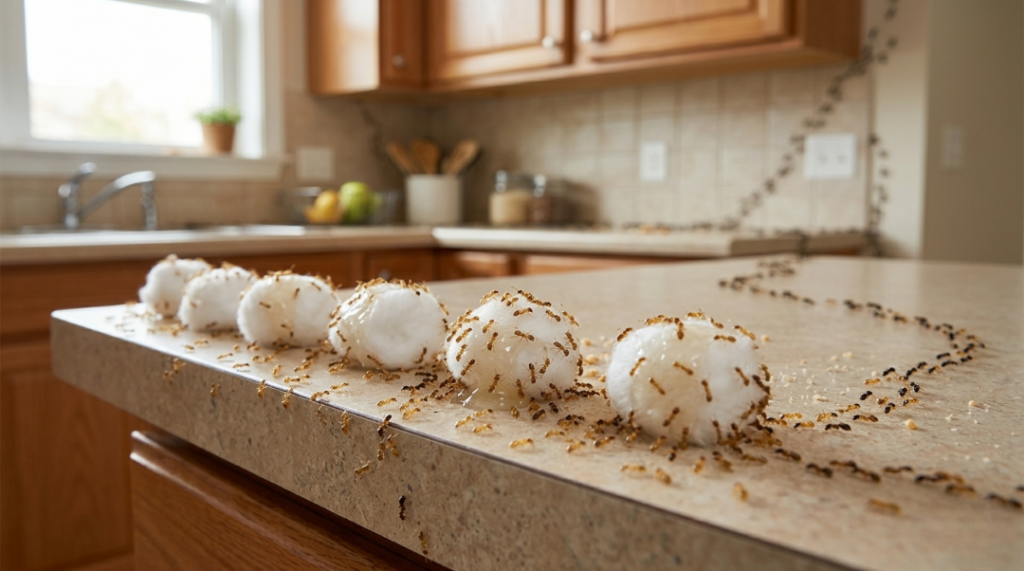
Large pharaoh ant colonies are rarely eliminated with natural remedies, as multiple queens maintain the colony. Borax bait provides the most effective natural colony treatment. Essential oils and vinegar primarily act as temporary repellents without reaching hidden nests.
I’ll be honest – I tried everything I read online before I figured out how to put the right bait. Cinnamon on the sidewalks. Lemon juice on the counter. Peppermint oil on cotton balls near the gaps in the cabinets.
Each time, the ants would disappear from that particular spot for a day or two and then return, sometimes in slightly different locations. Nothing was reaching the queens. The colony inside the walls was unaffected. Still, there’s a natural option that really works in a big way.
- Borax Bait
Borax bait is slowly spread by worker pharaoh ants to the queens and the entire colony. Weaker borax bait mixtures are more effective in spreading through pharaoh ant colonies than higher concentrations. At higher borax concentrations, the ants detect the bait before it reaches the queens and avoid it.
Before ordering commercial products, I made borax bait at home in the early days. And I did it wrong the first time. My first batch was too strong, and the ants completely ignored it. The concentration of borax needs to be very low.
To make this recipe add –
- 3 parts sugar t
- 1 part borax
- Enough warm water to make a thin syrup
Soak cotton balls and place them on active trails. Replace every two to three days. It’s slower than commercial bait, but if the concentration is right, it really reaches the colony.
- Vinegar Spray
Vinegar blocks the pheromone trails of pharaoh ants and cle
Peppermint and citrus oils temporarily repel pharaoh ant workers from treated areas. Essential oil barriers do not eliminate colonies and can be avoided within a few days. Pharaoh ant colonies may reroute around areas treated with repellents, but the overall size of the infestation is not reduced.
While the kitchen and bathroom were being baited, I used peppermint oil near my daughter’s bedroom door as a temporary barrier. This kept the area clear for a few days. But I was under no illusions that this was a solution – it was simply a workaround, not a solution.
Pharaoh Ants in Kitchen
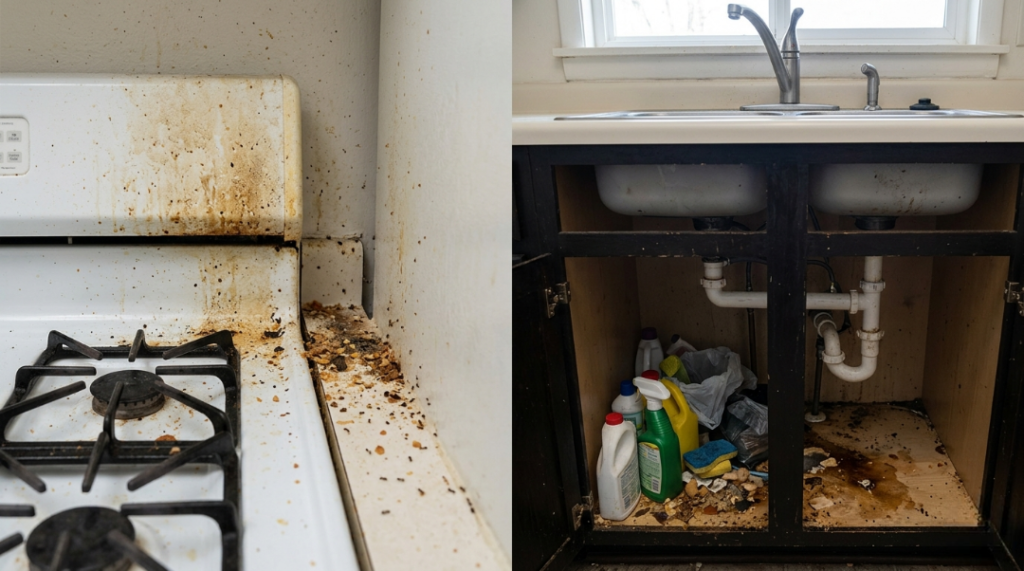
Pharaoh ant infestations in the kitchen are typically caused by grease, crumbs, sugar, and moisture near appliances and cabinet gaps. Pharaoh ant workers follow the grease trail to reach hidden food storage sites inside appliances and under countertops. Kitchen infestations grow faster than other rooms because food scraps are always available.
What I discovered during the deep clean was genuinely eye-opening. The grease ring under the stove grate that I thought I had been cleaning – not actually clean. The inside of the toaster – full of crumbs I never thought to check. The area behind the refrigerator – a thin film of dust and grease that had built up over months.
Spots I treated and baited specifically in the kitchen:
- Coffee maker drip tray area
- Under and behind the dishwasher
- Grease buildup zone around the stove
- Trash bin corner
- Bruno’s food and water bowl area
- Cabinet hinge gaps and edges
- Inside the pantry shelf corners
Pharaoh Ants in Bathroom
Moisture in bathroom wall voids and under-sink cabinets can attract ants. Plumbing leaks and condensation create damp conditions that make them a perfect breeding ground for pharaoh ants. Pharaoh ant infestations in bathrooms are often connected to kitchen colonies through wall voids.
I was thinking there was no food in the bathroom. Why would ants go there? When I investigated, I discovered it was due to moisture. Water was slowly leaking from a pipe joint in the cabinet under my sink, which I wanted to fix. For a colony of pharaoh ants, this kind of constant moisture in a warm wall void is exactly what they seek in a nesting site.
What helped most in the bathroom:
- Fixed the under-sink pipe drip properly
- Dried out the cabinet completely and left it open for airflow for two weeks
- Placed bait directly along the plumbing line behind the vanity
- Ran the exhaust fan for 20 minutes after every shower to reduce wall condensation
- Stopped leaving wet towels on the floor near the wall
Are Pharaoh Ants Dangerous?
Pharaoh ants are nuisance insects, but can spread bacteria in sensitive areas like hospitals and healthcare centers. Pharaoh ants can contaminate surfaces, food, medical supplies, and open wounds.
With my mother-in-law’s health, this was the part of my research that genuinely alarmed me.
For most healthy adults, pharaoh ants are an annoyance and a food contamination risk. They don’t bite seriously, they don’t damage the structure, they’re not going to hurt anyone directly. But the CDC has specifically documented pharaoh ants spreading bacteria in hospital settings – entering sterile areas, contaminating IV lines, reaching surgical dressings, and spreading organisms like Salmonella and Streptococcus between patients.
That’s a hospital context, not a home context. But the underlying mechanism is the same – these ants crawl through drains, garbage, and contaminated surfaces, and then they walk across your cutting board, your child’s snack plate, your elderly family member’s medication area.
I started being extremely careful about my mother-in-law’s medication box and her personal food items. Everything went into sealed containers until the infestation was fully resolved.
How Long Does It Take to Get Rid of Pharaoh Ants?
Small pharaoh ant infestations can clear up within 1 to 2 weeks of starting baiting. Larger infestations throughout the house often require continued treatment over several weeks. Pharaoh ant colonies with multiple satellite nests take longer to eliminate because the bait must reach multiple queen groups.
My personal timeline, being honest:
Week 1 – Stopped spraying, placed bait, activity got visibly worse before it got better
Week 2 – Kitchen trail activity dropped noticeably, bathroom still active
Week 3 – Bathroom trail thinning, kitchen almost clear, sealed the backsplash gap
Week 4 and 5 – Isolated activity near the stove wall, kept fresh bait there
Week 6 – No visible trails anywhere for four consecutive days
When I started treating correctly full resolution took me about six weeks because my infestation had already spread to multiple rooms. If I hadn’t spent that first week spraying and making things worse, it would likely have been three to four weeks.
| Infestation Size | DIY Treatment Time | Professional Treatment Time |
| Small Infestation | 1–2 weeks | 2–5 days |
| Medium Infestation | 2–4 weeks | 1–2 weeks |
| Large / Budded Colony | 1–2 months | 2–4 weeks |
Mistakes That Make Pharaoh Ant Problems Worse
Spraying visible ants is the most damaging pharaoh ant treatment mistake. Cleaning bait too early prevents colony elimination. Ignoring neighboring infestations allows pharaoh ant colonies to reinvade treated areas repeatedly.
I made almost every mistake on this list before I figured out what I was doing wrong. I’m putting them here so you don’t have to.
The one that cost me the most time was removing the bait too early. Around day four of baiting, the Terro station had so many ants on it that my mother-in-law asked me to please throw it away – it was disturbing to look at. I almost did. I’m very glad I didn’t, because that heavy feeding meant the bait was actively working and being carried back to the queens.
The full list of mistakes I either made or nearly made:
Spraying worker ants directly – did this for a week, made everything worse
Removing bait stations during heavy feeding activity – almost did this
Cleaning around active bait with surface spray – did this once, reset the trail
Sealing wall gaps early – almost did this, would have trapped colony fragments inside
Using peppermint oil on main infestation trails – disrupted the bait trail too
Leaving Bruno’s food bowl out overnight – was a competing food source near the bait
Pet and Child Safety
It’s important to keep pharaoh ant bait products out of reach of pets and children. Closed bait stations minimize accidental contact during active treatment. The EPA recommends following all instructions on ant bait labels when children or pets share treated areas.
Having a six-year-old child and a dog in the house, I thought carefully about this.
Commercial ant baits contain very small amounts of active ingredients – much less than any spray product. But with small children exploring the floors and dogs sniffing everything, caution still matters. What I did:
- All bait stations went behind appliances and inside cabinet corners – never open on the floor
- Bruno’s bait-adjacent areas were placed high up behind the refrigerator where he couldn’t reach
- I used enclosed Terro bait stations rather than open gel placements in the living room
- My daughter was told clearly – these are not toys, don’t touch the little boxes
- I washed my hands every single time after handling any bait product
- Followed every EPA label direction on the packaging without shortcuts
When to Call a Professional
When a pharaoh ant infestation spreads to multiple rooms or the entire house, professional extermination becomes necessary. When DIY baiting fails to reach all satellite nests, structural treatment becomes necessary. Larger infestations should require a professional extermination service immediately. This reduces the overall treatment time and cost.
When, despite consistently feeding, I was seeing activity on the trail in two rooms, I seriously considered calling a professional after the third week of trail baiting. I kept doing DIY because the activity was decreasing each week – it wasn’t stopping or getting worse. If your situation resembles any of the methods below, call a professional without waiting:
- Infestation has spread across more than three rooms
- Trail activity is not reducing at all after 4 to 6 weeks of correct baiting
- Colony keeps returning after temporary improvement
My neighbor and I actually coordinated our treatment timelines – both baited at the same time, both stopped using the spray at the same time. This coordination really made a difference in preventing re-entry through the boundary wall area.
How to Prevent Pharaoh Ants Permanently
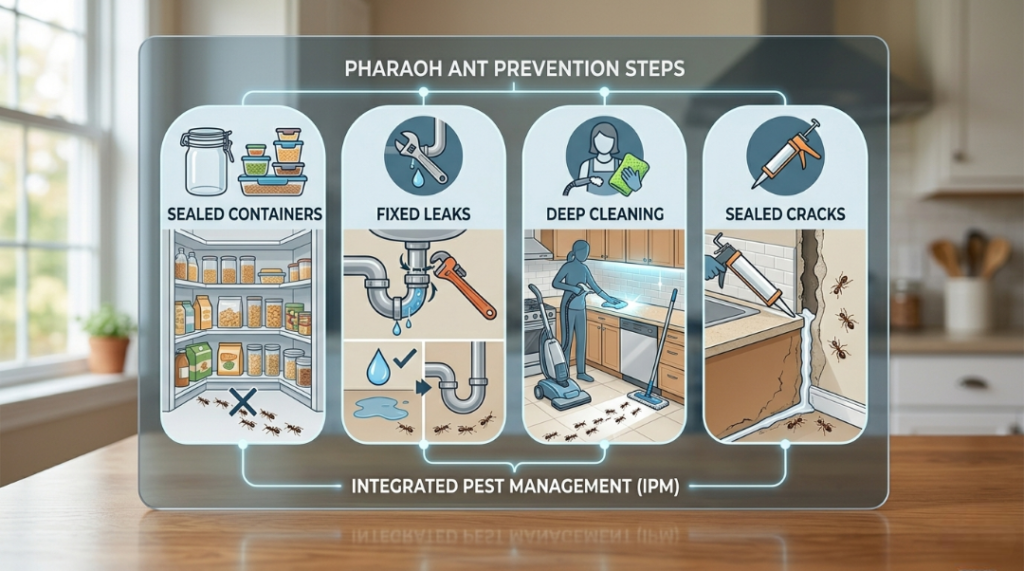
Permanent prevention requires moisture reduction, consistent sanitation, and early trail monitoring. Homes with fewer food residues and lower indoor humidity attract fewer pharaoh ant colonies. Regular inspection of warm indoor areas helps catch new pharaoh ant activity before colonies become established.
Six months on from my infestation, these habits are now just part of how I run the kitchen and bathroom. Some of them I already did – most of them I had to build from scratch. Here is the prevention Checklist:
- Clean up crumbs immediately – not just at the end of the day
- Every dry food item in an airtight container, including my pet food
- Fix plumbing drips immediately – even slow ones that feel minor
- Dry the under-sink cabinet regularly, leave it open for airflow
- Dry sinks before going to bed
- Seal wall gaps and baseboard gaps – after any treatment is fully complete
- Deep-clean behind and under the stove every month, not every year
- Empty and wash trash bins twice a week
- Check inside appliances – toaster, coffee maker, microwave – for residue
- Check warm areas near routers, appliances, and the water heater every few weeks
- Sealing kitchen wall crack to prevent pharaoh ant infestation
Pharaoh Ants vs Ghost Ants
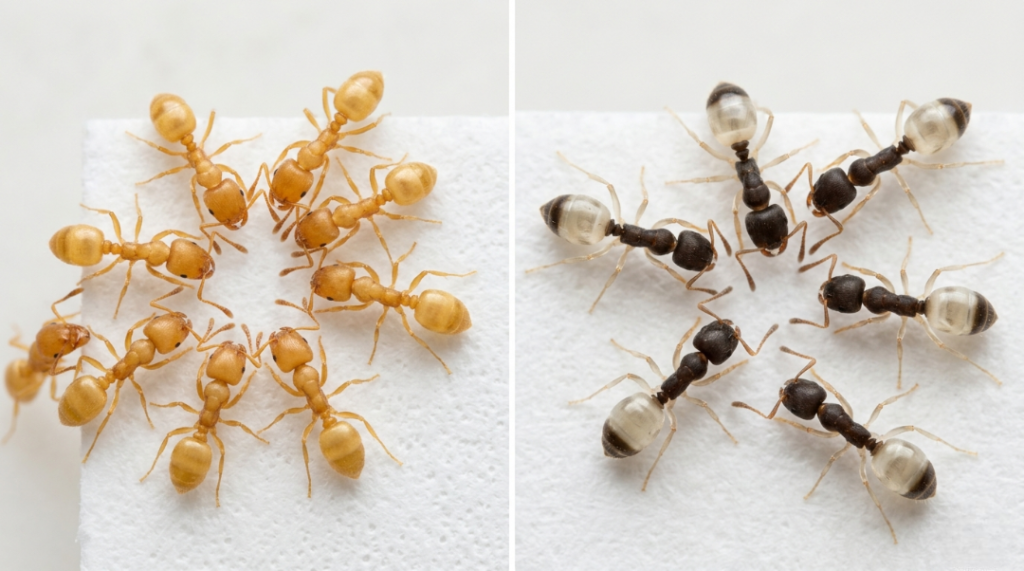
Pharaoh ants and ghost ants are both tiny indoor nuisance ants and most of the people get confused. They differ in body color and nesting behavior. Here we are going to explain the difference through a table :-
| Feature | Pharaoh Ants | Ghost Ants |
| Color | Yellow to light brown | Dark head with pale, translucent body |
| Size | 1.5–2 mm | 1.3–1.5 mm |
| Colony Structure | Multiple queens | Multiple queens |
| Common Nesting Areas | Warm indoor wall voids and cracks | Moist indoor spaces and hidden crevices |
| Primary Food Attraction | Proteins and sweets | Mostly sugary foods and liquids |
Quick rule:
Solid yellow tiny ants = likely pharaoh ants
Two-toned, almost see-through body = likely ghost ants
Frequently Asked Questions
Why are pharaoh ants suddenly everywhere?
When pharaoh ants build multiple satellite nests inside a house, they spread rapidly. This colony grows quietly within the walls for weeks before suddenly exploding into a visible explosion.
Do pharaoh ants bite?
Pharaoh ants rarely bite humans and do not sting. The ants are not aggressive, only focused on food.
What kills pharaoh ants permanently?
Slow-acting bait kills pharaoh ants permanently. Worker ants carry back bait to queens and hidden nests is the only reliable path to permanent colony elimination. Sprays only kill the workers you can see while queens continue reproducing inside the walls.
Why are pharaoh ants so hard to kill?
Because they have multi-queen colonies. Killing some queens doesn’t stop the others from continuing to lay eggs and rebuild.
Should you spray pharaoh ants?
No – and I cannot say this strongly enough from personal experience. Spraying triggers colony budding, which causes the colony to split and spread into new rooms. Every time I sprayed in week one, the infestation got worse.
What attracts pharaoh ants?
Food residue, grease, sugars, moisture, and warmth. Even a kitchen that looks clean can have enough hidden residue under appliances to support an active colony.
Can pharaoh ants live inside walls?
Yes, and this is the perfect place to build a nest. The actual colony is almost never visible – it’s inside wall voids, around plumbing, and in hidden structural gaps. You only ever see the workers out foraging.
What is the best bait for pharaoh ants?
A combination of sweet and protein-based slow-acting bait works best. Terro Liquid Ant Bait, Advion Ant Gel, and Advance 375A Granular Bait all performed well in my case and are used by professionals too.
Are pharaoh ants dangerous?
For healthy adults, mainly a nuisance and food contamination risk. For elderly or immunocompromised people in the household, the contamination risk is more serious – the CDC has documented pharaoh ants spreading bacteria in healthcare settings by contaminating sterile surfaces and equipment.
Why do pharaoh ants keep coming back?
Untreated satellite colonies still inside the walls and re-entry from a neighbor’s infestation are the two most common causes. The colony was never fully eliminated during treatment.
Can vinegar kill pharaoh ants?
No. Vinegar removes surface pheromone trails temporarily and is useful for final cleanup, but it cannot reach the colony inside the walls.
How long does pharaoh ant treatment take?
If you are placing bait in the correct way then most infestations improve within 1 to 3 weeks.
Can infestations spread between neighboring houses?
Yes – through shared boundary wall voids and outdoor ground trails. Coordinating treatment timing with neighbors provides good results.
When should you call an exterminator for pharaoh ants?
When the infestation has spread to more than three rooms and baiting has not produced any reduction after 4 to 6 weeks, or when the colony keeps returning after temporary improvement. Don’t wait as long as I almost did.